How Much Propane Does Generac Generators Use?
A Generac generator can use about 1 to 3 gallons of propane per hour, depending on its size, electrical load, and operating conditions. Larger loads and larger engines consume propane faster, so tank capacity matters as much as generator wattage.
On this page (9 sections)
- How much propane does a Generac generator use per hour?
- What changes propane consumption on a Generac generator?
- How many propane tanks will a generator need?
- Which generator size uses the most propane?
- Is a 14500-watt generator more practical on propane?
- Can a small dual-fuel inverter save propane?
- How do you estimate propane for a power outage?
- Does tri-fuel operation change propane planning?
- What is the best propane choice for different needs?
A Generac generator can use about 1 to 3 gallons of propane per hour, depending on its size and load. A small portable unit running a few essentials uses much less than a large home-backup generator powering several major appliances.
The exact answer to “how much propane does Generac generators use” depends on the model, propane pressure, engine design, and wattage demand. Use the generator's published fuel-consumption figure when available, then add a margin for cold weather, startup surges, and changing household loads.
How much propane does a Generac generator use per hour?
A small portable generator may use close to 1 gallon per hour at a heavy load, while a large home-backup unit can use several gallons per hour. At a light load, the same generator burns less propane because its engine does less work.
Generator size gives you a useful starting point. A compact inverter made for an RV or a few appliances has a smaller engine and lower fuel demand.
A large open-frame unit designed for whole-home backup needs more propane to produce higher continuous wattage.
Runtime estimates should include the load. A generator running at 25% load can stay on much longer than the same model running near its rated output.
Starting an air conditioner, pump, or compressor also creates a short surge that changes fuel demand.
For a tank calculation, see how long can a generator run on propane. That guide helps turn tank size, hourly use, and electrical demand into a practical runtime estimate.
What changes propane consumption on a Generac generator?
Electrical load is the biggest factor in propane use. The engine burns more fuel as the generator produces more power, so running only a refrigerator and a few lights uses less propane than running several heating, cooling, and pumping appliances.
Engine size also matters. Larger engines can produce more power, but they need more fuel to maintain that output.
A generator's rated wattage tells you how much electrical work it can handle, not how long a particular propane tank will last.
Weather can affect the result. Cold conditions change propane vaporization and may make starting harder, while altitude, maintenance, fuel pressure, and extension-cord losses can also change real-world consumption.
Your connected appliances create the final number. Add their running watts, account for starting watts where needed, and avoid treating the generator's maximum peak wattage as its normal operating load.
How does load affect propane use?
At a low load, the engine produces fewer watts and usually consumes less propane per hour. At a high load, the engine works harder and fuel use rises.
A refrigerator may cycle on and off instead of drawing full power continuously. An air conditioner or sump pump can create a larger starting demand, then settle into a lower running demand after startup.
How many propane tanks will a generator need?
Tank planning starts with usable gallons, not the cylinder's outside size. A common 20-pound cylinder contains about 4.7 gallons of propane when filled to its normal limit, while a larger stationary tank can hold much more.
Divide the usable propane by the generator's hourly consumption to estimate runtime. For example, 4.7 gallons divided by 1 gallon per hour gives about 4.7 hours.
If the generator uses 2 gallons per hour under your load, that same cylinder lasts about 2.35 hours.
Real runtime is rarely that neat. The generator may use less fuel while appliances are off, then consume more when a compressor or pump starts.
Keep spare fuel available for overnight operation, delayed deliveries, and rising loads.
A larger tank can reduce refills, but it also needs a suitable installation area and safe connection. Portable cylinders suit smaller units, while home-backup systems often use larger permanently installed tanks.
Which generator size uses the most propane?
The highest-wattage generator usually uses the most propane when both units run under similar loads. A large tri-fuel model can power more appliances, but that capacity comes with greater fuel demand.
The Westinghouse 28000W Tri-Fuel is designed for major home-backup needs. It produces 20,000 running watts on gasoline, supports propane and natural gas, and has a 999cc engine, so it belongs in a different fuel-planning class than a compact inverter.
Its large frame, 557 lb weight, 17.2-gallon gas tank, transfer-switch readiness, remote start, and CO sensor fit a serious home-backup setup. The unit also produces less than 5% THD for electronics such as phones, computers, and TVs.
This is the strongest match when your priority is running many large household loads. It also demands more planning for propane storage, connection hardware, placement, and safe operation than a smaller portable generator.
Is a 14500-watt generator more practical on propane?
A mid-size generator can balance home-backup power and fuel planning. It has enough output for several important circuits, while its engine and physical size are below those of a very large portable-generator class.
Who is the Westinghouse 14500W Tri-Fuel for?
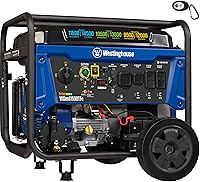
The Westinghouse 14500W Tri-Fuel suits homeowners who want substantial backup power without the largest portable-generator class. It produces 11,500 running watts and 14,500 peak watts on gasoline, with propane and natural gas as additional fuel choices.
Its 550cc engine, remote electric start, CO sensor, transfer-switch-ready outlets, and less than 5% THD support a broad home-backup plan. The 230 lb weight is easier to manage than the larger Westinghouse model, although it remains substantial.
Westinghouse gives it a 9.5-gallon gas tank and up to 19 hours at 25% load on gasoline. That gasoline figure does not equal propane runtime, but it shows why load level matters when estimating fuel hours.
Choose this model when you need more than an RV inverter can supply but don't need the maximum output of a 20,000-running-watt generator.
Can a small dual-fuel inverter save propane?
A small inverter can use less propane because it powers a smaller load and has a lower output ceiling. It works best for a refrigerator, lights, chargers, a few basic appliances, or an RV rather than full-home backup.
What does the Champion 4000W Dual Fuel RV Inverter provide?
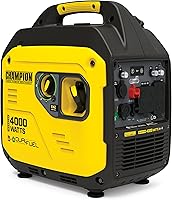
The Champion 4000W Dual Fuel RV Inverter produces 4,000 starting watts and 3,000 running watts on gasoline. On propane, it produces 2,700 running watts and runs for up to 25 hours at 25% load with a 20-pound propane tank.
The 149cc engine, 51.8 lb weight, 64 dBA noise rating from 23 feet, RV-ready TT-30R outlet, and less than 3% THD make it different from the two large Westinghouse units. It is easier to move and better suited to smaller loads.
The trade-off is lower propane output. Its propane running wattage is 2,700 watts, so keep connected appliances within that limit.
Pick this unit for portability and modest emergency power, not central air conditioning or broad whole-home coverage.
How do you estimate propane for a power outage?
Estimate fuel in three steps: calculate the load, find hourly consumption, and multiply by the number of hours you need. Then add extra capacity because outages rarely follow a perfect schedule.
Start by listing the appliances you plan to run at the same time. Separate continuous loads from items that cycle, such as refrigerators and freezers.
Include starting watts for motors, pumps, and compressors.
Next, use the generator's fuel-consumption information for the load level closest to your plan. If the figure is given at 25% load, don't apply it directly to a 75% load without adjusting your estimate.
Finally, multiply hourly use by expected runtime. A 12-hour overnight plan with 1 gallon per hour requires about 12 gallons before adding reserve fuel.
Use a written load plan so household members know which appliances can run together. Stagger high-demand devices instead of turning everything on at once.
Does tri-fuel operation change propane planning?
Tri-fuel operation gives you more fuel choices, but it does not make propane consumption disappear. You can switch between gasoline, propane, and natural gas when the generator supports those fuels, giving you more options during a long outage.
The Westinghouse models here are tri-fuel generators. They support propane along with gasoline and natural gas, which can help households choose fuel based on availability and storage needs.
Read best tri-fuel generator when you want to compare three-fuel operation. If you only need gasoline and propane, best dual fuel generator keeps the decision narrower.
Fuel switching should follow the generator's operating procedure. Keep the unit outdoors, away from doors and windows, and use the correct connection equipment for the fuel source.
What is the best propane choice for different needs?
Choose the Westinghouse 14500W Tri-Fuel for balanced home backup, the Westinghouse 28000W Tri-Fuel for the largest household loads, and the Champion 4000W Dual Fuel RV Inverter for portable basic power.
The 28000W model is the clear pick when you need very high running wattage and several major appliances at once. Its large engine and frame match that job, but the fuel plan must also match its higher capacity.
The 14500W model is the practical middle choice for many homeowners. It offers strong output, tri-fuel flexibility, remote start, and transfer-switch-ready connections without the size of the largest unit.
The Champion is the better fit for RVs, camping, and emergency essentials. Its propane runtime reaches up to 25 hours at 25% load with a 20-pound tank, but its lower propane running wattage limits the large appliances it can power.
For the question “how much propane does Generac generators use,” the useful rule is simple: the more watts you ask a generator to produce, the faster it uses propane. Match tank size to your real load, choose the smallest generator that covers it, and use can a Generac generator run on propane for the fuel-compatibility question.
Frequently asked questions
Does a generator use more propane at higher loads?
Yes. A generator burns more fuel as you connect more appliances and raise its electrical load.
A small standby load uses less fuel than running an air conditioner, refrigerator, sump pump, and other high-wattage equipment at the same time.
How much propane is in a 20-pound tank?
A standard 20-pound propane cylinder holds about 4.7 gallons of propane when filled to the normal safe limit. Actual runtime depends on generator size, load, temperature, fuel pressure, and how much usable fuel remains.
Can a portable generator run continuously on propane?
A portable generator can run for extended periods when it has a steady propane supply, but it still needs safe operation, maintenance, rest periods where required, and enough fuel. Keep it outdoors and follow its operating instructions.
Is propane better than gasoline for generator storage?
Propane is often easier to store for emergency use because it is kept in a sealed cylinder and does not degrade like gasoline. Gasoline can offer different output or runtime characteristics, so fuel choice depends on storage, availability, and the generator.