Are Westinghouse Generators Quiet?
Yes, Westinghouse inverter generators are quiet for their size. The smallest model runs as low as 52 dBA, which is about the level of a normal conversation, while the big tri-fuel unit runs as low as 64 dBA.
On this page (8 sections)
- How quiet are Westinghouse generators in decibels?
- What makes a Westinghouse generator quieter?
- Is 52 dBA quiet enough for camping?
- How loud is the Westinghouse 12000W tri-fuel inverter?
- Does Eco Mode lower generator noise?
- How do you keep a generator quieter in use?
- How does Westinghouse compare with WEN on noise?
- Which Westinghouse generator is quietest?
Yes, Westinghouse inverter generators are quiet for their size. The smallest model runs as low as 52 dBA, about the level of a normal conversation, while the big tri-fuel unit runs as low as 64 dBA.
The answer to "are Westinghouse generators quiet" depends on which model you pick and how hard you push it.
The inverter design is the reason. The engine speed rises and falls with the load, so a light load means a slow engine and less noise.
Westinghouse also adds insulation and mufflers to its inverter models. Traditional generators hold one high speed all the time and stay loud.
How quiet are Westinghouse generators in decibels?
The inverter lineup runs from about 52 dBA to 64 dBA at the low end. That range covers a small camping unit up to a whole-home tri-fuel model.
Both are quiet next to a traditional open-frame generator of similar wattage.
Decibels are a scale, not a straight line. Every extra 10 dBA sounds about twice as loud to your ear.
So 64 dBA is not slightly louder than 52 dBA; it's noticeably more sound. A 12,000W tri-fuel unit at 64 dBA is still calm for its power class.
Westinghouse lists these figures as "as low as" numbers. You see the low end when the generator runs light loads in Eco Mode.
Load it with a big appliance and the engine speeds up and the noise rises with it. That's normal for any inverter.
The sound rating sits on the engine and the enclosure, not on the outlet you plug into, so two people running the same model can hear different noise if their loads differ.
What makes a Westinghouse generator quieter?
The inverter design, engine speed control, and built-in sound treatment do the work. Each one matters, and they add up.
- Inverter output: the engine matches speed to demand instead of running at a fixed high rpm.
- Eco Mode: the iGen1500c and the iGen12000TFc both use it to cut engine speed at light loads, which saves fuel and lowers noise.
- Insulation and mufflers: the iGen12000TFc uses both to keep the unit neighborhood friendly.
- Enclosed design: the fully enclosed casing blocks some engine sound from escaping.
Compare that with a traditional generator. Its engine runs at one set speed to make 60 Hz power, so the sound stays steady and loud no matter what you plug in.
An inverter lets the engine drop when the load drops. This is also why an inverter burns less fuel.
Our guide on how does an inverter generator work explains the electronics behind it.
What else in the build cuts noise?
The engine itself is tuned for calm running. The iGen1500c uses a 56cc 4-stroke engine, and the iGen12000TFc uses a 457cc 4-stroke with a cast iron sleeve.
A smaller engine at a light load makes less mechanical noise than a big one working hard. Both units carry a CO sensor and overload protection, and those safety systems also keep the unit from running rough or surging when something goes wrong.
The recoil start on the small model and the electric start plus remote key fob on the big one mean you don't stand next to a roaring engine to get it going. A soft, steady start is part of what makes the whole experience feel quieter.
Is 52 dBA quiet enough for camping?
Yes, 52 dBA is quiet enough for most campgrounds. It sits near normal conversation volume, so you can talk next to the generator without raising your voice much.
That level comes from the Westinghouse iGen1500c. It's a 1,500 peak watt unit rated at 1,000 running watts.
At about 32 lb, it's light enough to carry from the truck to the campsite.
Westinghouse says it runs up to 12 hours on its 0.79 gallon tank with Economy Mode on. A long quiet run matters at night.
Many campgrounds set noise limits, so check yours before you book. Keep the generator on level ground away from tents, and point the exhaust away from seating.
It has two 120V 20A outlets and two USB outlets. That's enough for a phone, a laptop, a light, and a small cooler.
It's parallel capable too, so a second Westinghouse inverter with a parallel port can add power when you need more. The CO sensor shuts it down if carbon monoxide builds up, which matters when people sleep nearby.
How loud is the Westinghouse 12000W tri-fuel inverter?
It runs as low as 64 dBA. That's moderate sound for a unit that makes 12,000 peak watts on gasoline.
It's louder than a camping inverter but calm for a whole-home machine.
Westinghouse lists 9,000 running watts on gasoline, 11,000 peak and 8,100 running on propane, and 9,800 peak and 7,200 running on natural gas. All three fuel options keep it under 3% THD, so it's safe for sensitive electronics.
A 457cc engine runs up to 19 hours at 25% load on the 7.9 gallon tank.
The 191 lb weight and the never-flat wheels tell you this is a stay-put machine. Put it beside the house near your transfer switch inlet, not by a bedroom window.
A remote start key fob lets you start it without standing next to it. The CO sensor and low oil shutdown add safety for a unit that may run overnight.
What do the outlets and data center add?
The outlet panel is built for home backup, not for quiet camping. It has a 120/240V 14-50R 50A outlet and an L14-30R 30A twist lock, both transfer switch or interlock kit ready.
There's also a GFCI 120V 20A duplex household outlet and a 12V battery charger in the box. An LED data center shows fuel level, power output, remaining run time, voltage output and lifetime hours.
You can glance at it to see when the load has dropped and the engine has gone quiet, so you know when to expect the calmest running. The included propane regulator kit means you can switch fuels without extra shopping.
Does Eco Mode lower generator noise?
Yes, Eco Mode cuts noise because it lets the engine idle down when the load is light. Less load means lower engine speed and less sound.
You get the quietest running when you power small items rather than big appliances.
On the iGen1500c, flip Eco Mode on for a phone charger or a lamp and the engine drops to its slowest quiet speed. Turn on a space heater and the engine speeds up to meet demand.
The iGen12000TFc works the same way. Westinghouse says inverter technology matches engine speed to power demand and can cut fuel use by up to half versus traditional generators.
The trade-off is simple. Big loads mean more noise on any inverter.
If you want the calmest run, keep the load small and spread across the day.
How do you keep a generator quieter in use?
Place it on level ground away from people, keep loads light, and use Eco Mode. These three steps lower the sound you actually hear more than any single feature.
Sound drops with distance. Moving the unit a few feet farther from where you sit makes a clear difference.
Don't put it against a wall that bounces sound back toward the house. A hard surface like a patio reflects noise; grass and soft ground absorb some.
Keep the generator on a firm, level spot so it doesn't vibrate against the ground. Check that nothing rattles against the casing.
Close panels and covers fully. Run it with the maintenance schedule the manual gives, since a poorly tuned engine runs rougher and louder.
The iGen12000TFc's digital data center even tracks lifetime hours and maintenance, which helps you keep it running smooth and quiet over years.
Never run a generator in a garage, basement, or any enclosed space. The CO sensor on these Westinghouse units is a backup, not a reason to run indoors.
How does Westinghouse compare with WEN on noise?
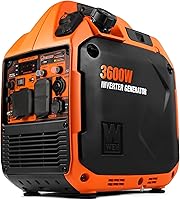
Both brands make quiet inverter models, and the WEN 4800W unit runs at a modest 62 decibels at quarter load. That's close to the bigger Westinghouse tri-fuel figure and louder than the small iGen1500c.
The WEN 56477i makes 4,800 surge watts and 4,000 rated watts from a 224cc engine. It weighs 72.7 lb and has onboard wheels plus a telescoping handle.
Its 1.9 gallon tank gives up to 7 hours of half-load run time. It has an RV TT-30R outlet and a Watchdog CO shutdown sensor.
It also has a fuel shutoff that runs the carburetor dry, which fights the blockages that come from stale fuel and keeps the engine running clean.
It's a fair choice if you need RV power and want sound in the low 60s. For the calmest small unit, the iGen1500c at 52 dBA wins.
For a side-by-side look at the two brands, read WEN vs Westinghouse generators.
Which Westinghouse generator is quietest?
The iGen1500c is the quietest Westinghouse model, at as low as 52 dBA. It's the one to pick when sound matters most, like tent camping or a small patio.
If you need to run a whole home, the iGen12000TFc at 64 dBA is the quiet option in its power class. For a camper or tailgater who needs more than 1,000 watts but still wants low noise, the WEN 4800W unit at 62 decibels at quarter load is a strong middle choice.
To see how these rank against other brands, our roundup of the quietest generator picks covers the low-noise leaders.
So are Westinghouse generators quiet? The inverter models are, and the small one is among the calmest in its class.
Pick the iGen1500c for near-silent light duty and the iGen12000TFc when you need home backup power with reasonable sound. If you're still weighing inverter types, our guide to the best inverter generators can help you choose.
Frequently asked questions
Are Westinghouse generators quiet enough for a campground?
Yes, the inverter models are quiet enough for most campgrounds, and the iGen1500c is rated as low as 52 dBA. Check your campground's noise limit, since some set a strict daytime cap.
Place the unit on level ground away from tents and RVs to keep sound away from people.
Why are inverter generators quieter than regular generators?
Inverter generators quiet down because the engine speed follows the load instead of running flat out. A regular generator holds one high speed all the time.
The inverter models also use insulation and mufflers, so the whole unit makes less noise at light loads.
How loud is 52 dBA compared with everyday sounds?
52 dBA is about the level of a normal conversation or a quiet office. That makes the iGen1500c easy to talk over at close range.
Sound fades with distance, so moving the generator a few feet away from where you sit makes a clear difference.
Is the Westinghouse 12000W generator quiet for whole home backup?
The iGen12000TFc runs as low as 64 dBA, which is moderate for a 12,000W unit. That's louder than a small camping inverter but calm for its power class.
Place it away from bedroom windows and close to your transfer switch inlet for the least disturbance.