WEN vs Westinghouse Generators: Which Is Better? (November 2026)
In this WEN vs Westinghouse generator comparison, choose WEN for frequent moves and sensitive electronics or Westinghouse for larger running loads and a bigger gasoline tank. Both offer gasoline and propane operation, an RV outlet and automatic CO shutdown.
On this page (12 sections)
- WEN vs Westinghouse generator: which fits your routine?
- How much can each generator run?
- Who should buy the WEN, and who should skip it?
- Who should buy the Westinghouse, and who should skip it?
- Which is easier to live with at a campsite?
- Will the RV outlets power your whole camper?
- Should you plan around gasoline or propane?
- How should you set up either generator?
- Which generator is better for home backup?
- What safety rules still apply with CO shutdown?
- What care helps prevent avoidable problems?
- Which should you choose, WEN or Westinghouse?
For this WEN vs Westinghouse generator choice, buy WEN for frequent moves and sensitive electronics, or Westinghouse for a larger running load. Your appliances, fuel choice and lifting route matter more than the larger number in a model name.
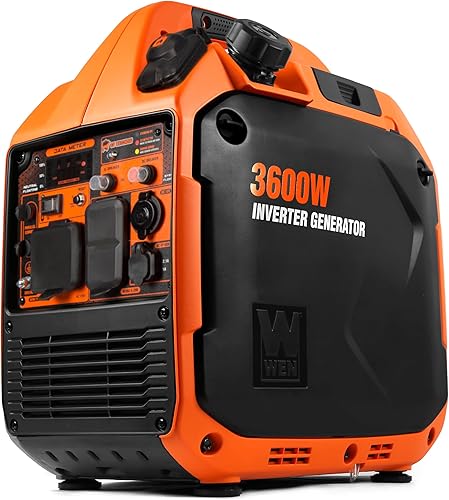
The WEN DF360iX is a smaller inverter generator; the Westinghouse WGen3600DFcv is a heavier open-frame model. This comparison covers those 2 models, rather than every generator either brand makes.
Both offer dual-fuel operation, an RV connection and automatic carbon monoxide shutdown. Start by deciding what must stay powered, then choose the machine that can support it in a safe outdoor location.

WEN vs Westinghouse generator: which fits your routine?
Choose WEN for regular travel; choose Westinghouse for more appliances running together. WEN makes more sense when moving the generator is a routine task, while Westinghouse suits buyers who can handle a heavier unit for extra capacity.
For weekend RV trips, loading and unloading can matter as much as output. A generator that covers your actual needs and is easier to move is often more useful than spare watts you rarely use.
For outages, think about your minimum useful setup. Keeping refrigeration, lights and communications running is a different job from adding a pump or several cooking appliances.
Neither model is an automatic choice for whole-home power. Large heating, cooling and cooking loads can require a different generator and a planned home connection.
How much can each generator run?
Westinghouse provides more continuous power on either fuel. Compare rated watts first, then check whether the generator can also cover the brief surge needed to start your largest motor.
| Power measure | WEN DF360iX | Westinghouse WGen3600DFcv |
|---|---|---|
| Gasoline running watts | 2,900 | 3,600 |
| Propane running watts | 2,600 | 3,240 |
| Gasoline surge watts | 3,600 | 4,650 |
WEN also offers 3,500 surge watts on propane. For either model, use the manual's fuel-specific surge limit before planning a motor load.
Build your load plan in 3 steps:
- Record the running watts of everything you want powered together.
- Find the startup requirement for appliances with motors or compressors.
- Allow for the largest likely startup event while the other planned loads are running.
Don't add every appliance's surge figure as if all motors must start together. Instead, identify realistic combinations and control when large loads turn on.
For example, a refrigerator may cycle on while lights and a router stay powered. Turning on a kettle at that moment adds another large load, even though the kettle has no motor startup surge.
Leave room for changing demand rather than planning to use every available watt. Our guide to what size generator you need explains how to build that appliance list.
Which WEN vs Westinghouse generator suits sensitive electronics?
WEN is the clearer choice for laptops, phones and other sensitive electronics. Its inverter output has total harmonic distortion below 0.3% at no load and below 1.2% at full load.
Westinghouse includes automatic voltage regulation, but no equivalent distortion figure is available here. Buyers choosing mainly for electronics should favor WEN's documented power quality.
An inverter doesn't remove the need to follow equipment instructions or use sound cords. Avoid damaged plugs, overloaded power strips and makeshift connections.
Read how an inverter generator works for the technology, or compare inverter vs regular generators for the practical tradeoffs.
Who should buy the WEN, and who should skip it?
Buy WEN if you need portable power for a modest load and expect to move it often. Its combination of inverter output and lower weight fits RV travelers, campers and households powering a short list of essentials.
It weighs 49 lb, compared with Westinghouse's 108 lb. That difference matters when you must lift a generator into a vehicle or carry it from storage before each use.
Skip WEN if your essential running load exceeds its capacity on your chosen fuel. Managing appliance use can reduce demand, but it won't solve a load that is already too large before anything else starts.
Also skip it if you need frequent high-demand appliance use without turning other equipment off. A larger generator may fit that routine better than constant switching between loads.
Who should buy the Westinghouse, and who should skip it?
Buy Westinghouse when extra running capacity solves a specific power need. It fits an outage plan with more simultaneous essentials or an RV load that leaves too little room on the WEN.
Its digital readout shows voltage, frequency and lifetime hours. The hour display is useful for tracking service intervals, especially when several days of outage use add hours quickly.
Skip Westinghouse if you must lift the generator alone and can't safely manage its weight. Check your storage route, steps and vehicle loading height before committing to it.
If your entire load is a few electronic devices and lights, its extra capacity may add handling work without helping your routine. Choose around the equipment you'll actually use.
Which is easier to live with at a campsite?
WEN is easier to handle, but check campground rules before buying either model. WEN reports 65 dB at quarter load; that figure doesn't describe its sound under every operating condition.
There isn't a comparable sound figure here for Westinghouse, so a firm noise ranking would be unsupported. Generator hours, site spacing and local noise limits can rule out an otherwise suitable machine.
Plan a secure outdoor spot before you arrive. Don't place a running generator under an RV, inside a storage bay or where exhaust could reach a neighboring campsite.
For other sound-focused choices, see quiet generators. Our portable generator guide explains the main designs if you're still choosing a generator type.
Will the RV outlets power your whole camper?
Both have a TT-30R RV receptacle, but the connection doesn't promise enough power for every RV appliance. Westinghouse also has an L5-30R outlet; these plug types aren't interchangeable.
WEN includes 2 household 120V receptacles, a 12V DC connection and 2 USB ports. Westinghouse includes a household duplex receptacle and rubber outlet covers.
All outlets share the generator's available output. Connecting an appliance to a different socket doesn't create another pool of watts.
Before running RV air conditioning, check its startup requirement and account for the converter charging the batteries. Water heating, refrigeration and other appliances may also add electrical demand without an obvious reminder.
An adapter changes which plug fits, not the generator's capacity or voltage. Use properly rated connections and avoid stacking adapters to force an unsuitable setup.
Our guide to choosing a generator for an RV or camper helps turn those appliance needs into a practical plan.
Should you plan around gasoline or propane?
Size either generator for propane if propane will be your main fuel. Both lose some running capacity on propane, so a load that fits on gasoline may need trimming after a fuel change.
Gasoline keeps fuel inside the generator's tank, while propane requires a separate cylinder and hose. Consider storage, transport and nearby refill options before choosing your normal fuel.
WEN has a 1.5 gal gasoline tank; Westinghouse has a 4 gal tank with a fuel gauge. Westinghouse claims up to 14 hours per gasoline tank, but load affects how long any generator runs.
Don't compare maximum runtime claims without matching the load and operating conditions. For an outage, keep enough fuel for your planned daily use rather than assuming a tank always lasts through the night.
WEN includes a tool-free LPG quick-connector. Westinghouse allows switching fuels without stopping the engine, but follow its exact switching procedure rather than applying that method to another model.
Keep propane cylinders upright and inspect connections as the manual directs. Our dual-fuel vs gas-only generator guide explains the broader storage and fuel-planning tradeoffs.
How should you set up either generator?
Choose the operating spot and connection method before adding a load. A generator needs safe placement, correct engine preparation and suitable cords before it can do useful work.
Read the model's manual before the first start. Westinghouse includes engine oil and a funnel, but included oil still needs to be added and checked according to the instructions.
Use this setup order:
- Place the generator on a stable, level outdoor surface with the required clearance.
- Check oil, fuel connections and the condition of cords and plugs.
- Start it with connected loads off or disconnected, following the manual.
- Allow the engine to settle as directed, then add loads one at a time.
- Connect the largest starting load first when practical, then add smaller equipment.
Use outdoor-rated cords sized for their load and length. A long, thin cord can cause voltage drop, so keep the route practical without moving the generator closer to the building.
Don't run cords where doors can crush them or people can trip over them. Keep plugs and connections dry, and stop use if a cord becomes damaged or unusually hot.
Which generator is better for home backup?
Westinghouse fits a larger essential-appliance plan; WEN fits a smaller plan with electronics and easier handling. Decide whether you'll power appliances directly or connect selected home circuits before choosing accessories.
Direct appliance cords can work for suitable plug-in equipment. Hardwired equipment and household circuits need a properly designed connection installed by a qualified electrician.
Never feed generator power into a wall outlet. Backfeeding can energize wiring unexpectedly and put utility workers and other people at risk.
For a circuit connection, read whether you need a generator transfer switch. Have the electrician confirm compatibility with the exact generator, inlet and circuits you want powered.
Also decide what can wait during an outage. Pausing electric cooking or water heating may leave enough capacity for refrigeration and communications without moving to a much larger machine.
What safety rules still apply with CO shutdown?
Both generators must stay outdoors, even with automatic CO shutdown. Place either at least 20 feet from the home, point exhaust away from buildings and follow any greater clearance in the manual.
Never operate one in a garage, shed or enclosed porch, even with doors open. Keep working CO alarms inside the home, and check that exhaust cannot reach nearby RVs or other occupied spaces.
WEN uses its Watchdog CO Shutdown Sensor. Westinghouse also includes CO shutdown, automatic low-oil shutdown and overload protection.
If a CO sensor stops the generator, move away and assess the placement before any restart. Don't repeatedly restart it in the same spot or disable the sensor.
Rubber outlet covers don't make Westinghouse safe to run exposed to rain. Use a purpose-built operating shelter that preserves ventilation and clearance, following the generator's instructions.
Our guides explain how to use a generator safely in rain and why generators give off carbon monoxide.
What care helps prevent avoidable problems?
Track engine hours, check oil as directed and prepare the fuel system for storage. Occasional outage use still requires care between starts.
WEN's fuel shutoff lets the engine use the gasoline remaining in the carburetor before it stops. That helps reduce stale fuel left there, but it doesn't replace the full storage procedure.
Follow the manual's oil-change and air-filter schedule. Heavy use, dust and long outages make a written service log more useful than relying on memory.
Let the engine cool before refueling, handling or storage. Keep spare fuel in approved containers and away from ignition sources.
Before a planned trip, confirm you have the right cords, propane connection and service supplies. Finding a missing part at home is much easier than finding it during an outage.
Which should you choose, WEN or Westinghouse?
Choose WEN when your load fits and frequent handling or electronics use drives the decision. Choose Westinghouse when you can manage the extra weight and need its added running capacity.
For this WEN vs Westinghouse generator decision, settle 3 points before ordering: your largest startup load, your total running load on the chosen fuel and your safe operating location. If either machine fails one of those checks, keep looking.
For the smaller option, read the WEN 3600-watt dual-fuel inverter review. If neither model covers your backup plan, the Westinghouse tri-fuel generator review covers a higher-capacity alternative.
Frequently asked questions
Is WEN or Westinghouse better for an RV?
WEN is the better fit for frequent RV trips when its output covers your appliances, while Westinghouse suits a larger running load; both have a TT-30R connection. Check the air conditioner's startup demand and count any converter, refrigerator or other equipment that could run at the same time.
Which generator has more power?
Westinghouse has more running power on both fuels: 3,600 watts on gasoline and 3,240 on propane, versus WEN's 2,900 and 2,600. Choose using the output for your planned fuel, then allow for motor startup demand; a peak watt figure cannot support that same load continuously.
Can these generators run on propane?
Yes, both accept propane as well as gasoline, but each has less running capacity on propane; size your load around propane output if that's your main fuel. Follow the manual for cylinder placement, hose connection and leak checks, and keep a spare cylinder ready for longer outages.
Which is easier to move?
WEN is easier to move because it weighs 49 lb, compared with 108 lb for Westinghouse. Your route still matters: steps, gravel and a high vehicle cargo floor can make handling difficult; plan the move with the engine cool and follow the manual's transport and fuel instructions.
Do both generators have carbon monoxide protection?
Both have automatic CO shutdown, but neither is safe inside a home, garage, shed or other enclosed space. Run the generator outdoors at least 20 feet from the home, with exhaust pointed away from buildings; keep working CO alarms inside, and follow any greater clearance required by the manual.