How Does an Inverter Generator Work?
Here's how an inverter generator works: an engine makes electricity, which electronics convert from AC to DC and back to controlled AC. Many models also adjust engine speed to match demand.
On this page (10 sections)
- How does an inverter generator work?
- Why convert AC to DC and back?
- Does an inverter generator change engine speed?
- What can an inverter generator power?
- Are inverter generators quieter and more fuel efficient?
- What should you check before buying an inverter generator?
- How do you set up an inverter generator safely?
- What care and operating mistakes should you avoid?
- Can you connect inverter generators together?
- Which inverter generator should you choose?
An inverter generator works by converting engine-generated AC electricity to DC, then back to controlled AC for your devices. Many models also vary engine speed with demand, helping reduce fuel use and noise during lighter use.
Understanding how an inverter generator works helps you choose beyond the large watt number on the case. You still need enough continuous output, room for starting surges, and the right outlets for your equipment.
How does an inverter generator work?
An inverter generator uses an engine, an alternator, and electronic power controls to supply electricity. The engine provides the motion; the electronics control the final AC waveform.
The process has 3 main steps:
- Generate AC: The fuel-burning engine spins an alternator, producing alternating current.
- Convert to DC: A rectifier changes that electricity into direct current.
- Create controlled AC: The inverter circuit switches the DC into AC at the intended voltage and frequency.
Household appliances use that final AC output. Unlike a battery power station, a fuel-powered inverter generator must keep its engine running to supply power.
How does the inverter control generator output?
The inverter sets the final AC waveform electronically, so output frequency doesn't have to follow engine speed directly. This allows many designs to vary engine speed while maintaining the frequency your equipment needs.
“Clean power” describes electrical output, not exhaust. An inverter generator still burns fuel and produces carbon monoxide.
Why convert AC to DC and back?
The conversion lets the generator control voltage, frequency, and waveform before electricity reaches the outlets. That matters for electronics that need a stable supply.
Total harmonic distortion, or THD, measures how much the waveform differs from a smooth sine wave. Lower distortion is useful, but it doesn't increase capacity or make every connected device compatible.
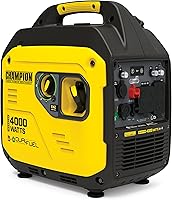
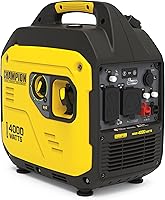
The Champion 4000W RV Inverter produces less than 3% THD. It suits campers who need an RV connection and more capacity than a small charging-focused generator.
Champion's recoil-start model weighs 48.1 lb and includes CO Shield automatic shutoff. Skip it if emergency home backup is your main purpose: Champion specifically does not recommend this model for that use.
For the broader design tradeoffs, read our guide to inverter versus regular generators.
Does an inverter generator change engine speed?
Many inverter generators slow down under light loads and speed up as demand rises. Economy Mode can help during long periods of charging devices or running a few lights.
A motor starting may cause a brief jump in engine speed. Follow the manual's Economy Mode instructions for large starting loads rather than assuming the lowest-speed setting fits every appliance.
The Westinghouse iGen1500c 1500W Inverter offers 1,500 peak watts and less than 3% THD. Its household outlets and USB ports suit a buyer powering a laptop, lights, and other modest loads whose combined demand fits.
Skip this model for electric space heating or a typical RV air conditioner. Its limited continuous output leaves little room for power-hungry appliances, even if their plugs fit.
For more context, compare inverter versus regular generators, then calculate what size generator you need.
What can an inverter generator power?
An inverter generator can power equipment within both its continuous and starting limits. Running watts describe sustained output; starting or surge watts cover brief extra demand.
Add the running watts of everything you'll use together. For motors and compressors, check startup requirements and allow for the largest expected start while other equipment remains on.
For example, a 600-watt running load plus an appliance drawing 1,800 watts during startup creates a temporary 2,400-watt demand. Those are example loads, so use appliance labels or manuals for your own calculation.
The WEN 3600W RV Inverter (56360iX) suits RV users who want more capacity than a charging-focused unit and a fuel shutoff for storage preparation.
WEN specifies under 1.2% THD at full load and includes CO Watchdog automatic shutdown. Skip it if you need 240V output or your planned loads exceed its capacity.
See what a 3000-watt generator can run for load-planning examples. Our best inverter generators guide covers more choices, while our quiet generators guide helps narrow sound-focused options.
Are inverter generators quieter and more fuel efficient?
They can use less fuel and make less noise at light loads because the engine doesn't always need to run at full speed. Heavy demand reduces that advantage.
Compare sound figures only when measurement distance and load match. Champion specifies 64 dBA from 23 feet, while WEN gives 65 decibels at quarter load without a matching distance here.
Those figures don't support a fair head-to-head ranking. Placement, nearby walls, and the direction of the exhaust also affect the sound reaching your campsite or home.
Treat maximum run time as a load-specific figure. Champion quotes up to 10 hours at 25% load, while WEN quotes up to 5 hours at half load; these aren't equivalent operating conditions.
What should you check before buying an inverter generator?
Start with load capacity and connection requirements, then check portability and maintenance needs. A model is useful only if you can safely place, connect, and move it.
For RVs, match the outlet and electrical requirements to the camper. A TT-30R receptacle doesn't guarantee enough output for every appliance, and a household outlet marked 20A doesn't mean the generator can supply that much through it continuously.
Also check whether you need 120V or 240V service. A plug adapter changes the connection shape, not the generator's voltage or available power.
If you're choosing for home circuits, plan the connection before buying. Our generator transfer switch guide explains why house wiring needs proper transfer equipment.
Think about lifting, too. Account for fuel and oil weight, vehicle loading height, and whether someone will help move the unit.
Parallel operation may provide an expansion path, but compare the cost and handling of 2 units with one larger generator. More equipment also means more storage and maintenance.
How do you set up an inverter generator safely?
Operate it outdoors, at least 20 feet from homes, with exhaust directed away from doors, windows, and vents. Never run it inside a home, garage, RV, or enclosed space, even with doors open.
Keep working CO alarms inside nearby occupied buildings. A generator's CO sensor is a backup feature and does not make an unsafe location safe.
Read our guide to generator carbon monoxide risks and the CPSC's carbon monoxide guidance.
Before starting, follow this sequence:
- Place the generator on firm, level ground and check oil and fuel as directed.
- Inspect cords and use outdoor-rated cables sized for the load and distance.
- Start with loads disconnected, then connect equipment in the manual's recommended order.
- Watch for overload warnings and disconnect excess loads if needed.
Keep the unit dry without enclosing it or blocking airflow. Review whether a generator can run in the rain before planning wet-weather use.
Never feed a wall receptacle from a generator. Grounding and bonding requirements depend on the generator and connection method, so follow the manual and use a qualified electrician for house connections.
What care and operating mistakes should you avoid?
Follow the oil, air-filter, fuel, and storage schedule in the manual. Low-oil shutdown helps protect an engine but doesn't replace regular checks.
Stop the engine and let it cool before refueling. Keep fuel in approved containers away from ignition sources, and follow local storage rules.
WEN's fuel shutoff lets the engine consume fuel remaining in the carburetor before stopping. That helps reduce stale-fuel buildup there, but it doesn't replace the rest of the storage procedure.
Avoid these common mistakes:
- Sizing by peak watts alone: Use continuous output for loads that stay on.
- Starting everything together: Stagger motor starts where practical.
- Ignoring cord losses: Long or undersized cords can cause voltage drop and overheating.
- Assuming low THD prevents overload: Waveform quality and capacity are separate limits.
Can you connect inverter generators together?
Some models support parallel operation with approved equipment, increasing available output. Compatibility and outlet limits still govern what you can run.
The Champion can connect with another compatible 4000-watt Champion inverter using its optional parallel kit. The Westinghouse can pair with another parallel-port-equipped Westinghouse inverter using the required Westinghouse parallel cord.
Check the exact models in both manuals before buying accessories. Never improvise a cable between ordinary outlets or assume combined output creates 240V service.
Which inverter generator should you choose?
Choose the Champion for compatible RV loads, the Westinghouse for modest portable loads, or the WEN for RV use with carburetor fuel shutoff. Skip any model whose continuous output, startup capacity, or connections don't fit your plan.
Knowing how an inverter generator works explains its controlled AC output and variable-speed benefits. Your buying decision still comes down to the equipment you'll run and how you'll connect it safely.
Compare the best inverter generators once your shortlist is clear. If the load calculation remains uncertain, use how to choose a generator size before ordering.
Frequently asked questions
How does an inverter generator make electricity?
An inverter generator uses a fuel-burning engine to spin an alternator, then converts the alternator's AC output to DC; an inverter circuit turns that DC into controlled AC for the outlets. This separates output frequency from engine speed, allowing many models to slow down under lighter loads.
Is inverter generator power safe for electronics?
Many inverter generators produce low-distortion AC suitable for electronics when used within their limits; check your equipment's voltage, frequency, and power requirements, along with any generator guidance from its manufacturer. A low THD figure describes waveform quality; it doesn't increase available wattage or remove the need for proper connections.
Does an inverter generator run at a constant speed?
Many inverter generators vary engine speed with electrical demand, especially when Economy Mode is active; the engine can slow down for small loads and speed up as demand rises. Follow the manual for motor-driven equipment, since some starting loads may call for Economy Mode to be turned off.
Can you connect two inverter generators together?
Some inverter generators can operate in parallel with compatible units and approved connection equipment; check both manuals for model compatibility, combined output, and outlet limits before buying a kit. Never join ordinary outlets together or assume that two generators from the same brand can automatically work as a pair.