Can a Generac Generator Run on Natural Gas?
Yes. Many Generac home backup generators run on natural gas, including air-cooled standby models that connect to your gas line and switch on during an outage. Tri-fuel portables make the same switch, though output drops a little compared with gasoline.
On this page (8 sections)
- How do you know which Generac models run on natural gas?
- Why does a generator make less power on natural gas?
- What does a natural gas connection involve?
- Does natural gas have a supply limit for a generator?
- When is a tri-fuel portable the simpler choice?
- Where should a natural gas generator sit?
- How do you size a generator for natural gas use?
- Is natural gas the right fuel for your backup plan?
Yes. Many Generac generators run on natural gas, including home standby units built to sit on a pad and trip on automatically when the grid drops.
Tri-fuel portables from other brands do the same job, and choosing between them comes down to how you want the fuel delivered.
If you are weighing a fixed standby unit against a portable, the fuel question is the first one to settle. The appliance determines the gas line, the line determines the cost, and the cost shapes the whole plan.
How do you know which Generac models run on natural gas?
Look at the fuel type in the model name and spec panel before anything else. Generac sells its home standby line as natural gas or liquid propane units, and the two are not the same build.
Generac's home standby range lists Guardian and other air-cooled models that take natural gas from a utility line. Liquid-cooled units cover larger homes with bigger loads.
The installer sizes the unit around the home's connected load, not the other way around.
A tri-fuel portable works from the same idea. The WEN 14500W Tri-Fuel runs a selection dial across gasoline, propane, and natural gas, so the same engine accepts whichever fuel you have on hand.
There is no second carburetor to swap and no hose change between the three settings.
The key check is the fuel rating on the label. A generator listed for natural gas will state its running watts on that fuel, and that figure is the one that matters at your panel.
Why does a generator make less power on natural gas?
Natural gas carries less energy per cubic foot than gasoline, so the same engine produces fewer watts when it burns it. A tri-fuel portable shows the gap clearly on its spec panel.
The WEN 14500W Tri-Fuel (TF-1450X) puts out 11,500 running watts on gasoline and 8,750 running watts on natural gas. Propane sits between the two at 10,300 running watts.
That pattern holds across tri-fuel machines.
Plan your circuits against the lowest number. If a generator runs 8,750 watts on natural gas, that is your ceiling, whatever the gasoline rating says on the box.
This is normal engine behavior, not a defect. Gasoline is a liquid with high energy density, while natural gas arrives as a vapor through a pipe at line pressure.
The engine breathes a thinner fuel, so each stroke delivers less push.
What does a natural gas connection involve?
A licensed gas fitter runs a dedicated line, a shutoff, and a quick-connect at the generator. This is not a weekend homeowner job.
Natural gas arrives under pressure from the utility. The installer checks pipe size against the generator's gas demand, tests for leaks, and sets the regulator so the unit gets steady pressure at full load.
For a standby unit, the gas line runs to the pad and the unit sits on a permanent concrete or composite base. For a portable, the line ends in a quick-connect fitting that the included hose attaches to.
The WEN TF-1450X ships with an NG quick-connect adapter and a 6-foot LPG hose. The adapter lets you match the generator inlet to a stub the gas fitter installs.
The hose covers the propane side, so you can switch between the two gas fuels without buying extra fittings.
Budget for the gas work separately from the generator. A long line, a larger meter, or a trench to a detached pad adds cost quickly.
Does natural gas have a supply limit for a generator?
Yes. Your gas meter and service line may not carry enough for a generator at full load.
This is the detail that surprises most homeowners.
A whole-home standby can pull a large volume of gas in an hour, and the meter has to handle the generator plus the house furnace, water heater, and range at the same time. Utilities often install a dedicated meter or size the service to cover the appliance.
Ask the gas fitter to calculate the total demand before ordering the generator. A unit that fits a home's electrical load can still fail on gas capacity.
For a tri-fuel portable, a standard home gas stub usually feeds it fine, though a long run or small pipe still reduces pressure. The gas fitter measures and adjusts the regulator.
When is a tri-fuel portable the simpler choice?
A tri-fuel portable suits homes that want natural gas backup without a permanent install. It moves where you need it and stores between outages.
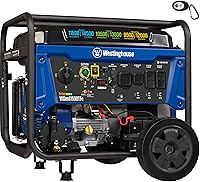
The Westinghouse 18000W Tri-Fuel delivers 14,500 running watts on gasoline and runs on propane or natural gas through the same panel. Its 713cc engine uses full-pressure lubrication and an automotive-style oil filter, and the unit holds up to 16 hours at 25 percent load on a 10.5-gallon tank.
It pairs with a Westinghouse WATS200 transfer switch for automatic backup, and the switch is sold separately.
What does the bigger Westinghouse add?
The Westinghouse 28000W Tri-Fuel goes bigger, with 20,000 running watts on gasoline from a 999cc V-twin. Its 17.2-gallon tank supports extended runs, and its 125A terminal block lets a licensed electrician hardwire it to a home panel for full delivery.
What does the WEN bring to the table?
The WEN TF-1450X sits at a lower output but keeps a 12-hour half-load runtime on its 8.2-gallon tank, with electric start and a CO Watchdog shutdown sensor. Its panel carries four 120V 5-20R outlets plus 120V/240V L14-30R and 14-50R transfer-switch-ready outlets and a 12V DC automotive outlet.
A portable is the practical pick when a gas line is easy to reach and you want the option to run on gasoline during a long outage. A standby unit wins when the generator lives outside year-round and starts itself.
Where should a natural gas generator sit?
Outside, well away from windows, doors, and vents, with the exhaust pointing away from the house. This rule applies to standby and portable units alike.
A natural gas generator still burns fuel and still makes carbon monoxide. The pipe brings fuel, not fresh air, so the unit cannot sit indoors.
Our guide on whether you can you run a generator in the garage explains why the CO risk is real even with the door open. The Westinghouse units carry a CO sensor that shuts the generator down when carbon monoxide rises, and the WEN uses its Watchdog CO Shutdown Sensor for the same job.
Neither replaces a safe outdoor spot.
Weather is the other factor. Rain and snow will not stop a generator, but the unit needs a cover or a dry spot that still allows airflow.
Read can a generator run in the rain before you place one.
For a portable, position it on level ground outside, run the cord to the transfer switch or inlet, and keep the gas quick-connect out of standing water. The Westinghouse 28000W Tri-Fuel adds never-flat wheels, foldable steel handles and a lift bracket.
Frames at this weight still call for two people when you move them into place.
How do you size a generator for natural gas use?
Add up the running watts of every circuit you want to back up, then add the largest motor's starting surge. Size the generator against its natural gas rating.
A furnace blower, refrigerator, sump pump, and a few lights sit well under 8,750 watts on paper. Startup surge on a well pump or air conditioner is the number that pushes you to a larger unit.
The 28000W unit's two 14-50R 50A outlets and two L14-30R 30A outlets let a single cord hookup carry major appliances at once.
Our guide to what can a 3000 watt generator run shows the same sizing math on a smaller scale, and the method carries over to a 9,000 or 20,000 watt machine.
Keep a written load list at the panel. It makes the installer's job easier, and it tells you which circuits to drop if a big appliance cycles on.
If you want a broader look at backup options before deciding on fuel, our roundup of the best generator for power outage covers what each type handles.
Is natural gas the right fuel for your backup plan?
Yes, if you have a gas line and want automatic refueling without tanks. It is the quietest option in practice because there is no delivery schedule and no propane to run out at 2 a.m.
The trade-off is a lower watt rating per engine, a licensed install, and a utility that must supply enough volume. A portable tri-fuel lets you hedge: natural gas at home, propane or gasoline when you travel.
If the gas work looks expensive, propane is a fine second choice. Pick the fuel you can keep supplied, then size the generator for the load on that fuel.
To settle on a unit, compare the natural gas running watts first and the gasoline peak second. For most homes with a meter, a natural gas generator is the answer to keeping the lights on.
Frequently asked questions
Can a Generac generator run on natural gas?
Yes. Generac makes air-cooled and liquid-cooled home standby generators that run on natural gas, plus tri-fuel portables that offer it as one option.
Check the model's fuel rating before you buy, because output changes with the fuel.
How much power does a generator lose on natural gas?
Expect less output than gasoline, often around 10 to 20 percent on a tri-fuel portable. The WEN TF-1450X drops from 11,500 running watts on gasoline to 8,750 on natural gas, so size your load against the natural-gas number.
Do I need a plumber to connect a generator to natural gas?
Yes. A licensed gas fitter should run the line, install the shutoff and quick-connect, and test for leaks.
Natural gas is piped and pressurized, so this is not a job for a garden hose and a wrench.
Is natural gas cheaper than propane for a generator?
Usually. Natural gas comes through a metered utility line, so you avoid tank refills and propane deliveries.
Ask your utility about the appliance allowance and whether a dedicated meter fits your setup.