What Can a 3000 Watt Generator Run?
What can a 3000 watt generator run? A model rated for 3000 running watts can power a refrigerator, lights, chargers, and other small loads together if their combined demand and motor startup surges fit its limits.
On this page (8 sections)
- What can a 3000 watt generator run at once?
- How do you calculate running watts and starting watts?
- Can it run a refrigerator and freezer together?
- Can it run an air conditioner or microwave?
- Which of these generators fits your load plan?
- How should you set up and connect a generator?
- What care and use mistakes should you avoid?
- What can a 3000 watt generator run for your needs?
A generator rated for 3000 running watts can power a refrigerator, lights, a router, and chargers together when their total draw and startup surges fit.
What can a 3000 watt generator run beyond those essentials? A microwave, coffee maker, or small air conditioner may fit, but you'll often need to switch other loads off.
Start with the generator's continuous rating, then check your appliances. A large wattage number in a model name may describe brief starting power rather than the power available throughout the day.
What can a 3000 watt generator run at once?
A 3000 running-watt generator can support several low-draw devices alongside a larger appliance, provided enough capacity remains for motor starts. Your appliance labels determine the combination, not a universal list of household items.
| Load plan | What to check |
|---|---|
| Refrigerator, LED lights, router, and chargers | Refrigerator startup demand plus everything already running |
| Microwave and a few small devices | Electrical input watts, rather than cooking output |
| Small air conditioner and lights | Compressor startup surge and required voltage |
| Coffee maker or portable heater | Heating demand and capacity left for cycling appliances |
| RV appliances | Total draw, startup needs, plug, and outlet limits |
Electric heating and cooking can consume much of the available output. Turn a high-draw appliance off before using another, rather than expecting normal household use from this size generator.
For an overview of fuel types and generator designs, see our portable generator guide.
How do you calculate running watts and starting watts?
Add the watts used by devices running together, then check the larger demand created when a motor starts. Both totals must fit, along with the limits of each outlet and cord.
- Record each device's electrical input watts.
- Find startup requirements for refrigerators, pumps, compressors, and other motor loads.
- Add the running watts of everything you want on together.
- For each motor start, add that appliance's full starting watts to the running watts of the other devices.
- Allow for automatic restarts or overlapping motor starts.
Don't add an appliance's full starting watts to its own running watts unless its instructions define the surge figure as additional power. That would count part of its demand twice.
What can a 3000 watt generator run in a worked example?
A hypothetical refrigerator-and-small-device plan could fit comfortably if its running and startup totals stay below the generator's limits. These example figures show the math; replace them with your appliances' requirements.
Suppose a refrigerator needs 200 watts running and 1200 watts during startup. Add 60 watts of lights, a 20-watt router, a 50-watt fan, and 70 watts of chargers.
The running total is 400 watts, while refrigerator startup brings demand to 1400 watts. Adding a hypothetical 1500-watt heater raises those totals to 1900 and 2900 watts, leaving little startup room if 3000 watts is also the generator's peak limit.
If a label gives only volts and amps, their product gives volt-amperes, which may differ from actual watts for motor loads. Ask the appliance manufacturer for unclear running or starting requirements.
Build your own table with our guide to what size generator you need.
Can it run a refrigerator and freezer together?
A refrigerator and freezer can share a generator if their running loads and possible compressor starts fit. Plan for both compressors to restart, even if you initially turn them on separately.
Starting one appliance first helps during setup, but thermostats control later cycles. Switching on a microwave while both cooling appliances are running can remove the reserve they need.
Keep food storage, lights, and communications ahead of optional heating or cooking loads. For medical equipment, arrange a backup plan with its manufacturer and your care team.
Can it run an air conditioner or microwave?
Some air conditioners and microwaves fit this capacity, but their electrical requirements decide the answer. Microwave cooking watts are not input watts, and an air conditioner's cooling capacity does not tell you its startup demand.
Read the microwave's electrical input label before adding it to your load plan. Turn off another high-draw appliance first if needed.
For an air conditioner, check voltage, running demand, and compressor startup requirements. Stop if it struggles to start or trips the generator, then resolve the capacity or connection problem before trying again.
A TT-30R RV receptacle helps with connection, but its shape does not promise enough power for every RV appliance. Our guide to choosing a generator for an RV or camper explains how to plan the whole RV load.
Which of these generators fits your load plan?
The Champion fits buyers who need a true 3000-watt continuous rating for permitted uses, while the two WEN models suit smaller load plans. Compare their running output first, then startup capacity and connections.
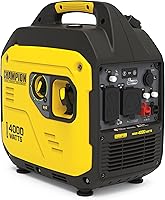
Champion 4000W RV Inverter: for larger camping and RV loads
The Champion supplies 3000 running watts and 4000 starting watts. It suits campers or RV users whose calculated demand needs more continuous capacity than either WEN here.
At 48.1 lb, it includes a 120V 25A TT-30R outlet, a household duplex outlet, and a 12V automotive-style outlet. Its inverter output has less than 3% total harmonic distortion.
Champion includes CO Shield automatic shutoff and backs the unit with a 3-year limited warranty. Skip it for emergency home backup, which Champion does not recommend for this model, or if you need electric start rather than recoil start.
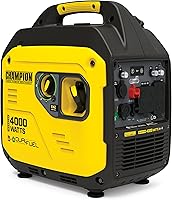
WEN 3600W RV Inverter: for lighter RV power plans
The WEN 56360iX suits RV users who can keep their load below its 2900 rated watts, with startup demand within its 3600-watt surge limit. It's a close alternative when the Champion's extra continuous capacity isn't needed.
It weighs 46.3 lb and includes household, RV, DC, and USB connections. Fuel shutoff uses up fuel remaining in the carburetor before shutdown, which helps reduce problems from stagnant fuel.
WEN includes CO Watchdog automatic shutdown and a 3-year warranty. Skip it if your plan requires a full 3000 watts continuously or your air conditioner's startup demand exceeds its capacity.
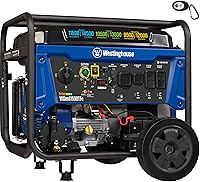
WEN 2800W Inverter: for lights and modest appliance loads
The WEN 56280iX suits buyers with a smaller appliance plan, offering 2250 rated watts and 2800 surge watts. Choose it for charging, lighting, and a compatible modest appliance load rather than treating it as a 3000 running-watt unit.
It has two household receptacles, a 12V DC receptacle, and two USB ports, but no TT-30R RV receptacle. WEN includes fuel shutoff, CO Watchdog, and a 3-year warranty.
Skip it if you need an RV receptacle or expect to combine several demanding appliances. Its lower continuous capacity leaves less room for load changes.
How should you set up and connect a generator?
Set it up outdoors in a dry location that meets the manual's clearance rules, with exhaust directed away from buildings. Never operate it in a home, garage, or partly enclosed space, even with doors open.
CO shutoff is a backup feature, not permission to operate near doors, windows, or vents. Learn more about how generators give off carbon monoxide.
Check oil and fuel before starting, follow the manual's startup sequence, and connect loads one at a time. Use outdoor-rated cords sized for the current and length, and protect connections from moisture.
Never feed power into a household wall outlet. Have a qualified electrician install an approved transfer connection before powering home wiring; our generator transfer switch guide explains the connection options.
Keep the generator dry without enclosing it or trapping exhaust. Read our guide to using a generator in the rain before planning wet-weather operation.
What care and use mistakes should you avoid?
Avoid repeated overloads, refueling a hot engine, and leaving storage care until the generator won't start. Follow the model's maintenance schedule, including oil checks and any break-in instructions.
If an overload occurs, disconnect appliances and follow the reset procedure. Reduce the load before reconnecting, rather than restarting with the same demand.
Stop the engine and let it cool before refueling. For storage, follow the manual's fuel instructions; a carburetor fuel-shutoff feature does not replace care for fuel left in the tank.
Don't compare runtime claims without checking the stated load. Higher demand uses fuel faster, so plan fuel stops and maintenance around actual use with our guide to how long a generator can run continuously.
What can a 3000 watt generator run for your needs?
Choose the Champion for the largest permitted camping or RV load among these options, the WEN 56360iX for a slightly lighter RV plan, or the WEN 56280iX for modest loads without an RV receptacle. Choose more capacity if essential appliances leave too little room for automatic motor starts.
The practical answer to what a 3000 watt generator can run comes from your simultaneous loads, startup needs, and connections. Use our generator sizing guide to finish that load plan before choosing.
Frequently asked questions
Can a 3000 watt generator run a refrigerator?
Yes, if the refrigerator's running draw and startup surge fit the generator's limits alongside other connected devices.
Check the appliance manual for both figures and reserve room for its compressor to restart automatically. A refrigerator that fits by itself may overload the generator when another large appliance is running.
Can a 3000 watt generator run a window air conditioner?
It can run some window air conditioners, provided their electrical input and compressor startup demand fit the generator's output.
Check the air conditioner's manual rather than judging by cooling capacity alone. Include every other connected load, and confirm the required voltage before choosing a generator.
Can I run a 3000 watt generator at full capacity?
Follow the generator manual's continuous-load limits rather than treating its starting wattage as usable ongoing power.
Even when the running total fits, a cycling compressor can add a surge. Leave enough unused capacity for that restart, and account for any reduction in output described for your operating conditions.
Can a 3000 watt generator power a whole house?
A 3000 watt generator generally powers selected essentials rather than a whole house operating normally. Large heating, cooking, and cooling loads can exceed its capacity.
Choose priority appliances, calculate running and startup demand, and have a qualified electrician arrange an approved transfer connection before supplying power to household wiring.