9 Best Portable Generators for Home Backup (November 2026)
The best portable generators for home backup include the Westinghouse 14500W Tri-Fuel for larger household load plans, the Westinghouse 13500W Tri-Fuel for homes with gas service, and the Westinghouse 12500W Tri-Fuel for managed household essentials.
On this page (8 sections)
- Which portable generators work best for home backup?
- How do you size the best generator for home backup?
- Is tri-fuel or dual fuel better for home backup?
- When does an inverter generator make sense for home backup?
- What safety setup does a home backup generator need?
- How should you prepare and maintain a backup generator?
- Which mistakes lead to the wrong backup generator?
- Which home backup generator should you choose?
The best generator for home backup here is the Westinghouse 14500W Tri-Fuel for larger selected-circuit plans and three fuel choices. For a few plug-in essentials, the lighter Champion inverter is a more practical starting point.
Choose around what must stay powered, how you'll connect it and which fuel you can keep available. The largest peak-watt number won't answer those questions.
Start with our generator size guide, or compare generators for power outages for short or occasional outages.
Our picks at a glance
-
1

-
2

-
3

- 4
 Check it
Champion 4000W Dual Fuel RV Inverter
Best for a few plug-in essentials - 5
 Best for larger gas-and-propane plansCheck it
- 6
 Check it
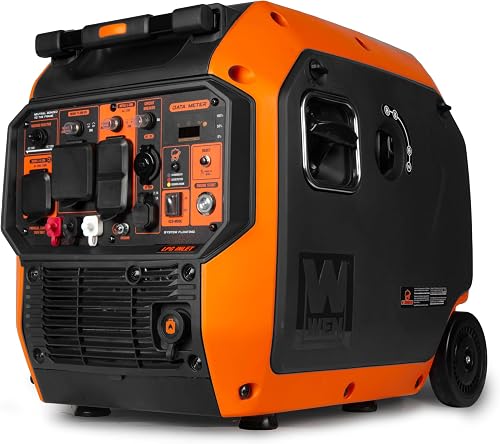
WEN 4800W Dual Fuel RV Inverter (DF480iX)
Best for rolling between storage spots - 7
 Check it
Westinghouse 6500W Dual Fuel Home Backup
Best for focused essential circuits - 8
 Check it
WEN 6800W Dual Fuel RV Inverter (DF680iX)
Best for smaller 240V backup plans - 9
 Best for high-demand propane householdsCheck it
Which portable generators work best for home backup?
The three Westinghouse tri-fuel picks suit broader household plans, while the smaller inverters suit fewer appliances and easier movement. The remaining dual-fuel models fill the gap between plug-in essentials and larger selected-circuit setups.
StalwartStore compared running output, fuel choices, starting methods, outlets and movement needs. For the differences between generator types, start with our portable generator guide.
| Product | Best for | Running watts | Fuel | Home connection | Our score |
|---|---|---|---|---|---|
| Westinghouse 14500W Tri-Fuel | larger household load plans | 11,500 on gasoline | Gasoline, propane or natural gas | 30A and 50A outlets | 9.2 |
| Westinghouse 13500W Tri-Fuel | homes with gas service | 10,500 on gasoline | Gasoline, propane or natural gas | 30A and 50A outlets | 9.1 |
| Westinghouse 12500W Tri-Fuel | managed household essentials | 9,500 on gasoline | Gasoline, propane or natural gas | 30A and 50A outlets | 8.9 |
| Champion 4000W Dual Fuel RV Inverter | a few plug-in essentials | 3,000 on gasoline | Gasoline or propane | 120V outlets; check compatibility | 8.8 |
| Westinghouse 13500W Dual Fuel | larger gas-and-propane plans | 10,500 on gasoline | Gasoline or propane | 30A and 50A outlets | 8.7 |
| WEN 4800W Dual Fuel RV Inverter (DF480iX) | rolling between storage spots | 4,000 on gasoline | Gasoline or propane | 120V outlets; check compatibility | 8.6 |
| Westinghouse 6500W Dual Fuel Home Backup | focused essential circuits | 5,300 on gasoline | Gasoline or propane | 30A L14-30R outlet | 8.6 |
| WEN 6800W Dual Fuel RV Inverter (DF680iX) | smaller 240V backup plans | 5,100 on gasoline | Gasoline or propane | 120V/240V L14-30R outlet | 8.5 |
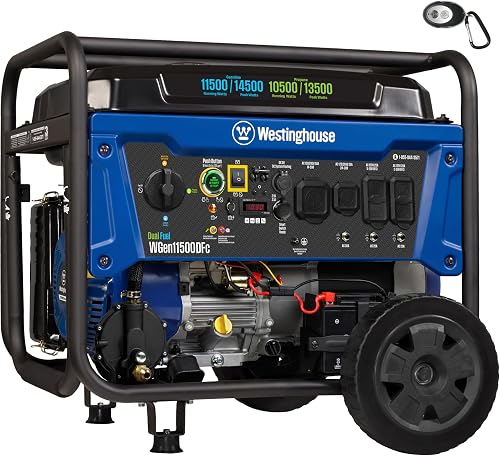
| Westinghouse 14500W Dual Fuel | high-demand propane households | 11,500 on gasoline | Gasoline or propane | 30A and 50A outlets | 8.4 |
Westinghouse 14500W Tri-Fuel: Best for larger household load plans
- 11,500 running watts on gasoline
- Gasoline, propane or natural gas
- Remote and electric start
- 30A and 50A outlets
Choose it for a larger selected-circuit plan that benefits from three fuel choices. Arrange compatible transfer equipment and a practical route to its outdoor operating spot.
Pros
- Three fuel choices
- Remote and electric start
- Less than 5% THD
Cons
- 230 lb
- Transfer equipment sold separately
Choose the Westinghouse 14500W Tri-Fuel when your load calculation calls for substantial capacity and you want several ways to fuel it. Its 11,500 gasoline running watts make it the strongest starting point here for a larger selected-circuit plan.
The 30A and 50A outlets give your electrician connection options, though the inlet, cord and transfer equipment must work together. A larger outlet alone doesn't increase the capacity of the rest of the system.
Westinghouse states up to 19 hours at 25% load on its 9.5-gallon gasoline tank. A home drawing more power will need a different refueling schedule.
Its pressure-lubricated engine and reusable oil screen still require the care schedule in the manual. Skip this 230 lb model if you cannot move it safely to a suitable outdoor location, or if a small inverter covers your needs.
Westinghouse 13500W Tri-Fuel: Best for homes with gas service
- 10,500 running watts on gasoline
- Gasoline, propane or natural gas
- Remote, electric and recoil start
- 30A and 50A outlets
A fit for households that want natural gas capability and whose loads fit its output. Size the plan for the fuel you will actually use.
Pros
- Three fuel choices
- Recoil starting backup
- CO sensor shutdown
Cons
- 230 lb
- Transfer equipment sold separately
The Westinghouse 13500W Tri-Fuel suits a household that wants natural gas as an option but doesn't need the top pick's gasoline capacity. It supplies 10,500 running watts on gasoline, with remote, electric and backup recoil starting.
Choose it after checking capacity on your intended fuel. A home planning to rely on natural gas should size around that mode, rather than carry the gasoline figure into its load calculation.
The 30A and 50A outlets support compatible home connection equipment. Westinghouse also supports pairing this model with the separately sold WATS200 automatic transfer switch.
That option needs a complete installation plan, including safe placement and fuel supply. Remote starting by itself doesn't detect an outage or transfer household circuits.
At the same 230 lb weight as the top pick, this model offers no weight advantage. Skip it if your priority is a lighter machine, or your planned loads require the larger model's capacity.
Westinghouse 12500W Tri-Fuel: Best for managed household essentials
- 9,500 running watts on gasoline
- 8,500 running watts on propane
- 7,500 running watts on natural gas
- Remote, electric and recoil start
Keep three fuel choices while planning around a smaller set of household loads. Its fuel-specific output makes careful sizing especially useful.
Pros
- Three fuel choices
- Remote and electric start
- CO shutdown
Cons
- 215 lb
- Output falls on propane and natural gas
The Westinghouse 12500W Tri-Fuel fits households willing to manage which larger appliances run together. It keeps natural gas capability without moving to the two larger tri-fuel choices.
Its running output is 9,500 watts on gasoline, 8,500 on propane and 7,500 on natural gas. That difference matters if a pump, refrigerator and another motor load might start close together.
Choose it when the lowest output you expect to use still covers your essential-load plan. Switching fuels shouldn't force you to discover during an outage that your usual appliance combination is too much.
Westinghouse states up to 12 hours from its 6.6-gallon gasoline tank, so arrange safe refueling breaks. Remote, electric and recoil starting offer several ways to get it running.
Skip it for frequent lifting or stair access: at 215 lb, it remains a heavy machine. It also isn't the right size if your required loads leave no startup margin on natural gas.
Champion 4000W Dual Fuel RV Inverter: Best for a few plug-in essentials
- 3,000 running watts on gasoline
- 2,700 running watts on propane
- 51.8 lb
- Under 3% THD
Its lighter frame suits households powering a short list of plug-in appliances. Skip it for 240V loads or a broad household circuit plan.
Pros
- Lighter than the other picks
- Gasoline and propane operation
- CO Shield auto shutoff
Cons
- Limited running capacity
- Recoil start
The Champion 4000W Dual Fuel RV Inverter is the choice for a short list of plug-in essentials and easier transport. Its 51.8 lb weight makes it more manageable than the other picks, though lifting still needs care.
It supplies 3,000 running watts on gasoline or 2,700 on propane. A refrigerator, a few lights and communication equipment may fit, but you must check their actual demand and allow for compressor startup.
Its under 3% THD output suits an essentials plan that includes electronics. Recoil starting means you should be comfortable pulling a starter cord before relying on it for emergencies.
The outlets are 120V, including the RV-style TT-30R. Skip this model for 240V appliances, and don't assume an RV adapter creates a suitable household connection.
An optional parallel kit offers an expansion route with compatible Champion equipment. Check the combined system's outlets and limits before buying a second unit.
Westinghouse 13500W Dual Fuel: Best for larger gas-and-propane plans
- 10,500 running watts on gasoline
- Gasoline or propane
- Remote, electric and recoil start
- 30A and 50A outlets
Choose it when a larger selected-circuit plan uses gasoline or propane. Natural gas households should choose a tri-fuel model instead.
Pros
- Remote and electric start
- Recoil starting backup
- CO sensor shutdown
Cons
- 230 lb
- No natural gas operation
Choose the Westinghouse 13500W Dual Fuel if your fuel plan uses gasoline and propane and your loads need a larger machine. Its 10,500 gasoline running watts match the similarly named tri-fuel model.
This is a sensible shortlist option when you have no natural gas service or no intention of installing a generator gas connection. Compare the complete setup, including cords, inlet and transfer equipment, rather than choosing by the generator name alone.
Remote and electric starting reduce the effort of routine startup, with recoil available as a backup. Keep the starting battery maintained so electric start remains useful after months in storage.
Westinghouse states up to 19 hours at 25% load from the gasoline tank. Build your outage plan around expected demand and available fuel instead of assuming every tank will last that long.
Skip it if natural gas operation matters, or if moving a 230 lb unit to its operating spot would be difficult.
WEN 4800W Dual Fuel RV Inverter (DF480iX): Best for rolling between storage spots
- 4,000 rated watts on gasoline
- Gasoline or propane
- Electric and recoil start
- Wheels and telescoping handle
Wheels, a pull handle and electric start suit a movable essentials setup. Confirm propane running output with WEN before sizing a propane load plan.
Pros
- Electric start
- Fuel shutoff
- CO Watchdog shutdown
Cons
- 78.5 lb
- Propane running output needs confirmation
The WEN 4800W Dual Fuel RV Inverter suits buyers who want electric start and a wheeled generator for a modest appliance plan. Its 4,000 rated gasoline watts give more room than the Champion for simultaneous loads.
Wheels and a telescoping handle help on a suitable surface, but its 78.5 lb frame still matters at steps and doorways. Measure the route from storage to the outdoor operating area before deciding where it will live.
Its 120V outlets fit a plug-in appliance approach. Skip it if your essential equipment needs 240V, even when that equipment's watt demand appears low enough.
Fuel shutoff lets the engine use fuel remaining in the carburetor before stopping, which helps reduce stale-fuel buildup. Follow WEN's storage instructions for the rest of the fuel system.
Confirm propane running output with WEN before sizing around that fuel. The gasoline capacity shouldn't stand in for a propane figure when choosing which appliances can run together.
Westinghouse 6500W Dual Fuel Home Backup: Best for focused essential circuits
- 5,300 running watts on gasoline
- 4,800 running watts on propane
- 30A transfer switch-ready outlet
- 120/240V selector switch
A middle option for selected essential circuits with a compatible home connection. Build a clear load schedule rather than expecting every appliance to run together.
Pros
- Gasoline and propane operation
- Transfer switch-ready outlet
- CO shutdown
Cons
- 135.6 lb
- Requires load management
The Westinghouse 6500W Dual Fuel Home Backup is a middle option for a defined set of essential circuits. Choose it when you want a compatible home connection without moving to one of the largest machines.
It provides 5,300 running watts on gasoline or 4,800 on propane. Plan around refrigeration, necessary pumps, heating controls and lighting before adding convenience appliances.
The L14-30R transfer switch-ready outlet and 120/240V selector support a planned circuit setup. Have your electrician confirm the required configuration, cord and inlet before an outage.
At 135.6 lb, it is lighter than the large Westinghouse picks, but wheels don't remove the difficulty of soft ground or steps. Keep its travel route clear.
Westinghouse states up to 14.5 hours of gasoline runtime. Skip this model if you expect electric heating, cooking and several motor loads to operate together without active load management.
WEN 6800W Dual Fuel RV Inverter (DF680iX): Best for smaller 240V backup plans
- 5,100 rated watts on gasoline
- 4,500 rated watts on propane
- L14-30R 120V/240V outlet
- Electric and recoil start
This inverter suits a smaller backup plan needing a compatible 240V connection. Its bonded neutral needs to be considered when selecting transfer equipment.
Pros
- 120V/240V outlet
- Fuel shutoff
- CO Watchdog shutdown
Cons
- 99.2 lb
- Limited capacity for large simultaneous loads
The WEN 6800W Dual Fuel RV Inverter is the inverter choice here for a smaller plan that needs a 120V/240V L14-30R connection. It produces 5,100 rated watts on gasoline or 4,500 on propane.
That makes it worth considering for selected circuits involving compatible 240V equipment. Voltage compatibility is only the first check: a pump's startup demand can still exceed the available capacity.
Its bonded-neutral configuration matters when choosing transfer equipment. Ask your electrician to match the generator's neutral arrangement to the installation, and don't change bonding yourself as a shortcut.
Electric start, recoil backup, wheels and a telescoping handle suit a generator that moves between storage and use. At 99.2 lb, it still needs a realistic movement plan.
Skip it if your household load calculation needs the capacity of the large open-frame models. Buying an inverter doesn't remove the need to schedule high-demand appliances or leave room for motors to start.
Westinghouse 14500W Dual Fuel: Best for high-demand propane households
- 11,500 running watts on gasoline
- Gasoline or propane
- Remote and electric start
- 30A and 50A outlets
Consider it for larger loads when your fuel plan uses gasoline and propane. Confirm its propane capacity against your household loads before buying.
Pros
- Remote and electric start
- Less than 5% THD
- CO sensor shutdown
Cons
- 230 lb
- No natural gas operation
The Westinghouse 14500W Dual Fuel suits a larger backup plan built around gasoline and propane. Its 11,500 gasoline running watts match the top pick, so its lower position here shouldn't obscure that capacity.
Choose between the two based on fuel access and the complete installation you need. The tri-fuel version is the better fit if natural gas belongs in your present or future plan.
This dual-fuel model has less than 5% THD output, plus remote and electric starting. Its 30A and 50A outlets need correctly matched connection equipment before they can serve household circuits.
For propane use, confirm running and startup capacity before settling your appliance list. Don't assume the gasoline output remains available after changing fuel.
Skip it for a small plug-in essentials plan or an awkward route from storage. Moving its 230 lb frame safely is part of making it useful during an outage, not a detail to solve afterward.
How do you size the best generator for home backup?
Size a home backup generator from simultaneous running demand plus motor startup needs. Use output on your chosen fuel, and check the capacity of the entire connection path.
Build your home backup generator load list
Split appliances into must-run, occasional-use and optional groups. Refrigeration and a sump pump may belong in the first group, while a microwave or coffee maker can wait until other loads are lower.
Record each appliance's voltage, running watts and startup requirement from its label or manual. Don't treat every heating system alike: furnace controls and a blower need a different plan from electric resistance heat.
For a simple example, suppose your chosen appliances total 2,000 running watts. If one motor needs 1,200 additional watts to start, that moment calls for 3,200 watts, assuming no other startup occurs together.
Leave useful headroom rather than planning to operate at the limit. Loads change, and automatic equipment can start without warning.
Our guide to what a 3000 watt generator can run helps with a short appliance list. For a complete circuit plan, use what size generator do I need?.
Check voltage and connection limits
Match voltage, outlet capacity, cord and inlet as well as watts. A 120V-only generator cannot run a 240V appliance through a simple plug adapter.
A large generator connected through a smaller inlet cannot send its full output through that connection. Ask your electrician how much capacity reaches your selected circuits and how loads should be distributed.
Central air conditioning, well pumps and other motor loads deserve special attention. Have their startup requirements checked before treating any model here as a whole-house solution.
Is tri-fuel or dual fuel better for home backup?
Choose tri-fuel when natural gas is a useful option; choose dual fuel when gasoline and propane cover your plan. Fuel flexibility helps most when you can actually obtain and use each fuel during an outage.
Gasoline is convenient for refilling a built-in tank, but it needs approved storage and rotation. Propane avoids keeping gasoline in the generator's carburetor during propane operation, though cylinders still need safe storage and enough capacity.
Natural gas can reduce trips for stored fuel, but it requires a suitable connection and adequate supply. Have a qualified gas professional check pressure, flow and line sizing for the generator and other gas appliances.
Output often changes with fuel, so choose the load plan before choosing the fuel supply. Cold weather and propane vaporization can also affect supply from cylinders, especially under sustained demand.
Read how a dual fuel generator works and compare the best dual fuel generators if two-fuel operation covers your needs.
When does an inverter generator make sense for home backup?
An inverter makes sense when its capacity and connections cover your essentials, and its size or power characteristics suit your household. A smaller machine can be easier to store and deploy than a large open-frame generator.
The Champion fits the shortest plug-in load plans. The WEN 4800W adds gasoline capacity and electric start, while the WEN 6800W adds a compatible 240V connection option.
Don't choose by noise figures alone. Measurement distance, load and conditions affect those numbers, so figures taken under different conditions aren't a fair direct comparison.
Power quality also needs a specific comparison. Some open-frame models here state low THD, while the inverters have their own power-quality figures.
Our guide to how inverter generators work explains the technology. Read inverter versus regular generators for the broader tradeoffs.
What safety setup does a home backup generator need?
A home backup generator needs safe outdoor placement, working CO alarms and a suitable electrical connection. Never operate it inside a home, garage, basement or shed, even with doors open.
Place it at least 20 ft from the home, with exhaust directed away from doors, windows and vents. Follow any greater clearance in the manual, and consider neighboring buildings too.
A CO shutdown sensor adds protection but cannot make an unsafe location acceptable. Keep working battery-powered or battery-backup CO alarms inside the home.
For home wiring, use correctly installed transfer equipment that isolates utility power. Read whether you need a generator transfer switch, and never feed generator power through a wall outlet.
For direct appliance connections, use outdoor-rated cords sized for their load and length. Protect them from damage and trip hazards, and avoid arrangements that require pinching cords through doors or windows.
Keep the generator dry without trapping exhaust or blocking cooling airflow. Our guide to using a generator in the rain explains why a general storage cover is unsuitable during operation.
Shut down and allow the engine to cool before adding gasoline. Store fuel away from ignition sources, and keep the exhaust area clear of combustible items.
How should you prepare and maintain a backup generator?
Prepare the complete setup before an outage, then maintain it by the manual's calendar and operating-hour schedule. A generator in storage needs attention even when it rarely runs.
Before first use, complete assembly, add the specified oil and check fuel connections. Learn the controls in daylight, including shutdown, overload reset and any voltage selector.
Arrange a practice outage routine with your household. Identify who can move the generator, which appliances stay off and how the connection sequence works.
During use, start and connect loads in the order directed by the manual and your electrician. Bring larger appliances online one at a time so their startup demands don't pile up.
Check oil as directed, with the engine stopped and positioned correctly. Low-oil shutdown protects the engine, but it doesn't replace routine checks.
Keep starting batteries charged, inspect cords and hoses, and track operating hours. After an outage, complete due maintenance and follow the storage procedure for fuel, carburetor and battery care.
Plan refueling and cooling breaks rather than expecting uninterrupted operation indefinitely. Our guide to how long a generator can run continuously explains what to account for.
Which mistakes lead to the wrong backup generator?
The biggest mistakes are buying by peak watts, ignoring fuel-specific output and leaving the connection plan until later. Each can turn an apparently suitable generator into a poor match.
Don't add every appliance in the house unless you truly need them together. A clear schedule for cooking, pumping and other large loads may let a smaller generator cover your priorities.
Don't mistake remote start or transfer-switch readiness for automatic backup. The compatible Westinghouse models need the separately sold WATS200 and a properly planned installation for that feature.
Don't overlook the route from storage. Wheels help on firm ground, but steps, mud and a heavy cord can make deployment difficult when the weather is bad.
Finally, include fuel storage, cords, inlet work and transfer equipment in the buying plan. The generator is one part of a working backup system.
Which home backup generator should you choose?
Choose the Westinghouse 14500W Tri-Fuel for a larger selected-circuit plan with useful access to all three fuels. Choose the smaller tri-fuel models when their fuel-specific capacity covers your loads.
For a few plug-in essentials, choose the Champion inverter if you can use recoil start. Pick the WEN 4800W for more gasoline capacity and electric start, or the WEN 6800W when a compatible 240V connection matters.
The Westinghouse 6500W fits a focused circuit plan, while the large dual-fuel models suit households using gasoline and propane. Confirm propane capacity before committing to a high-demand plan.
The best generator for home backup is the one your household can safely fuel, connect and operate for its required loads. Finish with a written appliance list using our generator sizing guide before you buy.
Our top 3 picks at a glance
-
1
-
2
-
3
Frequently asked questions
What size generator is best for home backup?
Choose capacity from the appliances you need together, including motor startup demand. Compare that load with running output on your chosen fuel, leaving room for changes in demand.
Use our generator sizing guide to build a practical load list before choosing a model or home connection.
Can a portable generator power a whole house?
A portable generator can power selected home circuits when its capacity, voltage and connection equipment match those loads. Whole-house coverage depends on the home's demand, especially heating, cooling and other large appliances.
Read whether you need a generator transfer switch before connecting any portable generator to home wiring.
Is a tri-fuel generator better for home backup?
Tri-fuel is useful when you can use natural gas as well as gasoline and propane. It adds a fuel option, but output and the gas connection still need to match your backup plan.
See how dual-fuel generators work if you only expect to use gasoline and propane.
Can an inverter generator run home appliances?
Yes, an inverter generator can run appliances within its running capacity and startup allowance. Check voltage as well as watts, since a 120V-only model cannot supply a 240V appliance.
A refrigerator, lights and internet equipment require a different plan from a well pump, central air conditioner or electric water heater.
Where should I run a portable generator?
Run it outdoors, at least 20 ft from the home, with exhaust directed away from doors, windows and vents. Follow any greater clearance in the manual, and never use a garage.
CO shutoff cannot replace safe placement; read about carbon monoxide risk and running a generator in the rain.


