Can a Portable Generator Be Stored Outside?
Yes, a portable generator can be stored outside, and for most homes that's the safer place. Keep it under a cover that lets air move, on a raised dry surface, and well away from windows, doors, and vents so fumes can't drift inside.
On this page (9 sections)
- Why is outside storage the safer choice for a generator?
- What makes an outside spot safe for a generator?
- Can a portable generator be stored outside under a cover?
- How should you prep a generator before outside storage?
- Which generator features matter for outside storage?
- How do you keep moisture and pests out of a stored generator?
- How often should you start a generator in outside storage?
- What should you check before the first run after storage?
- So, can a portable generator be stored outside?
Yes, a portable generator can be stored outside, and for most homes that's the safer place. Keep it under a cover that lets air move, on a raised dry surface, and well away from windows, doors, and vents so fumes can't drift inside.
A generator parked outside needs more care than one kept in a garage, but the trade-off is worth it. Carbon monoxide is the reason, since a fuel-burning engine kept in a closed space can leave fumes behind even when it's off.
Why is outside storage the safer choice for a generator?
Storing a portable generator outside removes the main carbon monoxide risk from your home. Engines give off carbon monoxide, and a garage or shed can hold that gas long after the unit shuts down.
The CDC calls carbon monoxide a colorless, odorless gas that can build up in enclosed spaces. That's why generator safety guidance tells you to run one outdoors only.
Storing it outside keeps the whole routine outdoors and keeps fuel vapors out of the house. Gasoline gives off fumes that can collect in a closed room, and a covered spot with moving air disperses them instead.
The one thing outside storage doesn't solve is weather. Rain, dust, and sun all shorten a generator's life if you leave it exposed, so the safe spot is outside and sheltered, not outside and bare.
What makes an outside spot safe for a generator?
Pick a flat, dry, raised spot under cover, at least 20 feet from the house. That's the same distance the CDC gives for running a generator, and it works well for storage too.
Check four things before you settle on a spot:
- Ground: level and firm, so the unit won't tip or sit in a puddle.
- Drainage: no water pooling where the generator sits.
- Distance: away from windows, doors, dryer vents, and intake vents.
- Overhead: no tree limbs that drop debris onto the cover.
A raised platform helps most. A plastic pallet, a rubber mat, or a low shelf keeps the base off damp concrete and soil, and that base is where rust usually starts.
Avoid storing a generator against a wall that shares a room with your bedroom or living area, because fumes can find gaps you don't notice. If the unit will sit near a door, point the exhaust and the cover's open side away from the house.
Can a portable generator be stored outside under a cover?
Yes, a cover is fine, as long as it breathes and comes off before the engine runs. A tight, waterproof tarp can trap moisture against the metal and speed up rust.
Look for a generator cover made for outdoor use. Fabric covers with vents or a loose fit let air circulate, and open-sided shelters are even better for airflow.
Never run the generator with the cover on. Exhaust needs open air, and a cover over a running engine is a fire and carbon monoxide hazard.
The cover only goes on once the unit is off and cooled.
If your spot catches rain, a small lean-to or a ventilated storage box works. A box with open sides and a solid roof keeps rain off while letting fumes and damp escape.
The rain question matters in use too; our guide to whether a generator can run in the rain covers running safely when it's wet.
How should you prep a generator before outside storage?
Drain or stabilize the fuel and change the oil before a long idle stretch. Fuel left in a carburetor can gum up over months, and old oil carries acids that wear the engine.
Here's the order that works:
- Run the tank low or dry, or add fuel stabilizer to a full tank.
- Run the engine a few minutes so treated fuel reaches the carburetor.
- Change the oil, or drain it if you're storing for the season.
- Remove the spark plug boot and wipe down the unit.
- Fit the cover and check the spot for water.
Short storage, a few weeks or a month, can skip the full drain if you use stabilizer. For winter or longer, drain the fuel and oil, then in spring add fresh fuel and oil and start it outdoors before you need it.
If your model has a fuel shutoff, use it. A unit like the WEN 2500W Inverter runs the carburetor dry on shutdown, which keeps stale fuel from sitting in it, and that's a real help for a generator that sits outside for months.
Which generator features matter for outside storage?
A fuel shutoff, a compact body, and CO protection are the features that make outside storage easier. These three models all fit the bill, and each one suits a slightly different setup.
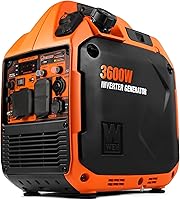
Best for running the carburetor dry: WEN 2500W Inverter (56250iX)
The WEN 2500W Inverter has an 80cc engine with 2500 surge watts and 1900 rated watts. Its fuel shutoff uses up the fuel in the carburetor before the unit stops, which helps prevent buildup during idle months.
It also has the WEN Watchdog CO Shutdown Sensor, so the unit turns itself off if it detects dangerous carbon monoxide levels. A lightweight 37.5-pound body makes it easy to move under cover when weather turns, and WEN backs it with a three-year warranty.
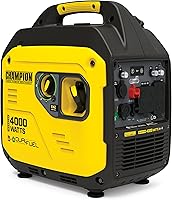
Best for the lightest lift in and out of storage: Champion 2500W Ultralight Inverter
The Champion 2500W Ultralight Inverter weighs 39.7 pounds and measures 17.6 by 12.6 by 18.1 inches. That size fits a compact storage box or a corner of a covered patio.
It runs at 53 dBA from 23 feet and gives 2500 starting watts and 1850 running watts on gasoline. A 1.1-gallon tank lasts up to 11.5 hours at 25% load, and it also has CO Shield auto shutdown and clean power under 3% THD for sensitive electronics.
Best for fuel flexibility in a stored unit: Champion 2500W Dual Fuel Inverter
The Champion 2500W Dual Fuel Inverter runs on gasoline or propane right out of the box. On gasoline it gives 2500 starting watts and 1850 running watts, with up to 11.5 hours of run time, and on propane it gives 1665 running watts and up to 25 hours.
It also carries CO Shield auto shutdown, a 120V duplex outlet with less than 3% THD, and a 12V outlet. At 43.2 pounds it's the heaviest of the three, so plan a spot you don't need to move it far from, and Champion covers it with a three-year limited warranty.
If you're still choosing between models for backup and camping, our guide to the portable generator types explains gas, dual fuel and inverter differences. Our roundup of the best generators with CO shutoff compares more units with that safety feature.
How do you keep moisture and pests out of a stored generator?
Keep the unit off the ground, cover it, and check it monthly. Moisture is the main enemy of an outside-stored generator, and small animals are the second.
Set the generator on a raised, dry surface so air moves under the base, and wipe off any standing water after storms. Inside a cover, a moisture absorber helps in humid months.
Check the cover and the unit once a month. Look for rust spots, chewed wires, and nests in the vents or around the engine, since a nest near the exhaust is a fire risk when you start the unit.
Pull the starter cord a couple of times every few weeks to keep seals from drying out. That's enough for a unit that won't run for months, and before each season you should run it outdoors to confirm it starts.
How often should you start a generator in outside storage?
Start and run it for about 20 to 30 minutes every month or two. A regular run keeps the engine lubricated, dries out moisture, and confirms the unit still works.
Run it outdoors, never in the cover or a closed space. Let it warm up and carry a small load if you can, then let it cool before you put the cover back on.
If you stored it with fuel, this run also moves the fuel through the system and reduces gumming. With a fuel shutoff, run it dry again after the test.
For longer gaps, a fresh tank of treated fuel and a run is the best protection.
What should you check before the first run after storage?
Check the oil, fuel, air filter, and exhaust first, then start it outdoors. A stored unit can surprise you with low oil or a blocked vent after a long rest.
Follow this checklist:
- Oil: check the level and top up or change it.
- Fuel: drain old fuel and add fresh, or confirm the tank was dry.
- Air filter: clean or replace it if it looks dirty.
- Exhaust and vents: clear any nests or debris.
- Cords and outlets: look for cracks or corrosion.
- CO sensor: make sure the auto shutdown feature is working as the maker says.
If the unit won't start, check the fuel shutoff, the spark plug, and the oil sensor first. Most no-start problems after storage trace back to old fuel or a tripped low-oil shutoff.
For sizing help before you buy, our guide to what size generator you need walks through the load math.
So, can a portable generator be stored outside?
Yes. Outside storage is the safer default for a portable generator, as long as you shelter it and keep it dry.
Pick a flat, raised spot under a breathable cover, at least 20 feet from the house and away from vents. Prep the fuel and oil, then run it every month or two.
The main risks are weather and stale fuel, and both are easy to manage. A cover, a raised base, and a simple monthly start cover most of it, and if the unit has a fuel shutoff or CO shutdown like the models above, storage gets easier still.
Run the generator outdoors every time, even when it lives on a covered patio. For more on placement and weather, read our related guides on generator CO shutoff and running in wet weather.
Frequently asked questions
Is it safe to keep a generator outside a garage door?
Only if the exhaust points away from the building and the door stays shut. Fumes can seep through gaps and into living space.
Place the unit at least 20 feet from the house and never run it inside a garage, even with the door open.
Does a generator need to be covered outside?
Yes, a cover keeps rain, dust and leaf litter off the unit and its outlets. Choose a breathable cover or a ventilated shelter so moisture can escape.
Never run a generator with a cover on, because the exhaust needs free airflow.
How should I prep a generator for long outside storage?
Run the tank dry or add fuel stabilizer, change or drain the oil, remove the spark plug boot and clean the unit. Then cover it and store it on a raised surface.
Repeat the fuel step before each long idle stretch.
Can I store a generator outside on a patio?
Yes, as long as the patio is flat, dry and away from doors and windows. Move the unit under shelter before storms and keep cords and outlets off the ground.
Check local rules on outdoor storage first.
Should a generator be stored outside or in a shed?
Outside under cover is safer than a closed shed, because a shed can trap carbon monoxide. If you use a shed, store the generator only when it's off and cold.
Run it outdoors, always.