What Size Generator Do I Need?
To work out what size generator you need, add the running watts of devices you'll use together, then calculate motor startup demand plus other operating loads. Choose rated and surge outputs above those totals, using the ratings for your planned fuel.
On this page (10 sections)
- What size generator do I need for my appliances?
- How do you calculate your generator wattage needs?
- What size generator is right for home backup?
- What size generator do I need for an RV or camper?
- What size generator do I need for a few essentials?
- How do inverter and conventional generators affect sizing?
- What should you check before choosing a generator size?
- How should you set up and care for a portable generator?
- Which sizing mistakes should you avoid?
- What size generator do I need? Make the final choice
To work out what size generator you need, add the running watts of devices you'll use together, then allow for motors starting while other equipment stays on. Match those totals to the generator's continuous and surge outputs for your chosen fuel.
A generator advertised as 4800 watts may supply that figure only briefly. Its lower rated output determines what you can keep running.
Start with the appliances you need, then choose the generator. For help choosing between fuel and power types, read portable generators explained.
What size generator do I need for my appliances?
Choose a generator that covers your busiest planned running load and startup load. Count what will operate together, rather than adding every electrical item you own.
Build a load sheet with these columns:
| Item to record | Why it matters |
|---|---|
| Appliance or device | Identifies each load you want to support |
| Running watts | Shows its ongoing demand |
| Full starting watts | Captures extra demand when a motor starts |
| Voltage | Helps confirm generator and connection compatibility |
| Use group | Separates essentials from loads that can wait |
| Automatic restart | Flags motors that may start without your control |
Use appliance manuals or labels for the figures. A household circuit breaker's amp limit tells you the circuit's capacity, not what an appliance actually draws.
For a simple resistive load, volts multiplied by amps gives watts. Motor loads need more care because that calculation alone may not show actual running power or startup demand.
Ask the appliance manufacturer for missing motor-start information. A plug-in power meter can help measure compatible plug-in devices, but an ordinary meter may miss a brief startup surge.
What size generator do I need for starting watts?
Your generator needs enough surge capacity for the full startup event, including equipment already running. For one motor, add its full starting watts to the running watts of everything else operating at that moment.
Don't count the starting motor's running watts again if the starting figure already includes them. If a manual instead gives an additional starting load, add that extra amount to the complete running total.
Refrigerators, freezers and pumps can cycle automatically. Starting appliances one at a time helps with initial loading, but it doesn't prevent two motors from restarting together later.
How much spare capacity should I leave?
Choose room above your calculated load, rather than a generator that only just meets it. That room helps accommodate changing demand and small devices you may add.
A percentage buffer cannot fix missing startup figures. Resolve uncertain loads first, especially pumps, compressors and equipment that must work during an outage.
Also check the generator manual for output limits at your elevation and operating temperature. Those conditions can affect the usable capacity of an engine-powered generator.
How do you calculate your generator wattage needs?
Calculate two totals: continuous demand and demand during startup. The following example uses made-up appliance figures to show the method, so replace them with your own equipment's requirements.
| Example device | Running watts | Full starting watts |
|---|---|---|
| Refrigerator | 200 | 1200 |
| Lights | 80 | No extra startup allowance in this example |
| Router and charging devices | 70 | No extra startup allowance in this example |
| Fan | 100 | 300 |
The running total is 450 watts. When the refrigerator starts with everything else running, the load is 1200 + 80 + 70 + 100, or 1450 watts.
If the refrigerator and fan start together, the example reaches 1200 + 300 + 80 + 70, or 1650 watts. A generator must cover that event as well as the ongoing total.
This is why a small generator can have enough running capacity yet still struggle with a compressor. Both totals matter, even when the average load looks low.
Now create a second use group for optional appliances. A kettle, toaster or portable heater can change the running total sharply, even without a large motor-start requirement.
You may decide to use one optional appliance while switching others off. Write that plan down so anyone using the generator knows which combinations to avoid.
Our guide to what a 3000-watt generator can run explains how to work within a specific capacity range.
What size generator is right for home backup?
For home backup, choose capacity around essential circuits and appliances, with large motors checked separately. Floor area and bedroom count are poor sizing shortcuts.
Start with refrigeration, necessary lighting, communication devices and any equipment your household depends on. Then decide whether pumping, heating controls or cooking loads belong in the plan.
Electric heating, water heating, central cooling and large pumps can change the required generator class. Have an electrician assess those loads before assuming a portable unit will support them.
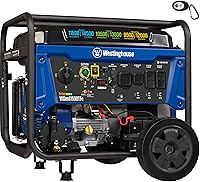
The Westinghouse 6500W Dual Fuel Home Backup suits buyers who need selected household circuits and fuel flexibility. Its 120/240V selector and transfer-switch-ready connection make it worth considering when your electrician's plan calls for compatible equipment.
On propane, it supplies 4800 running watts and 5800 peak watts. Build your load plan around those lower figures if propane will be your main outage fuel.
Skip it if you mainly need a carryable unit for charging electronics. At 135.6 lb, it calls for a practical storage and movement plan even with its wheel kit.
Also skip it if your must-run loads exceed its fuel-specific output. “Home backup” describes a use, not a promise that every appliance in the house can run together.
A transfer-switch-ready outlet still needs the right cord, inlet and professionally arranged transfer equipment. Read whether you need a generator transfer switch before buying connection parts.
Never feed household wiring through a wall outlet. For more options by backup need, see our best portable generators for home backup guide.
What size generator do I need for an RV or camper?
For an RV, size around air conditioner startup and the appliances you'll use alongside it. A matching receptacle helps with connection, but it does not increase the generator's output.
Read the air conditioner's requirements and include the converter or battery charger in your load sheet. Water heating, cooking appliances and other electric loads may need to run at separate times.
The WEN 4800W Dual Fuel RV Inverter (DF480iX) suits compatible RV owners who want gasoline and propane options. Electric start, onboard wheels and a telescoping handle also help buyers who can roll the unit into position.
Its propane surge output is 4320 watts, but WEN gives conflicting continuous propane figures of 3600 and 4000 watts. Get confirmation from WEN before sizing a propane load, and don't base an essential-load plan on the higher figure.
Skip this model if you need a simple one-person carry for frequent loading. It weighs 78.5 lb, so steps, vehicle height and storage access matter.
Also skip it if your RV needs a connection or voltage this unit cannot support. A plug adapter changes the connection shape, not the generator's electrical capacity.
A 30A RV connection does not mean every RV appliance can run at once. Use a written load plan, especially when the air conditioner and cooking equipment may overlap.
For the full connection and appliance checklist, read how to choose a generator for an RV or camper.
What size generator do I need for a few essentials?
Choose a smaller generator when your measured load is limited and easy to manage. Device count alone tells you little because one heating appliance can draw more than several electronics.
When does the Westinghouse iGen1500c make sense?
The Westinghouse iGen1500c suits small electronics and other modest loads that leave enough startup room. It is a better match for a short essentials list than for broad household backup.
Its built-in carrying handle makes it a candidate for buyers who move their generator often. Westinghouse specifies power quality below 3% total harmonic distortion, which is useful when comparing options for compatible electronics.
Skip it if your plan includes high-draw cooking appliances, electric heat or a compressor whose startup demand exceeds its capacity. Don't assume a refrigerator fits without checking its individual requirements.
Parallel capability offers a possible expansion path with another compatible Westinghouse inverter and the required Westinghouse parallel cord. Check the complete pairing and connection requirements before treating a second unit as a future solution.
When is the WEN 2800W the better fit?
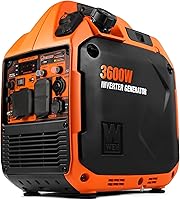
The WEN 2800W Inverter (56280iX) suits buyers who need more room for selected essentials without moving to the heavier units above. Its capacity can support a broader load group when both ongoing demand and motor starts fit.
The 45 lb design is worth considering when lifting matters as much as output. WEN specifies total harmonic distortion below 1.2% at full load for compatible sensitive electronics.
Fuel shutoff lets the engine use remaining carburetor fuel before stopping. That helps with gasoline storage care, though you still need to follow WEN's full storage instructions.
Skip it if you need propane operation, a dedicated RV receptacle or household loads beyond its capacity. Its outlets include two standard three-prong 120V receptacles, so plan around those connections.
How do inverter and conventional generators affect sizing?
Generator type affects power quality and operating behavior, but both designs need the same load calculations. An inverter label does not add starting capacity or guarantee compatibility with every device.
For electronics, compare the equipment's requirements with the generator's voltage and power-quality specifications. Keep enough capacity for other appliances that may start while those electronics remain connected.
Don't compare noise figures without checking the measurement conditions. A no-load figure and a quarter-load figure do not describe the same operating situation.
Fuel choice also affects sizing because dual-fuel models may produce different output on gasoline and propane. Use the figures for the fuel you will actually have available.
Read inverter vs regular generators for the design differences. Our guide to how a dual-fuel generator works explains the fuel setup.
What should you check before choosing a generator size?
Confirm voltage, outlet limits and the connection path before buying. A sufficient total wattage does not mean every receptacle can deliver that entire output.
Check the manual for individual outlet limits and any instructions about balancing 120V loads. A 120/240V generator may need careful load distribution across its circuits.
Use cords rated for the connected load, length and outdoor conditions. Long or undersized cords can cause voltage drop, and adapters do not raise a cord's amp capacity.
Plan where the generator will sit before deciding that a model fits your home. A heavy unit that you cannot move to a safe operating spot is a poor backup choice.
Keep the generator dry using only a setup suitable for generator operation that preserves ventilation and required clearances. Read whether a generator can run in the rain before planning wet-weather use.
How should you set up and care for a portable generator?
Prepare the operating spot, fuel and maintenance plan before an outage. Follow the manual for assembly, oil, starting, grounding and shutdown because requirements vary by model and connection.
Operate outdoors at least 20 feet from buildings, with exhaust directed away from doors, windows and vents. Never run a generator in a garage, even with the door open.
CO sensors are backup protection, and they do not make enclosed operation safe. Use working CO alarms in the home and review whether a generator gives off carbon monoxide and the CDC's generator safety guidance.
Once the generator is ready, start it according to its manual before adding loads in a planned order. If it overloads, disconnect loads and follow the reset procedure instead of repeatedly trying the same combination.
Shut the engine off and let it cool before refueling. Keep fuel away from hot parts, and follow the manual's rules for fuel storage and propane connections.
Track operating hours and follow the oil-change and service schedule. Check oil as directed, since automatic low-oil shutdown does not replace routine care.
For storage, follow the manufacturer's instructions for gasoline, carburetor care and any starting battery. Fuel shutoff is helpful, but it does not complete every storage task.
Which sizing mistakes should you avoid?
Avoid shopping by peak watts or by house size. Both shortcuts can leave you with a generator that fails to support your actual loads.
- Counting only running watts: Motor startup may exceed capacity even when normal operation fits.
- Double-counting a motor: Distinguish full starting watts from additional starting watts.
- Ignoring automatic restarts: Refrigerators and pumps can overlap after the initial startup.
- Using gasoline figures for propane: Your planned fuel may offer less usable output.
- Treating runtime as fixed: Load and fuel conditions affect how long a generator operates.
- Forgetting small background loads: Chargers, fans and RV converters still belong in the total.
- Buying for every appliance at once: A simple use schedule may reduce the capacity you need.
If a load remains uncertain, resolve it before choosing a close-fitting generator. Guessing is especially costly when that appliance is the main reason you need backup power.
What size generator do I need? Make the final choice
Choose the smallest suitable generator with room above both calculated totals, the right connections and a workable fuel plan. Start with the loads you cannot give up, then decide which optional appliances can wait.
Pick the Westinghouse iGen1500c for a modest essentials list. Move to the WEN 2800W when your calculations call for more running and startup room while lifting weight still matters.
Choose the WEN DF480iX for a compatible RV setup that benefits from dual fuel and electric start, after resolving its propane output. Choose the Westinghouse 6500W Dual Fuel Home Backup for selected household loads with an appropriate connection plan.
If none covers your must-run loads, look at a larger capacity class or reduce simultaneous demand. Use our 3000-watt generator guide to turn your appliance list into clear running and startup totals before ordering.
Frequently asked questions
How do I calculate what size generator I need?
Add the running watts of devices you'll use together, then calculate the load when a motor starts. Add that motor's full starting demand to the running watts of other operating devices, without counting the motor twice; choose rated and surge outputs above the respective totals.
Should I size a generator by starting watts or running watts?
Use both figures: rated watts cover continuous operation, while starting or surge watts cover brief startup demand. First check that your ongoing load fits the rated output, then check motor starts against surge capacity; a large peak number cannot make up for too little continuous power.
Can a 3000-watt generator run a refrigerator?
Yes, if the refrigerator's running and starting requirements fit the generator's continuous and surge outputs alongside other connected loads. Check the appliance manual rather than assuming all refrigerators draw the same power; also confirm whether the generator's advertised 3000 watts refers to running output or brief peak output.
How much generator capacity do I need for a house?
Size home backup around selected appliances and circuits, since house size alone does not determine electrical demand; refrigeration and lights need a different plan from central cooling, electric heat or a well pump. Have a qualified electrician check large motor loads, voltage needs and the connection to household circuits.
Can I run sensitive electronics on any generator?
Choose a generator whose power quality meets the equipment manufacturer's requirements. Inverter models often publish low total harmonic distortion figures, but the word inverter alone does not settle every compatibility question; check output quality, voltage and capacity, especially when computers or other electronics will share power with appliances that cycle.