11 Best Portable Generators With CO Shutoff (November 2026)
The best portable generators with carbon monoxide shutoff include the Westinghouse 14500W Tri-Fuel for large household loads, the Westinghouse 13500W Tri-Fuel for natural gas households, and the Westinghouse 12500W Tri-Fuel for selective circuit backup.
On this page (4 sections)
The Westinghouse 14500W Tri-Fuel is the best generator with CO shutoff here for higher-output home backup. Choose a smaller WEN or Champion inverter when you need portable power for an RV or a shorter list of appliances.
CO shutoff stops the engine when its sensor detects high carbon monoxide near the generator. It does not make indoor operation safe or replace CO alarms inside your home or RV.
Start with your power needs, connection method, and outdoor operating spot. Our guide to how portable generators produce carbon monoxide explains why placement matters even with automatic shutdown.
Our picks at a glance
-
1

-
2

-
3

- 4
 Check it
Champion 4000W Dual Fuel RV Inverter
Best for propane RV trips - 5
 Check it
WEN 3600W Dual Fuel RV Inverter (DF360iX)
Best for light packing campers - 6
 Best for stored fuel backupCheck it
- 7
 Check it
WEN 4800W Dual Fuel RV Inverter (DF480iX)
Best for frequent RV travelers - 8
 Check it
Westinghouse 6500W Dual Fuel Home Backup
Best for essential household circuits - 9
 Check it
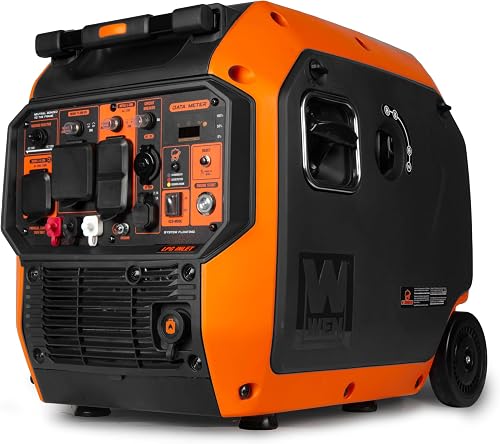
WEN 6800W Dual Fuel RV Inverter (DF680iX)
Best for occasional EV backup - 10
 Best for gasoline camping tripsCheck it
- 11
 Check it
WEN 4800W RV Inverter (56477i)
Best for gasoline RV stays
Best portable generators with CO shutoff for each use
Choose a large Westinghouse for several household circuits, a smaller inverter for travel, or a midrange model for selected essentials. The right choice covers your actual loads on your intended fuel without making transport or setup harder than necessary.
We compared continuous output, fuel options, connections, starting methods, and transport needs. These picks run from highest to lowest score, but a higher score does not make a heavy home backup generator the right camping choice.
| Product | Best for | Running watts | Fuel | CO shutdown | Our score |
|---|---|---|---|---|---|
| Westinghouse 14500W Tri-Fuel | large household loads | 11,500 on gasoline | Gasoline, propane, or natural gas | Automatic CO sensor shutdown | 9.2 |
| Westinghouse 13500W Tri-Fuel | natural gas households | 10,500 on gasoline | Gasoline, propane, or natural gas | Automatic CO sensor shutdown | 9.1 |
| Westinghouse 12500W Tri-Fuel | selective circuit backup | 9,500 gasoline; 8,500 propane; 7,500 natural gas | Gasoline, propane, or natural gas | Automatic CO shutdown | 8.9 |
| Champion 4000W Dual Fuel RV Inverter | propane RV trips | 3,000 on gasoline; 2,700 on propane | Gasoline or propane | CO Shield auto shutoff | 8.8 |
| WEN 3600W Dual Fuel RV Inverter (DF360iX) | light packing campers | 2,900 on gasoline; 2,600 on propane | Gasoline or propane | Watchdog automatic CO shutdown | 8.7 |
| Westinghouse 13500W Dual Fuel | stored fuel backup | 10,500 on gasoline | Gasoline or propane | Automatic CO sensor shutdown | 8.7 |
| WEN 4800W Dual Fuel RV Inverter (DF480iX) | frequent RV travelers | 4,000 on gasoline; confirm propane rating with WEN | Gasoline or propane | Watchdog automatic CO shutdown | 8.6 |
| Westinghouse 6500W Dual Fuel Home Backup | essential household circuits | 5,300 on gasoline; 4,800 on propane | Gasoline or propane | Automatic CO shutdown | 8.6 |
| WEN 6800W Dual Fuel RV Inverter (DF680iX) | occasional EV backup | 5,100 on gasoline; 4,500 on propane | Gasoline or propane | Watchdog automatic CO shutdown | 8.5 |
| Champion 4000W RV Inverter | gasoline camping trips | 3,000 on gasoline | Gasoline | CO Shield auto shutoff | 8.5 |
| WEN 4800W RV Inverter (56477i) | gasoline RV stays | 4,000 on gasoline | Gasoline | Watchdog automatic CO shutdown | 8.3 |
Westinghouse 14500W Tri-Fuel: Best for large household loads
- 11,500 running watts on gasoline
- Gasoline, propane, or natural gas
- CO sensor shutdown
- Remote electric start
Choose this high-output model for a planned household backup system with several essential circuits. Its three fuel options and 30A and 50A outlets support several connection plans.
Pros
- Three fuel options
- Remote electric start
- Less than 5% THD
Cons
- 230 lb
- Transfer equipment sold separately
The Westinghouse 14500W Tri-Fuel suits homeowners with a substantial backup plan and suitable transfer equipment. Its 11,500 running watts on gasoline give it the highest continuous gasoline output in this group.
Choose it when several essential circuits must run together and your load calculation supports buying this much capacity. Gasoline, propane, and natural gas options give you more ways to plan fuel access during an outage.
Remote electric start helps after the generator is safely positioned outside. Westinghouse also specifies less than 5% total harmonic distortion, a useful consideration when your backup plan includes computers or TVs.
Skip it for frequent vehicle loading or small travel loads. At 230 lb, even with wheels, a handle, and a lift bracket, it needs a firm route between storage and its operating spot.
Its 30A and 50A outlets support compatible transfer connections. Those connections still need to match your home's wiring and planned loads.
Westinghouse 13500W Tri-Fuel: Best for natural gas households
- 10,500 running watts on gasoline
- Gasoline, propane, or natural gas
- CO sensor shutdown
- Remote key fob
A strong choice for households that want natural gas operation alongside stored fuel options. Size your loads using the rating for the fuel you'll actually use.
Pros
- Three fuel options
- Electric, remote, and recoil starting
- 30A and 50A outlets
Cons
- 230 lb
- Transfer equipment sold separately
The Westinghouse 13500W Tri-Fuel fits households that want natural gas access alongside stored gasoline or propane. It supplies 10,500 running watts on gasoline, so choose it when your calculation fits below the top model's capacity.
Its push-button, remote, and backup recoil starting give you several starting options. The hour display also helps you track maintenance during a long outage.
Westinghouse specifies up to 19 hours from its 9.5-gallon gasoline tank at 25% load. Treat that as a light-load planning figure, not the runtime you'll get while drawing most of its capacity.
Skip it if you expect an easier-moving alternative to the top pick. It also weighs 230 lb, so the lower output does not bring a transport advantage.
Before choosing natural gas, confirm the generator's fuel-specific output and the required gas connection. A household gas supply still needs enough capacity for the generator and other appliances.
Westinghouse 12500W Tri-Fuel: Best for selective circuit backup
- 9,500 running watts on gasoline
- 7,500 running watts on natural gas
- CO shutdown
- Remote start
This tri-fuel model suits a defined set of essential circuits rather than an unchecked whole-house load. Remote starting and 30A and 50A connections help with a planned backup setup.
Pros
- Three fuel options
- Remote start
- Digital hour meter
Cons
- 215 lb
- Lower output on propane and natural gas
The Westinghouse 12500W Tri-Fuel is a good fit for a defined group of essential circuits. It provides 9,500 running watts on gasoline, 8,500 on propane, and 7,500 on natural gas.
Those differences matter if you plan to change fuels during an outage. A load plan that fits on gasoline may need fewer appliances running together on natural gas.
Remote start and the digital hour meter support regular backup use. Its 6.6-gallon gasoline tank also makes fuel planning part of the decision for longer outages.
Choose it when the lowest fuel rating you'll use covers your essential loads. Skip it if you need the higher-output models' extra capacity or expect to lift the generator into a vehicle regularly.
At 215 lb, it remains a substantial machine. Our guide to choosing a generator for home backup can help you separate must-run circuits from appliances you can use in turns.
Champion 4000W Dual Fuel RV Inverter: Best for propane RV trips
- 3,000 running watts on gasoline
- Gasoline or propane
- CO Shield auto shutoff
- TT-30R RV outlet
A portable choice for RV travelers who want propane operation and a compatible RV outlet. Plan appliance use around its continuous output rather than its starting wattage.
Pros
- Gasoline and propane
- TT-30R outlet
- 51.8 lb
Cons
- Recoil start
- Parallel kit sold separately
The Champion 4000W Dual Fuel RV Inverter suits RV travelers who want propane operation without moving a large open-frame generator. It provides 3,000 running watts on gasoline or 2,700 on propane.
The TT-30R outlet supports a compatible RV connection, but the outlet shape does not give you unlimited appliance capacity. Plan around the generator's continuous output and the startup demand of any air conditioner.
Champion specifies up to 10 hours on gasoline or 25 hours with a 20 lb propane cylinder, both at 25% load. These figures use different fuel quantities, so they do not show which fuel is more efficient.
Choose it for manageable travel loads and fuel flexibility. Skip it if you need electric starting, 240V equipment, or several large appliances at once.
Its 51.8 lb weight is easier to transport than the larger picks, though you still need to account for fuel and safe lifting.
WEN 3600W Dual Fuel RV Inverter (DF360iX): Best for light packing campers
- 2,900 rated watts on gasoline
- Gasoline or propane
- Watchdog CO shutdown sensor
- 49 lb
Choose this compact dual-fuel inverter for modest camping or RV loads and frequent transport. Fuel shutoff helps reduce gasoline left in the carburetor before storage.
Pros
- 49 lb
- Tool-free LPG quick-connector
- Fuel shutoff
Cons
- Limited capacity for simultaneous appliances
- Lower rated output on propane
The WEN 3600W Dual Fuel RV Inverter (DF360iX) is a strong fit for campers who move their generator often and keep their power needs modest. It weighs 49 lb and includes a tool-free propane quick-connector.
Its continuous output is 2,900 watts on gasoline or 2,600 on propane. That suits a planned combination of smaller loads rather than unrestricted use of heating and cooking appliances.
Fuel shutoff lets the engine consume gasoline remaining in the carburetor before stopping. WEN says this helps reduce buildup from stagnant fuel, which is useful for equipment stored between trips.
Choose it when carrying weight and two fuel choices matter more than extra capacity. Skip it if your intended motor load needs more starting power or your usual appliances already approach its continuous limit.
The TT-30R outlet makes a compatible RV connection convenient. Our RV and camper generator guide explains how to build an appliance plan before choosing the generator.
Westinghouse 13500W Dual Fuel: Best for stored fuel backup
- 10,500 running watts on gasoline
- Gasoline or propane
- CO sensor shutdown
- Remote electric start
This high-output model fits households planning around stored gasoline and propane. It offers remote starting and 30A and 50A outlets without adding natural gas capability.
Pros
- Remote electric start
- 30A and 50A outlets
- Hour meter
Cons
- 230 lb
- No natural gas operation
The Westinghouse 13500W Dual Fuel fits homeowners who plan to use stored gasoline and propane. It delivers 10,500 running watts on gasoline, matching the gasoline continuous output of the 13500W Tri-Fuel.
Choose between those models by fuel access rather than the number in their names. This dual-fuel model is the relevant choice if natural gas will not be part of your setup.
Remote electric start and 30A and 50A outlets support a planned household backup system. Its hour meter helps you keep track of engine use between service tasks.
Skip it if natural gas is part of your outage plan or you need frequent lifting. The 230 lb frame needs a suitable storage location and a clear moving route.
Have a qualified electrician match the generator to your inlet, transfer equipment, and circuits. Our guide to generator transfer switches explains the connection options before you commit to equipment.
WEN 4800W Dual Fuel RV Inverter (DF480iX): Best for frequent RV travelers
- 4,000 rated watts on gasoline
- Gasoline or propane
- Watchdog CO shutdown sensor
- Electric start with recoil backup
Electric starting, wheels, and a telescoping handle suit travelers who regularly move and set up their generator. Confirm propane continuous output with WEN before building a propane load plan.
Pros
- Electric start with recoil backup
- Wheels and telescoping handle
- Fuel shutoff
Cons
- 78.5 lb
- Propane rated output needs confirmation
The WEN 4800W Dual Fuel RV Inverter (DF480iX) suits travelers who want electric starting and more continuous gasoline output than the smaller portable inverters. It supplies 4,000 rated watts on gasoline.
Its wheels and telescoping handle help with moving the generator across suitable ground. At 78.5 lb, however, loading it into a vehicle remains a separate lifting task.
Keyless electric start includes recoil backup, and fuel shutoff helps reduce gasoline left in the carburetor. Those features suit repeated setup followed by storage between trips.
Choose it for RV use when the extra capacity and starting convenience justify the weight. Skip it if you need a generator you can comfortably carry farther from your vehicle.
Confirm its propane rated output with WEN before sizing a propane-only load plan. Use that confirmed continuous figure rather than assuming propane capacity equals the gasoline rating.
Westinghouse 6500W Dual Fuel Home Backup: Best for essential household circuits
- 5,300 running watts on gasoline
- Gasoline or propane
- CO shutdown
- Transfer switch ready outlet
A middle-ground choice for selected household circuits with gasoline or propane fuel. Its transfer connection supports a planned electrical setup, not an automatic promise of whole-house power.
Pros
- Gasoline and propane
- Transfer and RV outlet types
- Included wheel kit
Cons
- 135.6 lb
- No 50A outlet
The Westinghouse 6500W Dual Fuel Home Backup is a middle-ground choice for selected household essentials. Its 5,300 running watts on gasoline or 4,800 on propane suit a more restrained load plan than the largest Westinghouse models.
It has a transfer switch ready L14-30R outlet and a separate TT-30R RV outlet. Choose the connection that matches your equipment, and check the voltage selector instructions before use.
The included wheel kit helps move its 135.6 lb frame. That makes it lighter than the large backup picks, while still too heavy to treat as a casual carry.
Choose it when your essential circuits fit and you can stagger larger loads. Skip it if your electrical plan requires a 50A receptacle or more continuous output.
This is also worth considering when you need household connection options without the largest engine class. Our portable generator types explained guide puts this open-frame design alongside the inverter alternatives.
WEN 6800W Dual Fuel RV Inverter (DF680iX): Best for occasional EV backup
- 5,100 rated watts on gasoline
- Gasoline or propane
- Watchdog CO shutdown sensor
- Bonded-neutral 240V configuration
WEN says its bonded-neutral 240V configuration supports low-power Level 2 charging for battery and hybrid electric vehicles. Choose it only after checking the vehicle, charger, and connection requirements.
Pros
- Electric start with recoil backup
- 120V/240V L14-30R outlet
- Wheels and telescoping handle
Cons
- 99.2 lb
- EV charging compatibility needs confirmation
The WEN 6800W Dual Fuel RV Inverter (DF680iX) suits buyers who need inverter power and a compatible 240V connection. It supplies 5,100 rated watts on gasoline or 4,500 on propane.
WEN says its bonded-neutral 240V configuration supports low-power Level 2 charging for battery and hybrid electric vehicles. Confirm compatibility with your vehicle and charging equipment before choosing it for that purpose.
EV charging must share the generator's available capacity with any other connected loads. Plan it separately from essential household demand rather than assuming both can run together.
Choose it when its voltage, neutral configuration, and output match a specific need. Skip it for simple camping loads if you do not need those features.
Electric start, wheels, and a telescoping handle help with setup, but the generator weighs 99.2 lb. Its L14-30R connection also needs to match any planned household transfer arrangement.
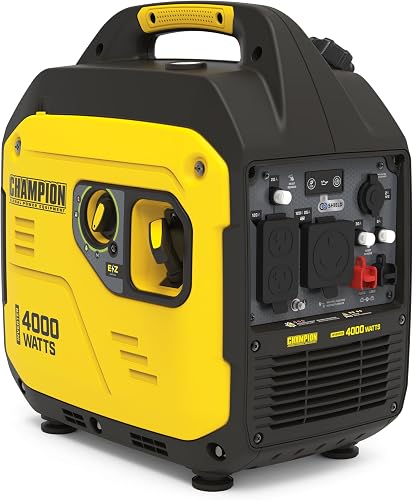
Champion 4000W RV Inverter: Best for gasoline camping trips
- 3,000 running watts
- CO Shield auto shutoff
- TT-30R RV outlet
- 48.1 lb
This lightweight gasoline inverter suits camping, tailgating, and compatible RV loads. Champion does not recommend this model for emergency home backup.
Pros
- 48.1 lb
- TT-30R outlet
- Less than 3% THD
Cons
- Gasoline only
- Not recommended for emergency home backup
The Champion 4000W RV Inverter suits gasoline-only camping and RV trips where carrying weight matters. It weighs 48.1 lb and supplies 3,000 running watts.
Its TT-30R outlet supports compatible RV connections, while less than 3% total harmonic distortion suits sensitive electronics. Recoil starting keeps this a different choice from the electric-start WEN models.
Champion specifically says this model is not recommended for emergency home backup. Choose another model if that is your main reason for buying a generator.
Buy it for travel when gasoline fits your fuel plan. Skip it if you want propane, electric starting, or a household emergency backup recommendation.
An optional parallel kit can connect it with another compatible 4000W Champion inverter. Account for the second generator, separate fuel needs, transport space, and safe placement before choosing that route over one larger machine.
WEN 4800W RV Inverter (56477i): Best for gasoline RV stays
- 4,000 rated watts
- Watchdog CO shutdown sensor
- Fuel shutoff
- Wheels and telescoping handle
Choose this gasoline inverter for RV stays where you want more continuous capacity than the smaller portable picks. Wheels help with ground transport, while fuel shutoff helps prepare it for storage.
Pros
- Four household receptacles
- Wheels and telescoping handle
- Fuel shutoff
Cons
- Gasoline only
- 72.7 lb
- Recoil start
The WEN 4800W RV Inverter (56477i) fits RV users who want 4,000 rated watts on gasoline and do not need propane operation. It uses recoil starting.
Four household receptacles offer convenient connection points for separate cords. They still share the generator's total capacity, so more sockets do not mean more available power.
Wheels and a telescoping handle help with ground transport, while its 72.7 lb weight matters when loading. Fuel shutoff helps reduce gasoline left in the carburetor before storage.
Choose it when gasoline-only operation fits your routine and the smaller inverters lack capacity. Skip it if propane flexibility or push-button starting would make regular use easier.
WEN specifies up to 7 hours at half load from the 1.9-gallon tank. Use a runtime figure at a comparable load when planning refueling breaks, rather than comparing it directly with another model's quarter-load figure.
How to choose a generator with CO shutoff
Choose by continuous output, starting demand, fuel, and connection requirements before comparing convenience features. CO shutdown belongs alongside safe placement, not in place of it.
How much power should a CO shutoff generator provide?
Use running or rated watts for equipment that stays on, then allow for motor startup demand. Peak watts cover brief surges and are not the capacity available throughout an outage.
Write down the appliances you'll run together, including pumps, refrigeration, lights, and communications equipment. Check appliance labels or manuals rather than estimating from size alone.
A practical load plan separates must-run equipment from items you can use briefly in turns. For example, avoid adding a high-draw cooking appliance just as a pump or refrigerator starts.
Our generator size guide walks through that calculation. Use the generator's rating for the fuel you intend to run.
Which fuel fits your outage plan?
Choose fuel you can safely store or reliably access. Dual-fuel models add propane, while the three tri-fuel Westinghouse models also accept natural gas.
Propane avoids storing gasoline in the carburetor during propane operation, but the engine still needs oil and routine care. Cylinder size, fuel level, and cold conditions also affect practical fuel availability.
Natural gas can reduce refueling work when service remains available. Have the connection and supply capacity checked rather than assuming any household gas outlet will work.
Our guide to how dual-fuel generators work explains the basic fuel setup. Never connect an unapproved fuel source or change fuels outside the manual's procedure.
Do you need inverter power or household voltage?
Choose voltage and outlet compatibility before choosing by wattage alone. A 120V RV outlet cannot directly supply equipment that requires 240V.
Inverter models are useful for travel and sensitive electronics, but power quality and capacity are separate questions. A clean electrical output does not let a small generator start an oversized motor.
Our inverter versus regular generator comparison explains the design tradeoffs. For household wiring, ask an electrician to check the inlet, transfer method, neutral arrangement, and generator compatibility.
How to set up and care for a CO shutoff generator
Prepare the operating spot, fuel, cords, and maintenance supplies before an outage. A ready setup matters as much as the generator, especially when darkness or bad weather makes moving equipment harder.
Place the generator before connecting loads
Operate outdoors at least 20 feet from the home, with exhaust directed away from doors, windows, vents, and occupied spaces. Keep it away from neighboring homes and RV openings too.
Never operate in a garage, basement, shed, or other enclosed or partly enclosed space. Opening a door does not provide a safe substitute for outdoor placement.
Use working CO alarms inside the home or RV. The CDC's carbon monoxide guidance explains generator placement and indoor alarm precautions.
Choose firm, level ground and keep cooling airflow clear. Weather protection must suit generator operation without enclosing the engine or trapping exhaust.
Our article on generator use in the rain covers weather planning. A garage is never the fallback operating spot when rain arrives.
Make connections without backfeeding
Use outdoor-rated cords sized for the load and distance, and inspect plugs and insulation before use. Route cords away from standing water, traffic, hot surfaces, and places where doors can crush them.
Never feed household wiring through a wall receptacle. A proper transfer arrangement prevents the generator from energizing utility lines and isolates the intended supply.
Follow the manual's startup sequence and connect loads in stages. Keep track of which appliances are running instead of waiting for overload protection to stop the generator.
Treat a CO shutdown as a safety warning
Do not disable the sensor or repeatedly restart after a CO-related stop. Follow the manual's shutdown indicator and restart instructions, and reassess placement before further operation.
A stopped engine does not prove nearby indoor air is safe. If an indoor CO alarm sounds or anyone feels unwell, move everyone to fresh air and seek emergency help.
Keep fuel and service tasks manageable
Check oil as directed, and follow the service schedule using engine hours where available. Low-oil shutdown is backup protection, not a replacement for oil checks.
Turn the engine off and let it cool before adding gasoline. Store fuel in approved containers away from living areas and ignition sources.
Use the manual's storage procedure after an outage or trip. Carburetor fuel shutoff helps with remaining gasoline, but it does not replace oil changes, air-filter care, or the rest of the storage instructions.
For electric-start models, follow the battery maintenance schedule between uses. Keep the manual, suitable oil, cords, and fuel equipment together so you can find them during an outage.
Which generator with CO shutoff should you choose?
Choose your generator with CO shutoff by the smallest practical model that covers your planned loads and connections. Leave enough starting capacity for motors, then make sure you can move and fuel it safely.
Pick the Westinghouse 14500W Tri-Fuel for higher-output household backup. Choose the 13500W Tri-Fuel for a lower-capacity three-fuel plan, or the 13500W Dual Fuel when stored gasoline and propane cover your needs.
For selected household essentials, consider the Westinghouse 6500W Dual Fuel. RV travelers should compare the Champion Dual Fuel and WEN DF360iX for easier transport, then move to the WEN DF480iX when extra capacity and electric starting matter.
Choose the WEN DF680iX only when its 240V features serve a defined need. The gasoline-only Champion and WEN models fit buyers who have no reason to add propane capability.
Before ordering, settle the outdoor operating spot and connection plan. Read our carbon monoxide safety guide so automatic shutdown remains an added safeguard within a safe setup.
Our top 3 picks at a glance
-
1
-
2
-
3
Frequently asked questions
What does CO shutoff do on a portable generator?
CO shutoff stops the engine when its sensor detects a high carbon monoxide level near the generator. It adds a safeguard but cannot confirm that the air inside your home or RV is safe.
Use safe outdoor placement and working indoor CO alarms every time.
Can a generator with CO shutoff run in a garage?
Never run a portable generator in a garage, even with the door open or a CO sensor installed. Exhaust can collect in the garage and enter the home.
Operate outdoors at least 20 feet from the home, and read our guide to generator use in a garage.
Which portable generators in this guide run on propane?
All picks except the Champion 4000W RV Inverter and WEN 4800W RV Inverter (56477i) accept propane. Those two models use gasoline only.
Size loads using the propane output, which can be lower than gasoline output, and follow the manual for regulator, hose, and cylinder requirements.
How much generator output do I need?
Add the running watts of equipment you'll use together, then allow for motor startup demand. Use continuous output for steady loads and peak output only for brief surges.
Choose using the rating for your intended fuel; our generator sizing guide explains the calculation.
Does CO shutoff replace safe generator placement?
No. CO shutoff adds protection but never replaces safe outdoor placement or indoor CO alarms.
A sensor near the engine cannot tell you whether exhaust is entering a distant window or vent.
Keep exhaust away from occupied spaces and read our carbon monoxide guide.


