Portable Generators: Gas, Dual Fuel and Inverter Explained
Choose a portable generator by matching its running watts and startup capacity to your essential equipment. Then check fuel options, outlets, weight and a safe outdoor operating spot before deciding.
On this page (12 sections)
- What should you compare when choosing a portable generator?
- How do you size a portable generator?
- What is the difference between conventional and inverter generators?
- Should you choose gasoline, dual fuel or tri-fuel?
- What kind of portable generator fits home backup?
- What portable generator works for an RV or camping?
- How should you compare noise and run time?
- How should you set up a portable generator before first use?
- How should you operate a portable generator safely?
- What care does a portable generator need between uses?
- Which buying mistakes should you avoid?
- Which portable generator should you choose?
Choose a portable generator by matching its continuous output and startup capacity to the equipment you need. Fuel access, safe placement and the right electrical connection matter just as much as the wattage on the box.
For home backup, start with essential appliances and circuits. For an RV or campsite, put carrying weight, sound and outlet compatibility near the top of your checklist.
“Portable” includes both carry-handle inverters and heavy wheeled machines. Before choosing either, work out where it will operate, how it will get there and how you will supply fuel.
What should you compare when choosing a portable generator?
Compare usable power, fuel, connections and handling before looking at convenience features. A remote starter saves effort, but it cannot fix an undersized generator or an unsuitable operating location.
Use this checklist to narrow the options:
| Factor | What to check | Why it matters |
|---|---|---|
| Running watts | Continuous output on your chosen fuel | Sets the load you can maintain |
| Peak watts | Short-term startup capacity | Helps motors and compressors start |
| Fuel | Availability, storage and connection needs | Determines your outage or travel plan |
| Outlets | Voltage, amperage and connector type | Must suit the equipment and connection method |
| Portability | Weight, handles, wheels and route | Affects whether you can move it safely |
| Sound | Measurement distance and load | Helps assess campsite and neighbor impact |
| Protective features | CO shutoff, low-oil shutdown and overload protection | Adds safeguards during correct operation |
Treat your purchase as a complete setup. Depending on the job, that may include approved cords, fuel containers, a propane cylinder, transfer equipment or electrical installation.
Also check the storage space before ordering. You need room to access service points and move the machine without lifting it over obstacles.
How do you size a portable generator?
Size a portable generator around the loads that will run together, plus the extra demand when motors start. Room count and house size do not tell you how much electrical power those loads need.
Make an equipment list with three columns: running watts, startup demand and priority. Use appliance manuals, labels or guidance from the appliance maker.
Separate must-have loads from conveniences. Refrigeration, a sump pump or communications may take priority over a coffee maker, microwave or electric heater.
What do running watts and peak watts mean for a portable generator?
Running watts describe continuous capacity, while peak watts cover brief startup demand. A peak number is not the power you can use all evening.
When an appliance gives total starting watts, add that figure to the running demand of the other equipment already on. Do not add the same appliance’s full running demand again.
For example, imagine a motor-driven appliance needs 600 running watts and 1,800 watts to start. With 400 watts of other equipment already running, the generator needs to support a 1,000-watt steady load and a 2,200-watt startup event.
Those are sample figures, not estimates for your refrigerator or pump. Use the requirements of your own equipment, especially for essential loads.
Which loads should you include in your wattage plan?
Include every device that may operate at the same time, including items that switch themselves on. A refrigerator or sump pump can start while you are using something else.
You can reduce demand by taking turns with optional appliances. However, avoid a plan that depends on someone remembering to unplug equipment every time an essential pump starts.
Heating appliances deserve special attention. Electric space heaters, kettles and cooking appliances can use much of a smaller generator’s capacity without needing a motor startup surge.
If a label gives volts and amps, multiplying them gives a useful starting point for some simple loads. Motors and electronic equipment may need further assessment, so use maker guidance when sizing is unclear.
Allow room for changes in demand rather than designing around the exact capacity limit. Follow any output adjustments in the generator manual for temperature, altitude or operating conditions.
For a worksheet and examples, read what size generator do I need. Our guide to what a 3000 watt generator can run helps you assess common load combinations.
What is the difference between conventional and inverter generators?
A conventional generator makes AC power through its engine and alternator, while an inverter model processes electricity through additional electronic circuitry. Choose by the job first, then compare the individual machines.
Inverter models often suit travel and smaller loads because many are compact and can adjust engine speed with demand. Larger conventional models are common choices for powering more home circuits.
Neither label guarantees a particular sound level or quality of electrical output. Check total harmonic distortion, often shortened to THD, and any requirements set by your equipment’s maker.
For a closer explanation, see inverter vs regular generators. Pay particular attention to capacity if you are moving from a small inverter to a home backup plan.
When does a portable inverter generator make sense?
A portable inverter generator makes sense when manageable weight and modest electrical demand shape the purchase. It can suit charging, campsite equipment and a carefully chosen set of outage essentials.
The Westinghouse iGen1500c has 1,000 rated watts and 1,500 peak watts, with two 120V outlets and two USB outlets. Its built-in handle helps with carrying, while gasoline-only operation keeps fuel choice simple.
Choose this Westinghouse for a short equipment list centered on lights, communications and compatible electronics. Its less-than-3% THD output suits sensitive devices within its capacity.
Skip it if your plan includes several motor-driven appliances or electric cooking and heating alongside other loads. Even a compact refrigerator needs its own startup check before you count it as a suitable match.
Parallel operation is possible with a compatible parallel-port-equipped Westinghouse inverter and the required Westinghouse cord. Treat that as a separate setup decision, since another generator adds fuel handling, storage and equipment to move.
When is a larger RV inverter worth carrying?
A larger RV inverter is worth carrying when you need more appliance capacity and a dedicated RV connection. It still needs to match your RV’s voltage and actual demand.
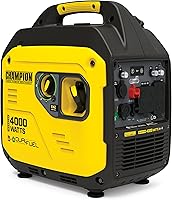
The Champion 4000W Dual Fuel RV Inverter provides 3,000 running watts on gasoline or 2,700 on propane, with 4,000 starting watts. Its TT-30R receptacle is rated at 120V and 25A.
Choose the Champion if you want gasoline and propane options for a modest RV load or a few home essentials. It also has household and automotive-style outlets, plus less-than-3% THD output.
At 51.8 lb, it needs a realistic lifting plan for vehicle loading. Check whether you can safely lift that weight from ground level and place it into your storage compartment.
Skip it if you need 240V equipment or expect an RV connector to deliver unrestricted shore power. Its recoil starter also deserves consideration if pulling a starter cord is difficult for you.
Should you choose gasoline, dual fuel or tri-fuel?
Choose the fuel you can store, obtain and connect safely, then consider whether a second option improves your plan. Fuel flexibility helps most when you have a practical way to use each option.
Gasoline suits people who already manage fuel for outdoor equipment and can rotate their stored supply. Use approved containers and follow local storage rules.
Propane avoids leaving gasoline in the carburetor during propane operation. It still requires a suitable cylinder, compatible hose and correct outdoor placement.
Natural gas can reduce the need to refill portable fuel containers where an appropriate supply exists. Have the connection and supply capacity assessed rather than assuming any outdoor gas fitting will support a generator.
Who should choose the Westinghouse tri-fuel model?
Choose the Westinghouse 14500W Tri-Fuel for larger selected home loads and multiple fuel options. Its gasoline output is 11,500 running watts and 14,500 peak watts, with 30A and 50A outlets for compatible connections.
This model fits a homeowner planning an installed backup connection and a larger load budget. Push-button and remote electric start can make operation easier once the generator is correctly positioned and prepared.
Its 230 lb weight makes it a poor match for frequent vehicle loading or stairs. Wheels, a handle and a lift bracket help with movement, but you still need a suitable route and storage location.
Skip it if you only need charging and a few small campsite loads. A machine this size brings handling and storage demands that a smaller inverter avoids.
Do not use its gasoline wattage to size a propane or natural gas setup. Confirm capacity on the intended fuel before committing to appliances or electrical installation.
Who should choose the WEN dual-fuel inverter?
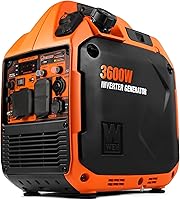
Choose the WEN DF360iX for modest RV or backup loads with attention to gasoline storage care. It provides 2,900 rated watts on gasoline or 2,600 on propane.
Its fuel shutoff uses the remaining gasoline in the carburetor before the engine stops. That helps reduce stale-fuel buildup during storage, though the rest of the maintenance schedule still applies.
The 49 lb design suits buyers who can manage a carry-handle generator but want more capacity than the small Westinghouse. A tool-free LPG quick-connector supports propane setup, and the outlets include RV, household, DC and USB connections.
Skip it if your essential load is already near its limit or needs 240V power. Choosing it for fuel shutoff only makes sense after you confirm the electrical fit.
For more detail, read how a dual fuel generator works. Compare storage and operating trade-offs in dual fuel vs gas-only generators.
What kind of portable generator fits home backup?
For home backup, choose a generator that supports your essential circuits and an approved connection method. Decide how power will reach the appliances before buying the machine.
One approach is to power suitable cord-connected appliances directly. That can work for a limited load, but it does not solve the needs of hardwired equipment.
For home wiring, have a qualified electrician plan the inlet, transfer equipment and installation. Grounding, neutral bonding and protective devices must suit the complete system.
“Transfer-switch ready” describes connection capability, not a completed installation. You still need compatible equipment and a safe way to isolate the home from utility power.
The larger Westinghouse supports the separately sold WATS200 automatic transfer switch. Automatic operation requires that compatible system and correct installation; remote start alone does not provide automatic home backup.
Never plug generator output into a wall outlet to feed house wiring. Backfeeding can expose utility workers and others to dangerous electrical power.
Plan fuel access alongside circuit selection. A generator that supports your loads for a short period is only part of a longer outage plan.
Read do you need a generator transfer switch for connection choices. For a wider shortlist, compare portable generators for home backup.
What portable generator works for an RV or camping?
For RVs and camping, prioritize usable output, a compatible connection and manageable handling. Then check campground generator rules before deciding where you can use it.
An RV-ready receptacle does not mean every appliance can run together. Air conditioning, a microwave and an electric water heater can quickly exceed the capacity of a compact generator.
Check the air conditioner’s startup requirement separately. If you are considering a soft-start device, confirm compatibility and the resulting demand with the equipment makers rather than guessing the reduction.
The Champion and WEN suit buyers who want an RV outlet and dual-fuel operation. The smaller Westinghouse suits lighter cord-connected loads when you do not need that dedicated RV receptacle.
Measure the vehicle storage opening and consider the height of the lift. A manageable carry across a driveway can become difficult when loading a deep compartment.
Also plan fuel transport and unloading. Keep fuel containers secured as directed, and operate the generator outside the vehicle after placing it at a safe distance.
For appliance planning, read how to choose a generator for an RV or camper. Our best generators for RVs guide offers more options for different travel needs.
How should you compare noise and run time?
Compare sound and run time only when load, distance and fuel conditions are clear. A low sound figure and a long run-time claim can describe very different operating situations.
Champion gives a sound figure of 64 dBA from 23 ft for its RV inverter. WEN gives 65 decibels at quarter load, so those numbers alone do not support a direct noise ranking.
Nearby walls, hard surfaces and surrounding buildings can change how sound reaches people. Safe exhaust placement comes first when choosing a location.
For more models focused on sound, see our quietest generator guide. Campground quiet hours still apply to a generator with a low sound rating.
Run time also changes with demand. A figure measured at quarter load will not describe operation near maximum continuous capacity.
Champion gives up to 10 hours on gasoline or 25 hours on a 20 lb propane tank at quarter load. Westinghouse gives up to 19 hours at quarter load from the larger tri-fuel model’s 9.5-gallon gasoline tank.
Use those figures to plan fuel checks, not to promise unattended operation. Our guide to how long a generator can run continuously explains the role of refueling and service stops.
How should you set up a portable generator before first use?
Prepare the location, fluids and connections before starting the engine. Read the manual while you have time and daylight, rather than during the first outage.
Use this sequence:
- Choose a safe outdoor location. Place it on a firm, level surface, at least 20 ft from the home, with exhaust directed away from openings.
- Check the movement route. Clear obstacles and arrange help or suitable handling equipment for a heavy unit.
- Complete assembly. Follow the instructions for any wheels, handles, brackets or starting battery.
- Add the specified oil. Check the required amount and measurement method before starting.
- Prepare the fuel system. Inspect hoses, fittings, containers and shutoff positions as the manual directs.
- Inspect cords and connections. Use undamaged outdoor-rated equipment with adequate capacity for the load and cable length.
- Start with loads disconnected. Follow the startup procedure, then connect appliances in the order the manual recommends.
Do not assume included engine oil means the engine is filled. Check the oil level yourself using the manual’s procedure.
For home backup, have the electrician explain the transfer sequence and label the circuits. Keep those instructions where the person operating the generator can find them.
Route cords where doors cannot pinch them and people will not trip over them. Do not use damaged cords or chains of household power strips to reach distant equipment.
How should you operate a portable generator safely?
Operate a fuel-powered generator outdoors, at least 20 ft from the home, with exhaust facing away from doors, windows and vents. Follow any greater clearance required by the manual.
Never use a home, garage, shed, porch or other enclosed or partly enclosed space. Open doors and fans cannot make those locations safe.
Keep working carbon monoxide alarms indoors according to their instructions. A generator’s CO shutdown sensor adds protection, but it cannot make an unsafe location acceptable.
If a CO alarm sounds or someone develops headache, dizziness or nausea, get everyone into fresh air and call emergency services. Do not reenter until responders say it is safe.
Keep electrical connections dry and use weather protection approved for operation as the manual directs. A storage cover is not an operating enclosure, and a homemade shelter must not trap exhaust.
Turn the engine off and let it cool before refueling. Keep gasoline away from hot parts and ignition sources.
Respect each outlet’s capacity as well as the generator’s total output. A large overall wattage does not let you exceed a smaller receptacle’s limit.
For more detail, read does a generator give off carbon monoxide and can a generator run in the rain. Our guide to running a generator near a garage explains why an open garage door is insufficient.
What care does a portable generator need between uses?
Follow the service and storage schedule in the manual, including engine-hour requirements. Infrequent use does not remove the need for oil checks, fuel care and inspection.
Before operation, check oil level, fuel leaks, loose connections and blocked airflow. Keep cooling and exhaust areas clear without removing protective guards.
Record operating hours and service dates. During a prolonged outage, maintenance may become due before utility power returns.
For gasoline storage, follow the manual’s instructions for fuel treatment, draining or carburetor care. Fuel shutoff is useful, but it does not replace oil changes, air-filter care or other service.
Keep an electric-start battery maintained as directed. A remote key fob is only useful when the generator’s starting system is ready.
After use, let the machine cool before covering or storing it. Follow the required shutdown sequence, including propane valve closure where applicable.
A short practice run before storm season can reveal missing cords, an awkward setup route or a starting problem. Run it outdoors with the same safety clearances required during an outage.
Which buying mistakes should you avoid?
Avoid buying by peak watts, connector shape or a single convenience feature. The machine must fit the whole job, from startup demand to storage.
Common mistakes include:
- Sizing from peak output. Plan continuous loads with running watts and assess motor starts separately.
- Ignoring fuel-specific capacity. Size for propane if that is your intended fuel.
- Confusing outlet shape with available power. An RV-style socket does not promise full shore-power capacity.
- Forgetting the lifting task. Consider stairs, vehicle loading and uneven ground before choosing a weight.
- Assuming parallel operation is universal. Use only compatible machines and the specified connection kit.
- Buying before planning placement. Confirm a safe outdoor operating area and a practical connection route.
- Overlooking installation needs. Arrange the electrical plan before expecting power at hardwired appliances.
Also avoid solving every future possibility with a larger machine. Buy enough capacity for a clear load plan, then weigh the extra fuel, movement and storage demands against the added capability.
Which portable generator should you choose?
Choose the portable generator that covers your planned loads with a setup you can manage. Use these differences to make the final choice.
| Your main need | Model to consider | Reason to skip it |
|---|---|---|
| Larger selected home loads with an installed connection | Westinghouse 14500W Tri-Fuel | Heavy handling and storage demands |
| Modest RV loads with gasoline or propane | Champion 4000W Dual Fuel RV Inverter | Recoil starting or lack of 240V output does not fit your needs |
| Modest RV or backup loads with gasoline storage care in mind | WEN DF360iX | Your essential load needs more continuous capacity |
| Lights, communications and small electronics | Westinghouse iGen1500c | Your equipment needs larger startup or continuous output |
Before ordering, settle four details: your load total, chosen fuel, connection method and safe operating location. If any one is unresolved, finish that part of the plan first.
Start with the generator sizing guide if you have not yet measured your needs. A clear appliance list turns a broad portable generator search into a manageable decision.
Frequently asked questions
What is the best type of portable generator?
Choose an inverter generator for modest loads where carrying weight and noise matter, or a larger conventional model for heavier home backup needs. Fuel choice is a separate decision: dual-fuel and tri-fuel designs offer alternatives to gasoline, but their output, outlets and connection requirements must fit your equipment.
Is an inverter generator better than a regular generator?
An inverter generator is often a better fit for camping, small backup loads and electronics when its output meets your needs; a conventional generator can suit larger loads. Compare individual models for continuous power, electrical output quality, sound, weight and fuel use rather than choosing by type alone.
How many watts do I need from a portable generator?
Add the running watts of equipment you will use together, then include the extra startup demand of motors that may start while those loads are running. Check both continuous and peak capacity on your chosen fuel; use appliance manuals or maker guidance rather than a generic household wattage estimate.
Can a portable generator power a house?
A portable generator can power selected home circuits when its capacity and electrical connections support them; whole-house coverage needs a separate load assessment. Have a qualified electrician plan the inlet, transfer equipment and installation, and never feed generator power into home wiring through an ordinary wall outlet.
Can I run a portable generator indoors or in a garage?
No, a fuel-powered portable generator must operate outdoors, at least 20 feet from the home, with exhaust directed away from openings. Never use a garage, porch or other enclosed or partly enclosed space; follow any greater clearance in the manual and keep working carbon monoxide alarms indoors.
What is the difference between gas, dual-fuel and tri-fuel generators?
Gas-only generators burn gasoline, dual-fuel models commonly support gasoline and propane, and tri-fuel models add another option such as natural gas. More fuel choices help you plan around availability, but output can change with fuel; check the continuous capacity and connection needs for the fuel you will actually use.