Can a Portable Generator Power a Refrigerator?
Yes, a portable generator can power a refrigerator, as long as its running watts cover the fridge and its surge watts cover the startup spike. Most fridges draw 100 to 800 running watts but need two to three times that for a second or two when the compressor kicks on.
On this page (8 sections)
- How many watts does a refrigerator need to run?
- How do you find your fridge's real power needs?
- What generator size do you need for a fridge?
- Can an inverter generator run a refrigerator safely?
- Which generators fit a refrigerator?
- How do you hook a refrigerator up to a generator?
- How long can a generator keep a fridge running?
- Which generator should you pick for your refrigerator?
Yes, a portable generator can power a refrigerator. The key is matching the generator's watts to the fridge's steady draw plus the brief surge when the compressor starts.
A typical fridge runs on 100 to 800 watts, but its startup spike is the number that catches people out.
How many watts does a refrigerator need to run?
A refrigerator needs 100 to 800 running watts, depending on its size, age and efficiency. The startup surge is two to three times that, so plan for 600 to 2,400 watts of short-term load.
Here's the rough split. A mini fridge or an efficient counter-depth model often runs in the low hundreds.
A standard full-size fridge tends to sit around 400 to 800 running watts. Older models and larger side-by-side units lean toward the top of that range.
The surge is the part people miss. When the compressor kicks on, it draws a quick burst well above its running watts.
A generator that only just covers the running watts will trip or stall when the fridge cycles. Always check both figures on the fridge's rating plate or manual.
| Fridge type | Running watts (typical) | Startup surge (typical) |
|---|---|---|
| Mini or compact | 100–300 | 300–900 |
| Efficient full-size | 300–500 | 900–1,500 |
| Standard full-size | 400–800 | 1,200–2,400 |
Treat the table as a starting point. Your fridge's plate is the real answer, and it's worth a look before you buy a generator.
How do you find your fridge's real power needs?
Find your fridge's real needs by reading the rating plate inside the door or on the back. It lists amps or watts, and the startup surge can be estimated from there.
If the plate gives amps at 120V, multiply by 120 to get watts. A fridge drawing 5 amps runs at about 600 watts.
For the surge, many makers list a locked-rotor amp figure. Multiply that by 120 too.
When only running amps appear, double or triple the running watts as a safe surge estimate.
A plug-in power meter gives a more precise picture over a few days. It shows the real cycle: a fridge isn't running its compressor constantly, so average draw is lower than the peak.
That matters when you're adding up total load on the generator.
Jot down the running and surge watts, then add a margin. A generator that runs at about 80 percent of its rated watts or less handles surges better and runs quieter.
What generator size do you need for a fridge?
You need a generator whose surge rating beats the fridge's startup spike and whose running watts beat its steady draw, with headroom to spare. For most homes that lands in the 2,000 to 4,000-watt range for a fridge alone.
If the fridge is the only load, a small inverter in the 2,000-watt class can do it. Add a second fridge, a freezer or a few lights and fans, and you move up.
Our guide to what a 3000 watt generator can run breaks down those combinations in detail.
Three specs matter most. Surge watts cover the fridge startup.
Running watts carry the steady load. Total harmonic distortion (THD) tells you how clean the power is, which matters for a fridge with a digital board.
Inverter generators keep THD low, often under 3 percent. If you plan to wire the generator into your home's panel, read up on whether you need a generator transfer switch.
Can an inverter generator run a refrigerator safely?
Yes, an inverter generator is the safer choice for a modern refrigerator. Inverter models produce clean, stable power with low total harmonic distortion, which suits the electronics inside a fridge.
A conventional generator produces a rougher sine wave. Some fridges with digital control boards are sensitive to that.
An inverter's power stays close to a pure sine wave, so the compressor and control board see steady voltage. The three models below all use inverter technology.
Running watts matter as much as cleanliness. A fridge cycles on and off, so the generator spends time under light load.
An inverter also throttles down to match demand, which saves fuel and keeps noise lower during the quiet stretches.
Check the generator's THD figure when comparing. Under 3 percent is a good sign for sensitive electronics.
A fridge alone is a modest load, so the generator often sits in its cleanest range.
Which generators fit a refrigerator?
Three generators in our research fit this job, from a single fridge up to a fridge plus major appliances. The Champion 4000W Dual Fuel is the top pick for most homes, with the WEN as the light option and the Westinghouse for whole-home backup.
Champion 4000W Dual Fuel RV Inverter: best for most homes
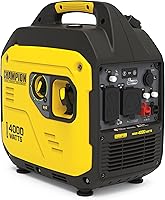
The Champion 4000W Dual Fuel RV Inverter is the best overall pick for fridge backup. It offers 4000 starting watts and 3000 running watts, so it clears a fridge surge and still has room for a freezer or a few lights.
It runs on gasoline or propane. On gasoline it gives 3000 running watts and up to 10 hours at quarter load; on propane it drops to 2700 running watts but stretches to up to 25 hours.
That long propane run time suits an overnight outage with a fridge cycling on and off. At 64 dBA from 23 feet, it stays quiet for a fuel-powered unit.
It weighs 51.8 pounds and includes CO Shield carbon monoxide shutoff. Champion backs it with a 3-year limited warranty.
WEN 3600W RV Inverter (56360iX): best for a light, single-fridge setup
The WEN 3600W RV Inverter (56360iX) is the light option. At 46.3 pounds, it's easy to move, and its 3600 surge watts and 2900 rated watts cover one fridge with a small margin.
WEN rates its total harmonic distortion at under 1.2 percent at full load, so it's clean for a fridge's electronics. The Watchdog CO Shutdown Sensor turns the unit off if carbon monoxide builds up.
A fuel shutoff valve runs the carburetor dry before storage. It's a gasoline-only unit with a 1.6-gallon tank and about 5 hours at half load.
That's shorter than the Champion's propane run time, but the lighter weight helps if you move it often.
Westinghouse 8200W Tri-Fuel Inverter: best for a fridge plus major appliances
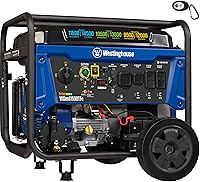
The Westinghouse 8200W Tri-Fuel Inverter is the pick when the fridge isn't the only thing you need to run. It delivers 6600 running watts and 8200 peak watts on gasoline, and it's transfer switch ready.
Its 14-50R 50A outlet can carry a fridge, a sump pump, lights and an air conditioner at once. It runs on gasoline, propane or natural gas.
On propane it gives 5940 running watts; on natural gas, 5280 running watts. The 298 cc engine and 3.9-gallon tank give up to 17 hours at quarter load.
Electric start and a remote key fob make starting easy, and it's rated under 3 percent THD. At 134.5 pounds it's a heavy unit, so it suits a permanent backup spot more than a grab-and-go role.
How do you hook a refrigerator up to a generator?
Hook a refrigerator up by plugging it into a 120V household outlet on the generator with a heavy-duty cord. Most fridges use a standard 5-20R outlet, which all three generators here include.
Start the generator and let it settle before plugging in the fridge. Plug the fridge in first, then add other loads one at a time.
If the generator trips when the compressor kicks on, unplug other loads and try again.
Keep the cord as short as practical and rated for the load. Run the generator outdoors, well away from doors and windows.
Never run it in a garage, basement or any enclosed space. Carbon monoxide builds fast, which is why all three models here include a CO sensor.
If you plan to power the fridge through your home's wiring instead of a cord, a transfer switch is the safe way. Our guide to generators for home backup covers that setup and what to look for.
How long can a generator keep a fridge running?
A generator can keep a fridge running for as long as its fuel lasts, and a fridge is a light load. The fridge only draws power when its compressor cycles, so the generator spends much of its time under low load.
That's where dual-fuel and tri-fuel models help. The Champion's propane mode runs up to 25 hours at quarter load.
The Westinghouse runs up to 17 hours on a 3.9-gallon tank. The WEN's 1.6-gallon tank gives about 5 hours at half load.
For an outage of a day or more, a model that runs on propane or natural gas gives you more time between refuels.
Keep the fridge door closed during an outage to slow warming. A fridge holds its temperature for hours if it isn't opened.
Run the generator in short sessions if fuel is tight, and check food temperatures when power returns. For outage planning, see our guide to generators for power outages.
Which generator should you pick for your refrigerator?
Pick the Champion 4000W Dual Fuel RV Inverter for most homes. Its 3000 running watts and 4000 starting watts clear a fridge surge with headroom, and its propane mode gives long run times.
Choose the WEN 3600W if a single fridge is all you need and you want the lightest unit.
Choose the Westinghouse 8200W Tri-Fuel if your fridge shares the load with an air conditioner or sump pump.
So can a portable generator power a refrigerator? Yes, when the watts line up.
Check your fridge's running and surge figures, pick an inverter with clean power, and leave a little headroom. That combination keeps the fridge cold through an outage without overloading the generator.
Frequently asked questions
Can a portable generator power a refrigerator?
Yes, if the generator's running watts exceed the fridge's steady draw and its surge rating covers the startup spike. Most refrigerators run on 100 to 800 watts but need two to three times that briefly when the compressor starts, so check the fridge label first.
Will a generator damage my refrigerator?
An inverter generator with low total harmonic distortion produces clean power that suits modern refrigerators and their electronics. A conventional generator with a rougher sine wave is a riskier match for a fridge with a digital control board.
How long can a generator run a refrigerator?
It depends on the generator's tank and load. A fridge is a light load, so a generator that runs 10 hours at quarter load on gasoline could keep it going for a long stretch, and dual-fuel models can stretch run time further on propane.
Should I plug a refrigerator into a generator's household outlet?
Yes, a standard 120V household outlet on the generator suits most refrigerators. Use a heavy-duty cord rated for the load, keep it as short as practical, and never run a generator indoors or in a garage.