Do You Need a Generator Transfer Switch?
You need a generator transfer switch or another approved transfer device to power household wiring from a portable generator. Have a qualified electrician match the equipment to your panel, generator, and essential circuits.
On this page (7 sections)
- What does a generator transfer switch do?
- Should you choose a manual switch, an interlock, or automatic transfer?
- How do you choose compatible transfer equipment?
- Which generators suit these home-backup setups?
- What should the electrician leave ready for an outage?
- What care and safety mistakes should you avoid?
- Which generator transfer switch setup should you choose?
You need a generator transfer switch or another approved transfer device to connect a portable generator to household wiring. You don't need one for suitable appliances plugged directly into the generator through properly rated outdoor cords.
The buying decision starts with your essential circuits, your electrical panel, and how much work you're willing to do during an outage. “Transfer-switch ready” means a generator has a connection for compatible equipment, not that a switch comes with it.
What does a generator transfer switch do?
A transfer switch selects utility power or generator power for the circuits it serves. Correct installation and operation prevent generator power from feeding back into utility lines.
A manual setup requires you to start the generator and transfer the loads yourself. An automatic setup changes sources according to its design, but it also needs a compatible generator and starting controls.
For a broader look at power sources and connection options, see our guide to portable generators.
Should you choose a manual switch, an interlock, or automatic transfer?
Choose a manual transfer panel for a defined group of essentials, an approved interlock for circuit selection at a compatible panel, or automatic transfer when the complete system supports it.
A manual transfer panel can make outage decisions easier because the backed-up circuits are chosen during installation. It's a useful fit when you want a clear routine for the refrigerator, heating controls, lights, and other priorities.
A panel interlock prevents the main breaker and generator breaker from being on together. It leaves you responsible for choosing circuits and managing the load, so clear labels and an operating checklist matter.
An automatic transfer switch suits buyers who want less manual intervention. Don't assume remote electric start provides automatic backup: the switch, generator controls, fuel supply, and installation must work as a system.
For a few cord-connected appliances, a panel connection may be unnecessary. Hardwired equipment needs an approved connection through household wiring.
How do you choose compatible transfer equipment?
Match the equipment to your loads, panel, voltage, and generator outlet before buying. Have an electrician check the full connection, including the inlet, cord, wiring, breakers, and transfer device.
Size the generator transfer switch setup around essential loads
Start with appliances you need, then separate continuous loads from equipment with motors. A refrigerator, sump pump, or heating blower can need extra power when it starts.
Write down running and starting requirements rather than choosing by generator peak output alone. Decide which loads can wait, such as electric cooking, clothes drying, or other large appliances.
Use what size generator you need to prepare your load list. Our guide to portable generators for home backup helps narrow the generator choices afterward.
Match the outlet, inlet, and electrical rating
A 30A or 50A outlet is one part of the connection. A higher-rated transfer device doesn't increase generator output, and a lower-rated connection can limit how much power reaches the home.
Confirm voltage as well as amperage. A 120V RV outlet isn't interchangeable with a 120/240V home-backup connection just because both carry a 30A label.
Have the electrician check neutral switching and grounding requirements for the exact generator and transfer arrangement. Don't change a generator's neutral connection or improvise with adapters to solve a mismatch.
Plan fuel and placement before installation
Choose a fuel you can store or access during an outage, and check generator output on that fuel. Gasoline figures shouldn't be used as the load budget for propane or natural gas operation.
Natural gas also needs a suitable supply and connection; having a gas service doesn't settle those requirements. Our dual-fuel versus gas-only guide explains the practical fuel tradeoffs.
Plan a safe outdoor operating location before deciding where the inlet belongs. The cord must reach without forcing the generator close to a door, window, or vent.
Which generators suit these home-backup setups?
Choose among these generators by required output and fuel access. These are generators for compatible transfer equipment, and none of the product boxes below is a transfer switch.
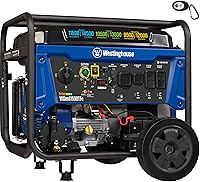
Westinghouse 14500W Tri-Fuel: for higher essential loads
The Westinghouse 14500W Tri-Fuel suits households whose load calculation calls for more capacity than the other options here. It produces 11,500 running watts and 14,500 peak watts on gasoline, with propane and natural gas as alternative fuels.
Choose it when starting demands or several essential loads justify the extra output. Its less-than-5% THD specification also matters if cleaner output for electronics is part of your buying plan.
Westinghouse supports connection through compatible manual transfer equipment, an interlock, or its separately sold WATS200 automatic transfer switch. The generator weighs 230 lb, so plan a clear route from storage to its operating location.
Skip it if a smaller generator comfortably covers your essentials or you can't manage moving a machine this heavy. Higher output won't help if your inlet or transfer connection limits delivery.
Westinghouse 13500W Tri-Fuel: for homes with natural gas access
The Westinghouse 13500W Tri-Fuel fits buyers who want natural gas capability without needing the largest gasoline output here. It delivers 10,500 running watts and 13,500 peak watts on gasoline.
It shares the larger model's weight, so choosing it doesn't reduce the moving burden. Westinghouse supports pairing it with the separately sold WATS200 for a compatible automatic backup setup.
Choose it when your essential loads fit its capacity and you have a practical plan for all 3 fuels. Skip it if natural gas has no role in your backup plan; the dual-fuel option below covers gasoline and propane.
Westinghouse 13500W Dual Fuel: for gasoline and propane plans
The Westinghouse 13500W Dual Fuel suits buyers who will use gasoline or propane and don't need natural gas capability. Its gasoline output matches the 13500W tri-fuel model.
Push-button and remote electric start reduce starting effort, while recoil start adds another starting option. Westinghouse also supports this model with its separately sold WATS200 automatic transfer switch.
Choose it for a home-backup plan built around stored fuel. Skip it if connecting to a household natural gas supply is a firm requirement, and confirm propane output before sizing your loads.
Westinghouse 6500W Dual Fuel Home Backup: for fewer essentials
The Westinghouse 6500W Dual Fuel Home Backup fits a smaller load plan and buyers who want a lighter machine. It weighs 135.6 lb, which still calls for a sensible moving and storage plan.
Output is 5,300 running watts and 6,500 peak watts on gasoline, or 4,800 running watts and 5,800 peak watts on propane. Budget your circuits around the fuel you'll actually use.
Choose it when refrigeration, selected lighting, and other essentials fit the calculation with room for starting loads. Skip it for a plan that depends on several large appliances running together or requires a 50A generator outlet.
What should the electrician leave ready for an outage?
The finished installation should include clear circuit labels and a written operating sequence. Ask the electrician to walk you through transferring power and returning to utility service.
Before installation, confirm:
- Which circuits the setup will serve.
- Which loads can run together and which must stay off.
- The correct generator outlet, cord, inlet, and transfer device.
- Any permits or inspections required locally.
- The generator's placement, grounding arrangement, and fuel connection.
Keep the sequence with the equipment. Follow the exact manuals for connection, startup, load transfer, shutdown, and utility restoration.
Bring loads on gradually as directed rather than starting every selected appliance together. If the generator struggles or protection trips, reduce the load and find the cause.
What care and safety mistakes should you avoid?
Keep the generator outdoors and away from openings, with working CO alarms in the home. A transfer switch handles electrical source selection; it doesn't control exhaust.
Never operate a generator in a home, garage, or enclosed space, even with doors open. A built-in CO sensor doesn't make those locations safe; read whether a generator can run in a garage before choosing storage and operating locations.
Keep connections dry and use only weather protection allowed by the generator manual. Our guide to running a generator in the rain covers weather precautions.
Never use a cord with exposed male plug ends to feed household wiring. Turning off the main breaker by hand doesn't replace approved transfer equipment.
Between outages, inspect the cord and connectors for damage, keep inlet covers closed, and maintain oil and starting batteries according to the manual. Shut down and let the generator cool before refueling.
Track operating hours so long outages don't push maintenance past its due point. See how long a generator can run continuously when planning fuel and maintenance breaks.
Which generator transfer switch setup should you choose?
Choose a manual transfer panel if you want a fixed set of essential circuits and a clear outage routine. Choose an approved interlock if your panel supports it and you're comfortable selecting loads yourself.
Choose automatic transfer only after confirming the whole system's compatibility and operating needs. For whole-home expectations, have an electrician assess the home's loads and whether a standby system is a better fit.
Among these generators, choose the 14500W Tri-Fuel for higher calculated demand, the 13500W Tri-Fuel for a natural gas plan, or the 13500W Dual Fuel for gasoline and propane. Choose the 6500W Dual Fuel for fewer essentials.
Before ordering a generator transfer switch, prepare your circuit list and review our home backup generator guide. Use the generator sizing guidance to give your electrician a realistic starting point.
Frequently asked questions
Do I need a transfer switch for a portable generator?
You need a transfer switch or another approved transfer device to power household wiring from a portable generator. You don't need one for suitable appliances connected directly with properly rated outdoor cords.
Have an electrician confirm which approach fits your essential loads, electrical panel, and local rules.
Can I plug a generator into a wall outlet?
Never plug a generator into a household outlet. That connection can send power backward through household wiring and onto utility lines, putting people at risk of electric shock.
Turning off the main breaker alone isn't an approved transfer method; use properly installed transfer equipment for household wiring.
Is an interlock kit the same as a transfer switch?
An interlock kit is different from a separate transfer switch. A compatible, approved interlock prevents the main and generator breakers from being on together, while you choose loads at the panel.
A manual transfer panel often groups selected circuits.
An electrician should confirm which arrangement your panel supports.
What size generator do I need for a transfer switch?
Size the generator for the loads you expect to run together, allowing for appliance starting needs and output on your chosen fuel. Then match the transfer equipment, inlet, cord, and protection to that setup.
A higher-rated switch doesn't increase the generator's output or guarantee enough power for every circuit.