Does a Generator Give Off Carbon Monoxide?
Yes, a fuel-powered generator gives off carbon monoxide (CO) whenever its engine runs. Use it outdoors at least 20 feet from your home, with exhaust pointed away from doors, windows, and vents.
On this page (9 sections)
- Why does a generator give off carbon monoxide?
- How far from the house should you place a generator?
- Does a CO shutoff stop all carbon monoxide risk?
- Which generator suits your backup or RV needs?
- How should you size and prepare a generator?
- Can carbon monoxide enter a house from outside?
- What are the symptoms of carbon monoxide poisoning?
- Does running time affect carbon monoxide danger?
- Does a generator give off carbon monoxide, and which should you choose?
Yes, a fuel-powered generator gives off carbon monoxide (CO) whenever its engine runs, including when it uses propane instead of gasoline.
CO has no color or smell, so your senses cannot tell you whether the air is safe. Before buying a generator, make sure you have an open outdoor location at least 20 feet from your home, with exhaust directed away from openings.
A CO shutoff is worth choosing, but it cannot make an unsafe location suitable.
Why does a generator give off carbon monoxide?
A generator produces carbon monoxide because its engine burns fuel. Gasoline and propane engines both produce CO, including engines in inverter generators.
“Inverter” describes how the unit produces electrical power, not an exhaust-free engine. A quiet generator still creates dangerous exhaust, and a small model still needs proper outdoor placement.
Battery power stations do not produce engine exhaust while supplying stored electricity. If your property cannot support safe generator placement, consider stored power for essential loads instead.
How far from the house should you place a generator?
Place a portable generator outdoors at least 20 feet from your home, with exhaust directed away from doors, windows, and vents. Follow any greater clearance required by its manual, and consider nearby homes and occupied buildings too.
Never operate it in a home, garage, basement, shed, carport, or enclosed porch. Fans, open doors, and cracked windows cannot make these locations safe.
Choose firm, level ground where the generator can stay dry without being enclosed. For wet-weather planning, read whether a generator can run in the rain.
Measure the cord route before an outage rather than moving the generator closer when a cord falls short. Use outdoor-rated cords sized for the load and distance, following the generator and appliance instructions.
For household circuits, arrange suitable transfer equipment with a qualified electrician. Our guide to whether you need a generator transfer switch explains the options; never feed generator power into a wall outlet.
Does a CO shutoff stop all carbon monoxide risk?
No, automatic CO shutdown is a backup safety feature, not protection against every exposure. It does not replace safe placement or working CO alarms inside your home.
A generator sensor measures conditions near the unit. Exhaust can travel toward a building without the sensor measuring what people inside are breathing.
Does a generator with CO shutoff still give off carbon monoxide?
Yes, a generator with CO shutoff still gives off carbon monoxide while its engine runs. The sensor stops the engine when its shutdown conditions are reached; it does not remove CO from the exhaust.
If a CO shutdown occurs, follow the manual and investigate the location before restarting. Never bypass the sensor or keep restarting the generator in the same spot.
Compare portable generators with CO shutoff if this feature is missing from a model you're considering.
Which generator suits your backup or RV needs?
Choose capacity and connections for your actual loads, then make CO shutdown part of your requirements. All 4 models below include automatic CO shutdown, but their power, fuel options, and portability suit different buyers.
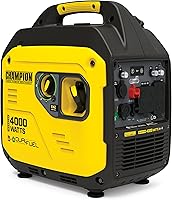
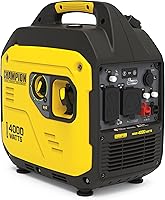
Champion: for smaller RV and essential-load setups
The Champion 4000W Dual Fuel RV Inverter suits buyers who want gasoline and propane options in a smaller unit. It weighs 51.8 pounds and has a TT-30R RV outlet, making it easier to plan around than the larger home-backup models here.
It supplies 3,000 running watts on gasoline or 2,700 on propane, with 4,000 starting watts. Size your appliance group for the fuel you'll actually use, especially if propane will be your outage reserve.
Skip it if you need 240V equipment or several large appliances at once. Its recoil start also makes it a poor match for someone who needs push-button starting.
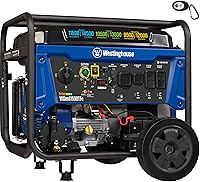
Westinghouse 13500W: for larger home-backup loads
The Westinghouse 13500W Dual Fuel suits a homeowner planning a larger, properly connected backup setup. On gasoline, it supplies 10,500 running watts and 13,500 peak watts, with 30A and 50A connections for compatible transfer equipment.
Push-button and remote electric starting suit buyers who want easier starts. Its 230-pound weight makes a planned storage location and clear moving route more useful than treating it as a carry-anywhere generator.
Skip it for light camping loads or frequent lifting into a vehicle. Its gasoline and propane options still require you to check the manual's output for your chosen fuel before sizing loads.
Westinghouse 6500W: for selected household circuits
The Westinghouse 6500W Dual Fuel Home Backup suits buyers who need more capacity than a small inverter without moving to the largest model here. It supplies 5,300 running watts on gasoline or 4,800 on propane.
Its L14-30R transfer connection and TT-30R RV outlet support different uses, provided the equipment and loads match. The wheel kit helps with ground movement, but its 135.6-pound weight still matters for steps and vehicle loading.
Skip it if your plan depends on running every major household appliance together. Build a list of essential circuits and allow for motor startup demand before choosing it.
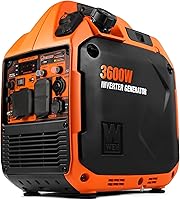
WEN: for gasoline-only RV and electronics use
The WEN 4800W RV Inverter suits buyers who want inverter power and more running capacity than the Champion here. It supplies 4,000 rated watts and 4,800 surge watts, with a TT-30R RV outlet and power suited to sensitive electronics.
Onboard wheels and a telescoping handle help move its 72.7-pound body. Its fuel-shutoff function uses the remaining carburetor fuel before stopping, which helps reduce deposits from stagnant gasoline.
Skip it if propane flexibility or 240V output is essential. Follow WEN's storage instructions even when using fuel shutoff, since that feature does not replace all fuel-system care.
For the differences between these designs, see portable generators: gas, dual fuel, and inverter explained.
How should you size and prepare a generator?
Add running loads and account for startup demand before choosing capacity. Use continuous output for the fuel you plan to burn, rather than the largest number in the model name.
Refrigerators, pumps, and air conditioners may need extra power when their motors start. Our guide to what size generator you need helps turn appliance labels into a workable load plan.
Before the first use, complete assembly and add the correct oil as directed. Read the connection, grounding, fuel, and shutdown instructions before an outage leaves you working in poor light.
Start with appliances disconnected, then connect loads in the sequence the manual allows. Keep the exhaust outlet clear of stored items, vegetation, and anything that could block airflow or catch fire.
Can carbon monoxide enter a house from outside?
Yes, outdoor exhaust can enter through openings, including doors, windows, and vents. Wind and nearby structures can change its path, so distance alone is not a reason to aim exhaust toward a building.
Don't place the unit beneath an open window or near an RV's door or ventilation intake. Read why a garage is unsafe for generator operation before choosing a sheltered location.
Install battery-powered or battery-backup CO alarms near sleeping areas, following their placement instructions. Check batteries and replace alarms according to the maker's schedule; a generator's sensor cannot replace them.
What are the symptoms of carbon monoxide poisoning?
CO poisoning can cause headache, dizziness, weakness, nausea, vomiting, chest pain, and confusion. Do not wait for several symptoms or a strong exhaust smell before taking action.
If a CO alarm sounds or anyone develops symptoms while a generator runs, get everyone outside into fresh air immediately and call 911. Tell responders that a generator may be involved.
Do not delay leaving to turn it off or search for the source. Stay outside until emergency responders say re-entry is safe.
Does running time affect carbon monoxide danger?
Yes, the engine produces exhaust throughout operation, and unsafe placement can cause dangerous exposure quickly. There is no safe short period for running a fuel-powered generator indoors.
Plan fuel stops without bringing the unit into shelter. Shut it down and let it cool before refueling, and keep fuel containers away from the operating generator.
Check oil and service intervals in the manual, especially during extended outages. For fuel planning and shutdown breaks, read how long a generator can run continuously.
Does a generator give off carbon monoxide, and which should you choose?
Every fuel-burning model here gives off carbon monoxide, so suitable outdoor placement comes before the buying decision. If you cannot provide it, choose another power source.
Pick the Champion for smaller dual-fuel RV loads, the WEN for greater gasoline-only inverter capacity, or either Westinghouse for household backup matched to your circuit plan. Choose the larger Westinghouse only when your loads justify its size and weight.
Before ordering, settle the location, cord route, connections, and indoor alarms. The generator safety and sizing guide can help you complete that plan.
Sources
Frequently asked questions
Does a generator give off carbon monoxide when it runs on propane?
Yes, a generator running on propane produces carbon monoxide in its exhaust. Switching from gasoline to propane does not make indoor operation safe, so keep the unit outdoors at least 20 feet from your home, direct exhaust away from openings, and use working CO alarms inside.
Can I run a generator in a garage with the door open?
No, never run a fuel-powered generator in a garage, even with the door fully open. Exhaust can collect inside and enter adjoining rooms, so move the generator to an open outdoor location at least 20 feet from your home and direct its exhaust away from doors, windows, and vents.
Does a CO shutoff make a generator safe indoors?
No, automatic CO shutoff does not make a generator safe indoors or close to a building. Its sensor responds to conditions near the generator, not the air throughout your home, so you still need proper outdoor placement and working battery-powered or battery-backup CO alarms near sleeping areas.
What should I do if a generator is running and I feel dizzy?
Get everyone outside into fresh air immediately and call 911 if anyone has headache, dizziness, nausea, weakness, chest pain, or confusion. Don't delay leaving to switch off the generator or find the source, and don't re-enter the building until emergency responders say it is safe.