How to Choose a Generator for an RV or Camper
Choose a generator for a camper by adding the running watts of appliances you'll use together, then allowing for motor startup demand. Match the RV connection, and choose a fuel type and weight that suit your trips.
On this page (11 sections)
- What size generator for a camper should you choose?
- Which outlets and connections should you check?
- Which inverter generator suits your camper?
- Is a dual-fuel generator useful for a camper?
- How much generator noise is acceptable at a campground?
- Where should you place a generator near a camper?
- How portable should a camper generator be?
- How do you set up and care for a camper generator?
- Which camper generator mistakes should you avoid?
- Frequently asked questions
- Which generator for a camper should you buy?
Choose a generator for a camper by matching its running output to your simultaneous loads, then checking startup demand and RV outlet fit. Fuel choice, lifting weight and campground rules should narrow the options after you know how much power you need.
A camper used mainly for battery charging needs a different power plan from one running air conditioning and cooking appliances. Decide which conveniences must work together and which can take turns.
For model comparisons, see our best generators for RVs and best generators for camping.
What size generator for a camper should you choose?
Choose enough rated watts for continuous use, plus surge capacity for appliances with motors. The larger number in a generator's name is often its temporary starting output.
Make a load list before choosing a model. Include equipment that switches on automatically, such as a refrigerator or battery charger, as well as appliances you turn on yourself.
| Load group | What to check | Planning choice |
|---|---|---|
| Lights and electronics | Combined draw from chargers and devices | Group these small loads together |
| Battery charging | Charger or converter input demand | Allow for charging after batteries run low |
| Microwave and cooking appliances | Electrical input watts | Run high-draw appliances separately |
| Air conditioner | Running watts and startup demand | Size around startup with other loads active |
| Water heating and refrigeration | Electric mode and automatic operation | Choose permitted operating modes deliberately |
Use electrical input watts, not a microwave's cooking output or an air conditioner's cooling capacity. Those numbers describe different things.
If an appliance gives amps instead of watts, volts multiplied by amps can help estimate demand. Motors and electronic equipment may need more detail, so use manufacturer input and startup figures where available.
How do you size a generator for a camper air conditioner?
Size around the air conditioner's starting demand plus other active loads, then confirm that ongoing use fits the generator's rated output. Cooling capacity alone cannot tell you which generator will start it.
For example, imagine appliances using 1,800 watts continuously, with one motor needing an extra 1,200 watts to start. That plan needs at least 3,000 watts during startup, even though the steady load is much lower.
These are example numbers, not estimates for your camper. Get your air conditioner's requirements from its manual or manufacturer, especially if a previous owner changed the equipment.
Avoid planning to use every available watt continuously. Extra capacity helps accommodate a charger drawing more power than expected or another appliance cycling on.
Can a small generator run a camper?
A small generator can handle a limited load plan, especially charging and low-power devices. It becomes a poor choice when you expect air conditioning and several high-draw appliances to run together.
Reduce demand deliberately: pause cooking appliances while cooling starts, and check which RV systems have electric heating modes. Follow appliance instructions when choosing another permitted energy source.
For a full calculation, read what size generator do I need?. Our portable generator guide explains the main generator types.
Which outlets and connections should you check?
Match voltage, plug type and current limits, then use the connection method your RV requires. An RV-ready socket makes connection simpler, but its shape does not determine the generator's total output.
A TT-30 connection is for 120V RV service. At 120V, a full 30A supply represents 3,600 watts, so a generator with lower running output cannot deliver that full amount continuously.
A 50A camper also cannot receive full campground service through a smaller generator and an adapter. An approved adapter may allow limited use, but you must manage the available load.
Check the limits of the generator outlet, RV cord and any adapter. The lowest limit controls, even when the generator has capacity remaining elsewhere on its panel.
Use a cord rated for the load and outdoor conditions, within the length guidance in the manuals. Damaged plugs, loose connections and undersized cords need attention before use.
Some RV electrical protection systems require a particular generator configuration. If yours rejects the connection, have an RV technician resolve the cause rather than bypassing protection or changing wiring yourself.
Which inverter generator suits your camper?
Choose the WEN DF360iX for compact dual-fuel use, the Champion for a gasoline-only carry option, or the WEN 56477i when your load calculation requires more output. Each has an RV receptacle, but their lifting needs and power limits differ.
Inverter power also suits many electronics. For the differences from conventional designs, see inverter vs regular generators.
WEN DF360iX: for campers who want propane flexibility
The WEN 3600W Dual Fuel RV Inverter (DF360iX) supplies 2,900 rated watts on gasoline or 2,600 on propane. Choose it when either fuel covers your load plan and you want a unit you can carry rather than a heavier wheeled model.
The quick-connector helps with propane setup, while fuel shutoff uses the remaining gasoline in the carburetor before shutdown. WEN also includes CO Watchdog shutdown and power intended for sensitive electronics.
Skip it if your required running load exceeds its propane output and propane will be your main fuel. Switching fuels changes available capacity, so calculate around the fuel you expect to use.
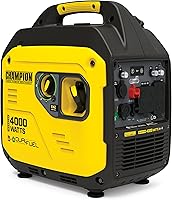
Champion 4000W: for gasoline users who carry their generator
The Champion 4000W RV Inverter fits campers who want 3,000 running watts and a manageable lifting weight without needing dual fuel. Its gasoline engine provides 4,000 starting watts.
Champion specifies up to 10 hours of runtime at 25% load from its 1.54-gallon tank. That helps with light-load planning, but heavier use will shorten the interval between fuel stops.
An optional parallel kit supports connection to another compatible Champion 4000-watt inverter. Skip this model if propane operation is essential or you need more continuous output from a single unit.
WEN 56477i: for campers with larger simultaneous loads
The WEN 4800W RV Inverter (56477i) suits buyers whose load calculation calls for 4,000 rated watts, with 4,800 surge watts available. That gives more room for simultaneous appliances than the smaller inverters here.
Its wheels help on suitable ground, but its 72.7-lb weight still matters when loading a vehicle. WEN specifies up to 7 hours at half load from the 1.9-gallon tank.
Choose it when extra capacity solves a real need. Skip it if your loads are modest and you must lift the generator alone into a high storage bay.
Is a dual-fuel generator useful for a camper?
Dual fuel is useful when you want a choice between gasoline and propane, particularly if either fuel may be easier to obtain during a trip. Size the generator using the output for your preferred fuel.
Propane avoids leaving gasoline in the carburetor during propane-only operation. You still need approved cylinders, proper connections and enough fuel remaining for both the generator and other camper uses.
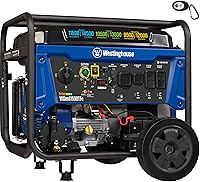
Westinghouse 4650W: for trips with less frequent loading
The Westinghouse 4650W Dual Fuel RV Ready suits campers who want more dual-fuel running capacity and can manage a heavier open-frame generator. It supplies 3,600 rated watts on gasoline or 3,240 on propane.
Its 4-gallon gasoline tank, fuel gauge and hour meter help with fuel and service planning. CO shutdown, low-oil shutdown and overload protection are included.
At 108 lb, it is a poor fit for frequent solo lifting. Choose it only after planning how to load, secure and position it; campers prioritizing lighter handling should favor one of the smaller inverters.
Learn more about fuel operation in how a dual-fuel generator works and trip planning in how long a generator runs on propane.
How much generator noise is acceptable at a campground?
The campground's generator policy decides what is allowed, including operating hours and sound limits. Confirm those rules before buying for a particular destination.
Champion specifies 64 dBA from 23 feet for its compact inverter. WEN specifies 65 decibels at quarter load for the DF360iX, but the measurement details here are not matched closely enough to rank them by those numbers.
Do not compare decibels without checking distance and load. A lightly loaded generator's sound figure will not describe every operating condition.
Plan charging and cooking around permitted hours. If you need power after quiet hours, a generator alone cannot meet that schedule.
Never build a tight enclosure around a generator to soften the sound. Safe cooling and exhaust clearance take priority, and nearby campers must remain clear of exhaust too.
Where should you place a generator near a camper?
Run it outdoors in the open, with exhaust directed away from your RV, neighboring campers, doors, windows and vents. Follow the generator manual and applicable public safety guidance for separation.
Never operate inside an RV, tent, garage, storage compartment or partly enclosed shelter. Carbon monoxide is invisible and odorless, so smell cannot tell you whether exhaust is entering the camper.
Keep working CO alarms inside the RV and check them as their instructions direct. A generator's automatic CO shutdown adds protection but does not make a poor operating location safe.
Choose firm, level ground with the clearances required for cooling. Recheck exhaust direction if nearby vehicles move or campsite conditions change.
Read does a generator give off carbon monoxide? before departure. For wet-weather planning, see can a generator run in the rain?.
How portable should a camper generator be?
Choose a generator you can load and move with the help available on each trip. Wheels solve part of the job, but they do not lift a unit into a truck or carry it across steps.
Measure the storage opening, usable compartment space and route to the operating spot. Allow room to grip the handles without catching your fingers or tipping the unit.
Compare generator weight separately from fuel containers and other gear. A propane cylinder, gasoline can and RV cord add to the equipment you must transport.
Secure everything according to the relevant transport instructions. Never assume an RV storage compartment is suitable for carrying fuel simply because the container fits.
How do you set up and care for a camper generator?
Follow the manual's initial setup, startup and service schedule, and begin with large RV loads switched off. A repeatable routine helps prevent overloads and missed maintenance.
- Choose a safe operating location and inspect the unit for damage or leaks.
- Check oil on level ground using the manual's method.
- Connect the approved fuel supply and inspect the cord and plugs.
- Start and warm the generator as directed, then connect RV power in the required order.
- Add loads gradually, starting the largest motor load while other demand is low.
- Before shutdown, remove loads and follow the manual's cooling and fuel instructions.
Low-oil shutdown does not replace checking the oil level. Keep a record of operating hours so oil changes and air-filter service follow actual use.
Before refueling gasoline, shut the engine off and let it cool. Keep fuel away from ignition sources, and never pour fuel into a running generator.
Before storage, follow the fuel instructions for that model. Fuel shutoff helps clear a carburetor, but it does not replace all fuel-system care or other scheduled maintenance.
Keep cooling openings clear and inspect for loose parts after travel. If a breaker trips, reduce the load and find the cause before restarting.
Which camper generator mistakes should you avoid?
Avoid buying by peak watts, plug shape or claimed runtime alone. Those shortcuts overlook the limits that matter during a trip.
- Forgetting battery charging: A depleted battery bank can add demand when RV power is first connected.
- Confusing cooking watts with input watts: Use the appliance's electrical demand in your calculation.
- Assuming an adapter adds capacity: It changes the connection, not the available output.
- Comparing unlike runtime figures: Quarter-load and half-load claims describe different operating conditions.
- Sharing propane without a reserve: Generator use leaves less fuel for other camper equipment.
- Expecting wheels to solve lifting: Plan the move into and out of the vehicle before buying.
Also check whether your destination permits generators at all. No amount of extra capacity solves a campsite rule that prevents operation.
Frequently asked questions
A camper generator must match your loads, connection and campsite conditions. These answers cover the checks that matter before you connect power.
What size generator do I need for a camper?
Choose a generator whose rated watts cover the appliances you'll run together, with enough surge capacity for motor startup. Include the battery charger and any automatic loads in your total.
If air conditioning matters, confirm its starting demand before choosing a model by its advertised peak watts.
Can I plug a generator directly into my RV?
Yes, if the generator outlet, RV cord and camper electrical system are compatible. Use the RV's shore-power inlet and an approved connection method, following both manuals.
An adapter changes plug fit, not available power, so keep the combined load within the generator, outlet, cord and adapter limits.
Are inverter generators good for RVs?
Inverter generators suit many RV trips because they offer power options for electronics and camper appliances in portable designs. You still need enough running and starting capacity for your loads.
Compare the specific model's outlets, power quality, weight and sound measurements rather than assuming all inverter generators perform alike.
Can a camper generator run in a campground?
Only run a camper generator where campground rules allow it, during the permitted hours and within any sound limits. Confirm that your campsite also has space for safe outdoor placement.
A quiet generator still creates exhaust, and permission to run one does not make a cramped location safe.
How far should a generator be from an RV?
Follow the generator manual and applicable public safety guidance for separation from your RV and nearby occupied spaces. Keep exhaust away from doors, windows and vents, including neighboring campers.
Operate outdoors in the open, and keep working CO alarms inside the RV; a shutdown sensor does not replace those precautions.
Which generator for a camper should you buy?
Pick the WEN DF360iX for compact dual-fuel use, or the Champion if gasoline suits your trips and you want a carryable inverter. Choose the WEN 56477i when larger simultaneous loads justify its added weight.
The Westinghouse fits buyers who need more dual-fuel running capacity and can handle the heavier unit. Rule out any model that fails your startup calculation, storage plan or campground requirements.
Before ordering, finish your load list and confirm the RV connection. Use our RV generator guide to compare models, and the generator size guide to check your calculation.
Frequently asked questions
What size generator do I need for a camper?
Choose a generator whose rated watts cover the appliances you'll run together, with enough surge capacity for motor startup; include the battery charger and any automatic loads in your total. If air conditioning matters, confirm its starting demand before choosing a model by its advertised peak watts.
Can I plug a generator directly into my RV?
Yes, if the generator outlet, RV cord and camper electrical system are compatible; use the RV's shore-power inlet and an approved connection method, following both manuals. An adapter changes plug fit, not available power, so keep the combined load within the generator, outlet, cord and adapter limits.
Are inverter generators good for RVs?
Inverter generators suit many RV trips because they offer power options for electronics and camper appliances in portable designs; you still need enough running and starting capacity for your loads. Compare the specific model's outlets, power quality, weight and sound measurements rather than assuming all inverter generators perform alike.
Can a camper generator run in a campground?
Only run a camper generator where campground rules allow it, during the permitted hours and within any sound limits; confirm that your campsite also has space for safe outdoor placement. A quiet generator still creates exhaust, and permission to run one does not make a cramped location safe.
How far should a generator be from an RV?
Follow the generator manual and applicable public safety guidance for separation from your RV and nearby occupied spaces; keep exhaust away from doors, windows and vents, including neighboring campers. Operate outdoors in the open, and keep working CO alarms inside the RV; a shutdown sensor does not replace those precautions.