Inverter vs Regular Generators: Which Do You Need? (November 2026)
The inverter generator vs regular generator choice comes down to your load and where you'll use it. Choose an inverter for quieter portable power and electronics; compare conventional models for heavier loads when noise and transport matter less.
On this page (13 sections)
- Inverter vs Regular Generators: Which Do You Need?
- Inverter generator vs regular generator: what is the difference?
- Which type is quieter?
- Which provides cleaner power for electronics?
- How much generator power do you actually need?
- Which uses less fuel during a long outage?
- Which is easier to move and store?
- Which of these compact inverters fits your plans?
- Which type suits home backup?
- Which type works better for camping and RVs?
- How should you set up and care for either type?
- What mistakes should you avoid before buying?
- Inverter generator vs regular generator: which should you choose?
Inverter vs Regular Generators: Which Do You Need?
The inverter generator vs regular generator choice starts with your load: choose an inverter for quieter portable power, and consider a conventional generator for heavier work where noise and weight matter less.
For camping, chargers and a few small appliances, an inverter is usually the better starting point. For several large backup loads or power tools, compare models of both types that meet the required output.
The three examples below are compact inverters, not a model-by-model comparison against conventional units. They show where portable inverter power fits and where you should look for more capacity.

Inverter generator vs regular generator: what is the difference?
An inverter generator processes electricity through electronic circuitry, while a regular generator typically supplies AC power directly from its alternator. This lets many inverters change engine speed without changing the frequency delivered to your appliances.
A conventional generator usually runs at a steady engine speed to maintain its output frequency. Its simpler design often makes it a less expensive route to higher wattage.
“Inverter” describes how electricity is produced, not a fixed size or fuel type. Large inverters exist, and an enclosed case alone doesn't prove a generator uses inverter technology.
Our portable generator guide explains the main categories. Read how an inverter generator works for a closer look at the conversion process.
Which type is quieter?
Inverter generators are usually quieter at light loads, making them a stronger choice around campsites and nearby homes. Compare sound figures only when the measurement distance and operating load match.
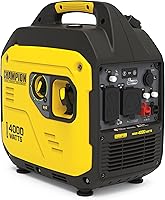
Champion specifies 53 dBA from 23 ft for its compact inverter. WEN specifies 65 decibels at quarter load for the 3600W model and 60 decibels at no load for the 2800W model.
Those measurements don't support a direct noise ranking because the operating conditions differ. They also won't tell you how loud each unit will be while starting a demanding appliance.
An inverter's engine can become louder as demand rises. Buying a small unit and running it near full output may undermine the quiet operation you wanted.
Check campground operating hours before buying, even if a generator is marketed as quiet. Our quiet generator guide explains what to compare beyond a single sound number.
Which provides cleaner power for electronics?
An inverter is usually the easier choice for electronics, but check the exact generator's output quality. Total harmonic distortion, or THD, describes how much the electrical waveform differs from a smooth sine wave.
The Champion produces power with less than 3% THD. WEN specifies under 0.3% at no load and under 1.2% at full load for both models here.
Some conventional generators also provide power suitable for electronics. Follow your equipment manufacturer's requirements rather than assuming every regular generator will damage a laptop or charger.
Don't treat a surge protector as a cure for unsuitable output. It cannot correct every voltage, frequency or waveform problem, and it doesn't increase the generator's capacity.
How much generator power do you actually need?
Size the generator for devices you'll run together, including their startup demands. Running watts describe continuous capacity; starting or surge watts cover brief extra demand.
A refrigerator compressor, pump or air conditioner may need extra power when it starts. Heating appliances can also consume a large share of a small generator's continuous output.
Use appliance labels and manuals to build your load plan:
- List the equipment you must run during the same period.
- Add its running watts.
- Check extra startup demand for motors.
- Confirm that startup can occur while the other planned loads remain connected.
- Match the required voltage and receptacles.
A generator's headline wattage is often its surge figure. Choosing from that number alone can leave you with too little continuous power.
How to compare inverter generator vs regular generator wattage
Use the same planned load for both types, then compare continuous output, startup capacity and connections. A larger surge number doesn't compensate for insufficient running watts.
For example, a hypothetical 900-watt running load with 800 additional startup watts briefly needs 1700 watts. Add another 500-watt appliance, and the same startup event now requires 2200 watts.
Leave room for uncertain loads and motors that could start together. You can manually stagger some appliances, but a refrigerator or sump pump may restart without warning.
Use our generator size guide to build a realistic appliance list before choosing a model.
Which uses less fuel during a long outage?
An inverter often saves fuel when demand stays low, because many models slow their engines as the load falls. At heavier loads, compare actual consumption rather than assuming the same advantage.
Runtime and efficiency are different. A generator with a larger tank can run longer while burning more fuel per hour.
Compare runtime at similar watt loads, not just equal percentages. Half load on a large generator can mean much more power than half load on a small one.
Champion specifies up to 11.5 hours at 25% load. WEN specifies up to 5 hours at half load for the 3600W model and up to 9 hours at half load for the 2800W model.
These figures describe different workloads and tank sizes, so they aren't an efficiency ranking. Plan fuel around your expected demand and allow for changes in conditions.
For extended use, follow the manual's service intervals and shutdown requirements. Our guide to how long a generator can run continuously explains how refueling and maintenance affect an outage plan.
Which is easier to move and store?
Small inverters are often easier to carry, but your lifting route matters as much as the weight. Steps, a high vehicle cargo floor and soft ground can make a portable generator awkward to move.
The Champion weighs 39.7 lb, compared with 46.3 lb for the WEN 3600W and 45 lb for the WEN 2800W. Allow for added fuel when planning transport.
Wheels help on suitable ground but don't solve lifting into a vehicle. Check the dimensions, handles and storage space before choosing a larger conventional unit.
Secure a generator upright during transport according to its manual. Let it cool before loading it, and keep fuel containers separate from occupied spaces.
Our best inverter generators guide offers more choices if these compact models don't match your output or carrying needs.
Which of these compact inverters fits your plans?
Choose the Champion for easier carrying, the WEN 3600W for its RV connection, or the WEN 2800W for smaller household-outlet loads. Each suits a different portable-power plan.
Champion: choose it when carrying weight comes first
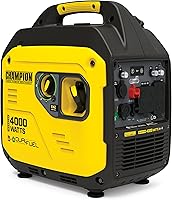
The Champion is the lightest option here and suits camping or tailgating with a modest appliance list. Skip it when emergency home backup is the goal, as Champion specifically advises against that use.
It can connect to another compatible Champion 2500-watt inverter through an optional parallel kit. Count the kit, second unit and extra transport space before treating parallel operation as your expansion plan.
WEN 3600W: choose it for a direct RV connection
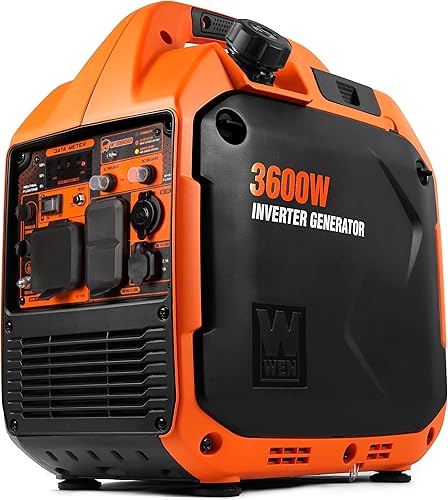
The WEN 3600W is the strongest fit here for RV buyers who need a TT-30R receptacle. That connector doesn't mean you can run every RV appliance together.
Skip it if your air conditioner and other planned loads exceed its running or startup capacity. A matching plug makes the connection convenient; it doesn't add available power.
WEN 2800W: choose it for camping with household plugs
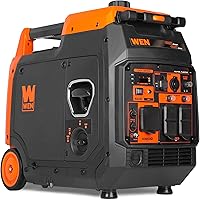
The WEN 2800W suits campers who need ordinary receptacles and USB charging rather than a dedicated RV outlet. Its fuel shutoff uses remaining carburetor fuel before shutdown, which helps reduce stagnant fuel buildup.
Choose the RV model instead if a TT-30R connection is a priority. Neither USB ports nor extra receptacles let you exceed the generator's total output.
Which type suits home backup?
Either type can serve selected household loads if its capacity and connections match the job. Larger conventional generators are worth comparing when several appliances, pumps or hardwired circuits must stay available.
Start with essential services rather than every room. Refrigeration, lighting and communications create a different load plan from electric heating, cooking and air conditioning.
None of these three compact models is a whole-house solution. Leave the Champion out of an emergency home backup plan and assess either WEN against the specific appliances you need.
Check voltage as well as wattage. A generator with only 120V outlets cannot directly supply an appliance that requires 240V.
For household wiring, have an electrician select and install suitable transfer equipment. Never feed generator power through a wall outlet or use a cord with exposed male plugs.
Our generator transfer switch guide explains the connection decision. For appliances connected by extension cords, follow both manuals and use outdoor-rated cords with enough current capacity.
Which type works better for camping and RVs?
An inverter is usually the better camping choice when lower noise, easier transport and electronics power matter. Confirm that the campsite permits generators before planning around one.
For tent camping, list the appliances that truly need AC power. Lights and phone charging create a different requirement from an electric cooker or space heater.
For an RV, check the air conditioner's startup demand and decide which appliances you'll switch off while it runs. Don't assume a compatible receptacle guarantees enough capacity.
A conventional generator can suit an RV if its output, noise and connection arrangement fit. Our RV and camper generator guide covers those checks in more detail.
How should you set up and care for either type?
Both types need safe outdoor placement, correct oil and fuel, and regular maintenance. Inverter electronics don't remove the hazards of an engine, hot exhaust or gasoline.
Operate a portable generator outdoors, at least 20 ft from your home, with exhaust directed away from buildings. Keep it away from tents, RV openings, doors, windows and vents, and follow any greater clearance in its manual.
Never run it in a garage, even with the door open. CO shutdown sensors are extra protection, and working CO alarms are still needed inside occupied buildings.
Choose a dry, level location and protect connections from moisture. Read whether a generator can run in the rain before choosing weather protection, since an improvised enclosure can trap exhaust or heat.
Before first use, add the specified oil and fuel, then follow the manual's startup sequence. Connect loads as directed and avoid starting several demanding appliances at once.
Check oil on the schedule the manual requires, including during extended use. Low-oil shutdown is a backup feature, not a replacement for routine checks.
Shut down and let the engine cool before refueling. Keep gasoline away from ignition sources and store it in approved containers.
For storage, follow the manufacturer's fuel treatment or draining instructions. Fuel shutoff can clear the carburetor, but it doesn't empty or preserve all gasoline remaining in the tank.
Keep air filters, cooling openings and spark plugs serviced on schedule. Record operating hours so a long outage doesn't carry the engine past an oil-change interval.
What mistakes should you avoid before buying?
Avoid choosing by surge watts, plug shape or the word “quiet” alone. Those shortcuts miss the limits that determine whether a generator will serve your actual load.
A common mistake is buying extra capacity for one rarely used appliance. Decide whether you can run that appliance separately before accepting more weight, fuel use and storage space.
The opposite mistake is buying the smallest unit and expecting careful switching to solve every overload. Automatic loads can start together, so your plan needs to cover them.
Don't assume any 2 generators can connect in parallel. Use only combinations and equipment specifically approved for the models involved.
Finally, choose a safe operating location before ordering. A generator that fits your wattage needs still needs enough outdoor space for exhaust clearance and safe connections.
Inverter generator vs regular generator: which should you choose?
Choose an inverter generator for frequent portable use, especially camping, electronics and places where noise matters. Choose a conventional generator when it meets a heavier load more affordably and you can manage its sound, size and transport.
Among these three, pick the Champion for modest camping loads and easier carrying. Choose the WEN 3600W for its RV connection, or the WEN 2800W when household receptacles and USB charging suit your trip.
Skip all three if your essential loads need more continuous power, greater startup capacity or a different voltage. Settle the connection and placement plan before committing to any model.
The final inverter generator vs regular generator decision should follow your appliance list. Use what size generator do I need? to turn that list into an output target.
For safe operation, follow U.S. Consumer Product Safety Commission generator guidance and CDC carbon monoxide guidance.
Frequently asked questions
Is an inverter generator better than a regular generator?
An inverter generator is usually better for camping, portable electronics and places where noise matters. A conventional generator may be the better buy for heavier loads when carrying weight and sound are less important; compare continuous output, startup capacity, outlets and power quality before choosing an exact model.
Can an inverter generator power a house?
An inverter generator can power selected home essentials when its running output, startup capacity and voltage match those loads. These three small models cannot cover a whole house, and Champion excludes its model here from emergency home backup; household wiring requires suitable transfer equipment installed by an electrician.
Do inverter generators use less fuel?
Inverter generators often use less fuel at light loads because many can reduce engine speed as demand falls. The advantage depends on the model and workload; compare fuel consumption or runtime at similar watt loads, accounting for tank size, rather than assuming the longest advertised runtime means the lowest fuel use.
Can a regular generator run sensitive electronics?
A regular generator can run sensitive electronics if its output quality meets the equipment manufacturer's requirements. Check the exact generator's total harmonic distortion, voltage and frequency specifications; a surge protector does not turn poor-quality power into a clean waveform, so choose a compatible power source before connecting your devices.
Are inverter generators safe to use indoors?
No fuel-burning inverter generator is safe indoors, in a garage or in a partly enclosed space. Operate it outdoors, at least 20 ft from your home, with exhaust directed away from buildings and openings; a CO shutdown sensor adds protection but cannot replace safe placement or working indoor CO alarms.