8 Best Generators for Camping (November 2026)
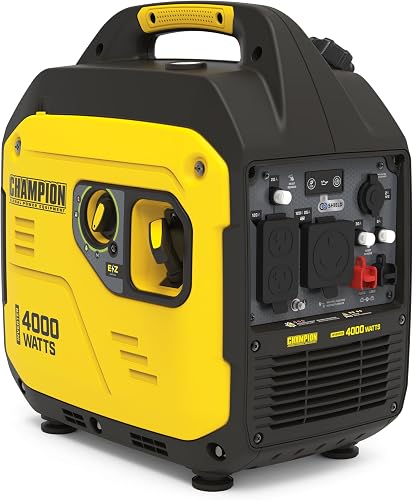
The best camping generators include the Champion 4000W RV Inverter for RV weekends, the Champion 2500W Ultralight Inverter for frequent carrying, and the Westinghouse iGen1500c 1500W Inverter for small electronics.
On this page (7 sections)
- How we chose the best generators for camping
- Which camping generator fits your setup?
- How much power should a camping generator provide?
- How do noise, weight and fuel change the choice?
- How should you set up a camping generator?
- What care and operating mistakes should you avoid?
- Which is the best generator for your camping trip?
The Champion 4000W RV Inverter is our pick for the best generator for camping with an RV because it combines a useful RV connection with enough continuous output for a planned appliance load. Choose the Champion 2500W Ultralight Inverter if lighter carrying matters more than powering larger equipment.
Start with what you'll plug in, where you'll place the generator and when the campground allows it to run. Those choices matter more than the largest number printed in a generator's name.
For a broader overview, read our guide to portable generators, gas, dual fuel and inverter models. If your trip centers on an RV, compare the best generators for RVs.
Our picks at a glance
-
1
-
2

-
3

- 4
 Check it
WEN 3600W RV Inverter (56360iX)
Best for occasional RV trips - 5
 Best for propane-powered RV campsCheck it
- 6
 Best for shared tent campsCheck it
- 7
 Best for tracking camp useCheck it
- 8
 Check it
Champion 2500W Dual Fuel Inverter
Best for light-load propane camping
How we chose the best generators for camping
The best generators for camping match continuous power, carrying needs and campsite restrictions. We compared output, connections, fuel options, sound information and features that help during use or storage.
The scores reflect those features and their fit for camping. Our top pick balances RV usefulness and portability; a lower-ranked model can still be the better choice for a smaller load or a propane-based setup.
Running watts and rated watts both describe continuous output here. Starting, surge and peak watts describe short bursts, so use the continuous figure when comparing everyday capacity.
| Product | Best for | Running watts | Weight | RV outlet | Our score |
|---|---|---|---|---|---|
| Champion 4000W RV Inverter | RV weekends | 3000 | 48.1 lb | 120V 25A TT-30R | 8.5 |
| Champion 2500W Ultralight Inverter | frequent carrying | 1850 | 39.7 lb | None | 8.1 |
| Westinghouse iGen1500c 1500W Inverter | small electronics | 1000 | About 32 lb | None | 8.0 |
| WEN 3600W RV Inverter (56360iX) | occasional RV trips | 2900 | 46.3 lb | TT-30R | 7.9 |
| BILT HARD 4500W Dual Fuel | propane-powered RV camps | 3500 gas, 3200 propane | 57.7 lb | TT-30R | 7.9 |
| WEN 2800W Inverter (56280iX) | shared tent camps | 2250 | 45 lb | None | 7.8 |
| WEN 2500W Inverter (56250iX) | tracking camp use | 1900 | 37.5 lb | None | 7.2 |
| Champion 2500W Dual Fuel Inverter | light-load propane camping | 1850 gas, 1665 propane | 43.2 lb | None | 7.1 |
Which camping generator fits your setup?
Choose an RV-ready model for a matching RV connection, a smaller inverter for modest plug-in loads, or dual fuel when propane helps your trip plan. Each choice below has a clear limit as well as a useful role.
1. Champion 4000W RV Inverter: best generator for RV camping
Choose the Champion 4000W RV Inverter for RV weekends when you want more appliance capacity without moving to the heaviest generator here. Skip it if your whole power plan is charging phones and running a few small devices.
Champion 4000W RV Inverter: Best for RV weekends
- 3000 running watts
- TT-30R RV outlet
- 48.1 lb
- CO Shield auto shutoff
Choose this Champion for an RV connection and enough output to support a carefully planned mix of campsite appliances. It balances capacity with a smaller carrying burden than the BILT HARD.
Pros
- RV-ready TT-30R outlet
- Up to 10 hours at 25% load
- Clean power under 3% THD
Cons
- Heavier than the smaller gasoline picks
- Gasoline only
It provides 3000 running watts and 4000 starting watts at a weight of 48.1 lb. The TT-30R receptacle is rated at 120V and 25A, so its RV-style connection doesn't turn it into an unlimited shore-power supply.
Champion gives up to 10 hours at 25% load from its 1.54-gallon gasoline tank. A campsite using larger appliances will need a different fuel schedule than that light-load figure suggests.
The practical fit is an RV owner willing to manage loads, such as pausing a cooking appliance while another large device runs. Before buying, check your hardest-starting appliance rather than assuming the RV outlet settles the question.
Champion rates sound at 64 dBA from 23 ft. Confirm your campground's limit before making this your default power source.
2. Champion 2500W Ultralight Inverter: easier carrying for smaller camps
Choose the Champion 2500W Ultralight Inverter when you move the generator by hand often and can keep electrical demand modest. Skip it if you want a direct TT-30R connection or expect several large loads at once.
Champion 2500W Ultralight Inverter: Best for frequent carrying
- 1850 running watts
- 39.7 lb
- 53 dBA at 23 ft
- CO Shield auto shutoff
A useful choice for campers who carry their generator from the parking spot and keep larger appliances off their power plan. Its household outlets suit a modest campsite setup.
Pros
- Lower carrying weight than the RV-focused picks
- Up to 11.5 hours at 25% load
- Clean power under 3% THD
Cons
- No TT-30R outlet
- Limited room for large simultaneous loads
Its 1850 running watts and 2500 starting watts suit a planned group of smaller devices. At 39.7 lb, it reduces the carrying burden compared with the larger RV-focused choices.
Champion rates it at 53 dBA from 23 ft and gives up to 11.5 hours at 25% load. That runtime suits light-demand planning, rather than a promise of a full day powering whatever you connect.
Household and automotive-style outlets cover basic connections, while an optional parallel kit allows expansion with another compatible Champion inverter. Buying two units also means transporting and maintaining two engines, so compare that plan with one larger generator.
This is a sensible gasoline choice for campers who charge devices in scheduled sessions and leave high-demand electric cooking equipment at home.
3. Westinghouse iGen1500c 1500W Inverter: power for a modest device list
Choose the Westinghouse iGen1500c for charging, small electronics and other loads that stay well within its capacity. Skip it when electric cooking or RV cooling is a main reason for buying a generator.
Westinghouse iGen1500c 1500W Inverter: Best for small electronics
- 1000 rated watts
- Built-in carrying handle
- As low as 52 dBA
- Two USB outlets
Pick this compact inverter for charging and other modest electrical loads. Skip it if cooking appliances or RV cooling are central to your trip.
Pros
- Compact design with carrying handle
- Two USB outlets
- Up to 12 hours on a 0.79-gallon tank
Cons
- Only 1000 rated watts
- No RV TT-30R outlet
It supplies 1000 rated watts and 1500 peak watts, with two household outlets and two USB outlets. Multiple sockets give you connection choices, but every connected device still shares the same output limit.
Westinghouse describes it as about 32 lb with a built-in carrying handle. That makes it worth considering when loading and unloading matter more than spare capacity.
Westinghouse gives up to 12 hours from a 0.79-gallon tank and sound as low as 52 dBA. Neither figure should be treated as a guarantee for your particular load.
Its economy mode adjusts engine speed to demand, and compatible Westinghouse parallel equipment can increase available output. For a new buyer, however, a consistently larger power need is a reason to choose a larger unit from the start.
4. WEN 3600W RV Inverter (56360iX): useful for trips with storage gaps
Choose the WEN 3600W RV Inverter for an RV connection plus fuel shutoff that helps when packing away between outings. Skip it if propane operation is part of your fuel plan.
WEN 3600W RV Inverter (56360iX): Best for occasional RV trips
- 2900 rated watts
- TT-30R RV receptacle
- CO Watchdog shutdown
- Fuel shutoff
This RV-ready WEN suits campers who want several connection types and fuel shutoff for the breaks between trips. Plan appliance use around its continuous output.
Pros
- RV receptacle plus household and USB connections
- CO shutdown sensor
- Fuel shutoff drains the carburetor during shutdown
Cons
- Gasoline only
- Lower rated output than the Champion 4000W RV Inverter
Its 2900 rated watts and 3600 surge watts place it close to the top Champion in continuous capacity. At 46.3 lb, it also weighs slightly less.
The panel combines an RV receptacle with household, DC and USB connections. That's useful when you want to connect the RV while keeping a separate charging device outside, provided the total load stays within capacity.
Fuel shutoff lets the engine use fuel remaining in the carburetor before stopping. It helps reduce stale fuel left in that part of the system, but you still need to follow WEN's full storage instructions.
WEN gives up to 5 hours at half load from its 1.6-gallon tank and 65 dB at quarter load. Use those operating conditions when planning fuel stops and comparing sound claims.
5. BILT HARD 4500W Dual Fuel: more capacity with propane flexibility
Choose the BILT HARD 4500W Dual Fuel when higher continuous output and propane use outweigh carrying concerns. Skip it if you regularly carry equipment a long way from the vehicle.
BILT HARD 4500W Dual Fuel: Best for propane-powered RV camps
- 3500 rated watts on gasoline
- 3200 rated watts on propane
- 58 dBA at 23 ft
- CO sensor shutdown
Choose the BILT HARD when fuel choice and higher continuous output matter more than carrying weight. An LPG hose with regulator is included.
Pros
- Gasoline or propane operation
- TT-30R outlet
- CO sensor shutdown
Cons
- Heaviest pick here
- Lower rated output on propane
It provides 3500 rated watts on gasoline or 3200 on propane. Starting capacity also changes by fuel, from 4500 watts on gasoline to 4150 on propane, so build your appliance plan around your chosen fuel.
At 57.7 lb, this is the heaviest generator here before adding your separate fuel supply. Think through lifting it into your vehicle, carrying it over uneven ground and finding a level operating spot.
An LPG hose with regulator is included, and the panel has an RV outlet along with household, USB and DC connections. BILT HARD rates sound at 58 dBA from 23 ft.
This is the stronger fit for a vehicle-based camp where output matters more than minimum size. Its enclosed design and sound figure don't replace checking the campground's own generator rules.
6. WEN 2800W Inverter (56280iX): a middle option for household plugs
Choose the WEN 2800W Inverter for a shared campsite whose devices use household plugs and need more capacity than the smallest models offer. Skip it if a direct RV connection is essential.
WEN 2800W Inverter (56280iX): Best for shared tent camps
- 2250 rated watts
- CO Watchdog shutdown
- Fuel shutoff
- Two USB ports
This WEN suits a shared campsite that needs more output than the smallest picks but uses household plugs. Fuel shutoff is useful when packing up between outings.
Pros
- More continuous output than the smaller gasoline picks
- CO shutdown sensor
- Household, DC and USB connections
Cons
- No RV TT-30R outlet
- Gasoline only
Its 2250 rated watts and 2800 surge watts give you a middle step between small-device power and the RV-focused choices. The 45 lb body is still a meaningful lift, so don't choose it solely because its output number looks moderate.
WEN gives up to 9 hours at half load from the 1.58-gallon tank. That can help you plan permitted generator sessions, while actual demand determines your refill needs.
Fuel shutoff and CO Watchdog are included, along with household, DC and USB connections. WEN rates noise at 60 dB with no load, which isn't a fair direct comparison with another model powering appliances.
This model makes sense when your written device list exceeds the smaller WEN's capacity. If your demand stays low, the lighter model saves carrying effort without giving up features you actually need.
7. WEN 2500W Inverter (56250iX): lighter weight and an hour meter
Choose the WEN 2500W Inverter for modest loads when low carrying weight and easy service tracking matter. Skip it if your permitted generator window requires a long uninterrupted run at a substantial load.
WEN 2500W Inverter (56250iX): Best for tracking camp use
- 1900 rated watts
- 37.5 lb
- CO Watchdog shutdown
- Onboard hour meter
A lighter gasoline option with an hour meter to help you track service intervals. Choose it for modest loads and planned charging periods.
Pros
- Lighter than the other WEN picks
- Onboard hour meter
- Fuel shutoff
Cons
- No RV TT-30R outlet
- Up to 4.4 hours at half load
It provides 1900 rated watts and 2500 surge watts in a 37.5 lb body. Household outlets and USB ports fit basic campsite connections, but there is no TT-30R receptacle.
The onboard hour meter helps you record engine use and follow the manual's service schedule. That's useful when several short trips make it hard to remember how many hours the engine has run.
WEN gives up to 4.4 hours at half load from its 1-gallon tank. Plan a shutdown and cooling period before any needed refill rather than treating refueling as a quick task while appliances remain connected.
Its sound figure is 65 dB at quarter load. Choose this WEN for its weight, output and hour meter, rather than assuming a smaller engine guarantees a quieter neighboring campsite.
8. Champion 2500W Dual Fuel Inverter: propane for lighter loads
Choose the Champion 2500W Dual Fuel Inverter when propane fits your trip and your power needs stay modest. Skip it if you need the larger dual-fuel model's output or want the lightest gasoline-only carry.
Champion 2500W Dual Fuel Inverter: Best for light-load propane camping
- 1850 running watts on gasoline
- 1665 running watts on propane
- 53 dBA at 23 ft
- CO Shield auto shutoff
This compact dual-fuel inverter suits campers who want propane without moving to the largest model here. Size your load for the fuel you'll actually use.
Pros
- Two fuel options
- Included LPG hose
- CO Shield auto shutoff
Cons
- Lower output on propane
- No TT-30R outlet
It supplies 1850 running watts on gasoline or 1665 on propane and weighs 43.2 lb. Use the lower propane figure for planning if that's the fuel you intend to bring.
Champion rates sound at 53 dBA from 23 ft and gives runtimes up to 11.5 hours on gasoline or 25 hours on propane. The propane figure depends on fuel supply and demand, so it isn't a basis for comparing fuel efficiency by itself.
An LPG hose, covered household duplex outlet and regulated automotive-style outlet are included. There is no direct TT-30R connection.
This is a focused choice for campers who already plan to transport propane and want to avoid the larger dual-fuel unit. Include the cylinder's weight and space in your packing plan before deciding that the generator alone fits.
How much power should a camping generator provide?
Choose enough continuous output for simultaneous loads, then check whether it can handle the largest startup event. Don't add every appliance you own if you can schedule larger devices separately.
Build a simple campsite load plan
Write down each device, its running demand and whether it starts a motor or compressor. Use its manual or electrical label, and distinguish the appliance's input power from any advertised cooking or charging output.
For example, a hypothetical 600-watt device, 200-watt charger and 100 watts of other equipment total 900 running watts. If a motor then starts, its startup requirement must fit alongside whatever remains on.
RV battery charging can add demand as soon as you connect the cord. Include that background load instead of counting only the appliances you switch on yourself.
Our guide to what a 3000-watt generator can run helps put that common size into context. Keep some capacity available for changing loads rather than planning every trip at the limit.
Check air conditioning separately
An RV air conditioner can have a much larger starting demand than its steady running load. Confirm both requirements for your exact unit before choosing a generator.
If the air conditioner fits only when other large appliances are off, make that part of your routine. A larger generator may be the better buy if constant switching would make the trip awkward.
Match outlets as well as watts
A matching plug is only one part of compatibility. Check voltage, receptacle limits, cord capacity and total generator output together.
An adapter changes the connection shape; it doesn't create extra capacity. For basic tent-camping loads, household outlets may be all you need.
How do noise, weight and fuel change the choice?
Choose a generator you can carry safely, fuel practically and use within campground rules. Extra output has little value if the unit stays in the vehicle or can't run during the hours you need.
Compare sound figures with their conditions
Distance and engine load affect a sound measurement. A no-load figure can't tell you which generator will be quieter while powering your equipment.
Ask the campground about permitted hours, generator areas and any sound limit before booking. Place the generator with neighboring sites in mind, without moving it closer to your own occupied space.
If sound is your main concern, compare our guide to quiet generators. Use its comparisons alongside the rules for your destination.
Count the full transport load
Generator weight is only part of what you'll carry. Fuel, cords, an appropriate weather cover and, for propane use, a cylinder also take vehicle space.
Consider the awkward lift from a trunk or truck bed, not just a short carry on flat ground. A slightly smaller unit can be the better choice if you can reduce demand through planned charging sessions.
Choose fuel for the whole trip
Gasoline-only models keep the fuel system choice simple. Dual fuel gives you another option, but both dual-fuel picks here have lower continuous output on propane.
Compare runtime at similar loads and account for tank or cylinder size. A longer quoted runtime doesn't automatically mean lower fuel use.
Our guide to how dual-fuel generators work explains the tradeoffs. Transport fuel in approved containers and follow the generator and cylinder instructions.
How should you set up a camping generator?
Set it up outdoors on a firm, level surface, away from occupied areas, with exhaust directed away from people and openings. Decide whether a campsite has enough safe space before unloading.
Choose the location before connecting cords
Keep a fuel-burning generator at least 20 ft from occupied spaces, including tents and RVs. Never operate it inside a vehicle, garage, tent or enclosed shelter, even with doors or windows open.
Account for nearby campers as well as your own setup. If the site can't provide safe separation, use another power source or choose a different site.
CO shutdown is a backup feature, not permission to reduce that distance. Use working CO alarms in the RV and read about carbon monoxide from generators before the trip.
Prepare the engine and electrical connections
Check the manual's oil and fuel instructions before the first start. Don't assume that oil included in the box means the engine is ready to run.
Use outdoor cords with the gauge and length required for the load, and inspect plugs and insulation. Route cords away from walking paths and keep connections protected from water.
Start with loads disconnected, then follow the manual's warm-up and connection steps. Add devices one at a time so you can identify a load that causes trouble.
Plan for changing weather
Keep the generator and electrical connections dry while preserving all required ventilation and exhaust clearance. A tarp draped over a running engine or an enclosed box can create serious hazards.
Have a suitable operating-weather plan before you leave. Our guide to running a generator in the rain covers the questions to resolve before a wet camping trip.
What care and operating mistakes should you avoid?
Follow the service schedule and shutdown instructions, and treat fuel stops as planned breaks. A few simple habits reduce preventable problems between trips.
Refueling before the engine cools
Shut down, disconnect loads as instructed and let the engine cool before adding gasoline. Keep fuel away from hot surfaces and ignition sources, and clean up spills before restarting.
Plan charging and appliance use around this break. Don't depend on uninterrupted generator power for equipment that needs a separate reliable supply.
Ignoring a shutdown or overload
Remove connected loads and investigate the cause before restarting. An overload, low-oil stop or CO shutdown calls for a different response, so use the manual's troubleshooting steps.
If a CO alarm or shutdown occurs, move people to fresh air and assess the location. Never bypass the sensor or repeatedly restart in the same unsafe position.
Leaving old fuel between trips
Follow the manual's storage procedure when the generator will sit unused. WEN's fuel-shutoff feature helps clear the carburetor, but it doesn't replace care for fuel remaining elsewhere in the system.
Track operating hours, check oil as directed and service filters and other parts on schedule. Store the generator cool and dry after it has cooled fully.
Which is the best generator for your camping trip?
The best generator for camping is the one that covers your real load and practical campsite limits. Choose the Champion 4000W RV Inverter for an RV connection, or the Champion 2500W Ultralight when easier carrying matters more.
Pick the Westinghouse for a short list of small devices. Choose the WEN 2800W when household-plug loads need a middle level of output, or the smaller WEN when its hour meter and lower weight fit your routine.
For propane, choose the BILT HARD when capacity takes priority and the Champion Dual Fuel when demand stays low. The WEN RV model is worth considering when its connection options and fuel shutoff suit occasional trips.
Before ordering, confirm your largest startup load, permitted generator hours and safe placement space. Use our RV or camper generator guide to turn those checks into a power plan, and compare the best generators for RVs if cooling and RV appliances drive the decision.
Our top 3 picks at a glance
-
1
-
2
-
3
Frequently asked questions
What size generator do I need for camping?
Choose enough running output for the devices you'll use together, plus room for motor startup demands; a small charging setup needs less capacity than an RV with cooking or cooling appliances. Add your actual appliance loads before buying, using our generator sizing guide for the calculation.
Are inverter generators good for camping?
Yes, inverter generators suit camping when their output, outlets and sound levels fit your equipment and campground rules; the models here provide power intended for sensitive electronics. Choose by continuous wattage first, then compare carrying weight and fuel needs; an inverter label alone doesn't ensure quiet-hours approval.
Can I run an RV air conditioner with a camping generator?
Yes, if the generator covers the air conditioner's startup and running demands while supporting any other connected loads; check the air conditioner manual and account for the RV's battery charger and appliances. A TT-30R outlet supplies a connection, but it doesn't guarantee enough power for your particular cooling system.
Can I use a generator at any campsite?
No, some campgrounds ban generators or limit their hours, locations and sound levels; confirm the rules before booking. You also need a safe outdoor operating spot away from occupied areas and neighboring camps; a generator-friendly campground may still have individual sites where safe placement is difficult.
Is a dual-fuel generator useful for camping?
Yes, dual fuel is useful when carrying propane fits your travel plans or you want a second fuel choice; allow for cylinder transport, hose routing and lower propane output when sizing your setup. Our guide to how dual-fuel generators work explains the practical differences before you choose.


