9 Best Generators for RVs (November 2026)
The best generators for RVs include the Champion 4000W Dual Fuel RV Inverter for flexible RV trips, the WEN 3600W Dual Fuel RV Inverter (DF360iX) for frequent campsite moves, and the WEN 4800W Dual Fuel RV Inverter (DF480iX) for appliance-heavy RV trips.
On this page (9 sections)
- Which generators are the best for RV use?
- How do you choose an RV generator's wattage?
- Which RV outlet should your generator have?
- Is an inverter generator a better RV choice?
- Should you choose gasoline or propane for an RV?
- How should you set up an RV generator safely?
- What care prevents trouble between RV trips?
- Which common RV generator mistakes should you avoid?
- Which generator is the best fit for your RV?
The best generator for most RV trips is the Champion 4000W Dual Fuel RV Inverter, provided its running output covers your appliances. It balances fuel choice and manageable size, while larger models suit heavier loads and smaller gas-only models reduce carrying weight.
Start with your air conditioner's startup demand, the appliances you'll run together and your RV's connection. Those 3 checks matter more than the largest watt number on the generator.
Use our RV and camper generator guide and generator sizing guide to build your load plan. For the main equipment types, see portable generators explained.
Our picks at a glance
-
1

-
2
 Best for frequent campsite moves
WEN 3600W Dual Fuel RV Inverter (DF360iX)
8.7/10 our score
See it on Amazon -
3
 Best for appliance-heavy RV trips
WEN 4800W Dual Fuel RV Inverter (DF480iX)
8.6/10 our score
See it on Amazon
- 4
 Check it
Westinghouse 6500W Dual Fuel Home Backup
Best for shared home backup - 5
 Check it
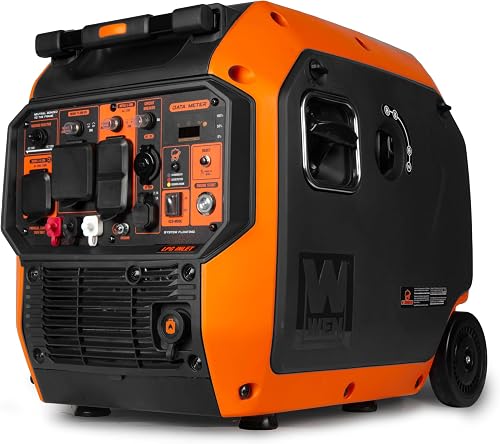
WEN 6800W Dual Fuel RV Inverter (DF680iX)
Best for larger power plans - 6
 Best for lighter gasoline tripsCheck it
- 7
 Check it
WEN 4800W RV Inverter (56477i)
Best for gasoline-focused campers - 8
 Check it
Westinghouse 4650W Dual Fuel RV Ready
Best for longer stationary stays - 9
 Check it
WEN 4800W Electric Start RV Inverter (56480iX)
Best for avoiding pull starts
Which generators are the best for RV use?
The Champion dual-fuel inverter is the most balanced choice here, while the compact WEN favors frequent moves and the larger WEN models favor heavier electrical loads. Choose the Westinghouse home-backup model when you also need its separate household connection options.
StalwartStore compared running output, fuel options, RV connections, starting features and transport weight. The order reflects overall RV fit; a lower-ranked model can still be the right choice for a specific trip.
| Product | Best for | Running watts | RV outlet | Weight | Our score |
|---|---|---|---|---|---|
| Champion 4000W Dual Fuel RV Inverter | flexible RV trips | 3000 W gasoline; 2700 W propane | 120 V 25 A TT-30R | 51.8 lb | 8.8 |
| WEN 3600W Dual Fuel RV Inverter (DF360iX) | frequent campsite moves | 2900 W gasoline; 2600 W propane | TT-30R | 49 lb | 8.7 |
| WEN 4800W Dual Fuel RV Inverter (DF480iX) | appliance-heavy RV trips | 4000 W gasoline; confirm propane output | TT-30R | 78.5 lb | 8.6 |
| Westinghouse 6500W Dual Fuel Home Backup | shared home backup | 5300 W gasoline; 4800 W propane | TT-30R 30 A | 135.6 lb | 8.6 |
| WEN 6800W Dual Fuel RV Inverter (DF680iX) | larger power plans | 5100 W gasoline; 4500 W propane | TT-30R | 99.2 lb | 8.5 |
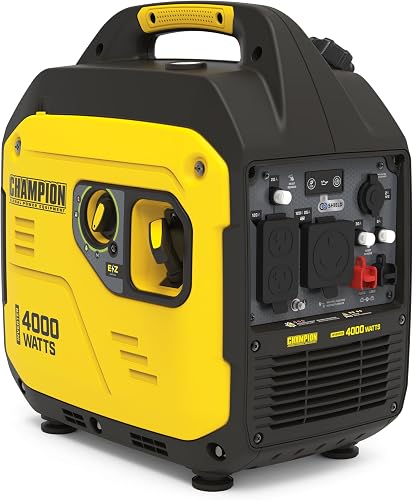
| Champion 4000W RV Inverter | lighter gasoline trips | 3000 W gasoline | 120 V 25 A TT-30R | 48.1 lb | 8.5 |
| WEN 4800W RV Inverter (56477i) | gasoline-focused campers | 4000 W gasoline | TT-30R | 72.7 lb | 8.3 |
| Westinghouse 4650W Dual Fuel RV Ready | longer stationary stays | 3600 W gasoline; 3240 W propane | TT-30R 30 A | 108 lb | 8.2 |
| WEN 4800W Electric Start RV Inverter (56480iX) | avoiding pull starts | 4000 W gasoline | TT-30R | 77 lb | 8.0 |
Champion 4000W Dual Fuel RV Inverter: Best for flexible RV trips
- Gasoline or propane
- 4000 starting watts on either fuel
- TT-30R outlet
- CO Shield auto shutoff
A balanced choice for RV travelers who want two fuel options without moving to a larger wheeled generator. Check your air conditioner's startup demand before choosing it.
Pros
- Gasoline and propane operation
- Compact frame with an RV outlet
- CO Shield auto shutoff
Cons
- Lower running output on propane
- Recoil start
Choose this Champion for mixed weekend and longer RV trips when you want to choose between gasoline and propane. It supplies 3000 running watts on gasoline or 2700 on propane, with 4000 starting watts on either fuel.
The 51.8 lb frame sits between the smallest picks and the larger wheeled models. Check whether you can lift it comfortably from your actual storage height, especially when packing alone.
Champion claims up to 10 hours on gasoline or 25 hours from a 20 lb propane tank, both at 25% load. Treat those as light-load figures, rather than a promise of overnight air conditioning.
Its optional parallel connection gives you a path to expand with compatible equipment later. Skip it if your present load already needs a larger generator or you want electric start, because neither extra capacity nor push-button starting comes with this unit alone.
WEN 3600W Dual Fuel RV Inverter (DF360iX): Best for frequent campsite moves
- Gasoline or propane
- Tool-free LPG quick-connector
- Fuel shutoff
- CO Watchdog shutdown sensor
The lightest dual-fuel choice here suits travelers who load and unload often. Its lower output calls for careful planning around air conditioning and electric cooking.
Pros
- Lightest dual-fuel model in this group
- Tool-free propane connection
- Fuel shutoff for gasoline storage care
Cons
- Less running capacity than the larger WEN models
- Propane further reduces available output
The DF360iX suits travelers who load and unload at every stop and want propane capability. At 49 lb, it is the lightest dual-fuel generator in this group, though fuel and separate propane equipment add to your travel load.
It provides 2900 running watts on gasoline or 2600 on propane. That favors a controlled appliance schedule, especially if an air conditioner shares power with a microwave or battery charger.
The tool-free LPG quick-connector makes propane hookup more convenient. Fuel shutoff helps prepare the gasoline fuel system for downtime by using fuel left in the carburetor before shutdown.
Choose it for a modest load plan and frequent campsite changes. Skip it if your appliances already approach its running limit before the air conditioner starts, since a compact frame is little help when you must keep resetting an overload.
WEN 4800W Dual Fuel RV Inverter (DF480iX): Best for appliance-heavy RV trips
- Gasoline or propane
- Electric start with recoil backup
- Wheels and telescoping handle
- CO Watchdog shutdown sensor
A step up for RV owners whose gasoline loads exceed the compact models' capacity. Electric start and wheels add convenience, though loading it still requires a lifting plan.
Pros
- More gasoline running capacity than the compact picks
- Electric start with recoil backup
- Two fuel options
Cons
- Heavier to lift into a vehicle
- WEN gives conflicting propane running-watt figures
The DF480iX is a better fit when the compact models leave too little capacity for your planned loads. Its 4000 running watts on gasoline give you more room for appliances, while electric start avoids routine pull starts.
WEN gives conflicting propane running figures of 3600 W and 4000 W. Confirm the correct rating with WEN before buying for a propane load that depends on the difference.
Wheels and a telescoping handle help move its 78.5 lb frame across suitable ground. They do not solve lifting it into a truck bed or pulling it through deep gravel.
Choose this model if you need more gasoline capacity and expect to use both fuels. Skip it for a propane-only plan until the rating is clear, or choose a smaller unit if frequent solo lifting matters more than the extra power.
Westinghouse 6500W Dual Fuel Home Backup: Best for shared home backup
- Gasoline or propane
- RV-ready TT-30R outlet
- CO shutdown
- Transfer-switch-ready L14-30R outlet
The highest-output choice here makes sense when one generator must serve RV trips and a compatible home backup connection. Its weight makes frequent loading a major consideration.
Pros
- Highest total running output in this group
- RV and home transfer-switch connections
- Included wheel kit
Cons
- Heaviest model in this group
- Full generator output cannot pass through the RV outlet
This Westinghouse suits buyers who want one generator for RV trips and home backup. It provides the highest total running output here, at 5300 W on gasoline or 4800 W on propane.
Its separate L14-30R outlet can serve a compatible home transfer-switch setup. That requires the correct home equipment and installation; an RV receptacle alone does not provide a household backup connection.
The 135.6 lb weight is the main travel drawback. An included wheel kit helps on the ground, but loading requires a suitable ramp, lifting help or another planned method.
Westinghouse claims up to 14.5 hours from the 4.7-gallon gasoline tank. Choose it when both roles justify the size, and skip it if a single RV cord is your only use, since that connection cannot carry the generator's full total output.
WEN 6800W Dual Fuel RV Inverter (DF680iX): Best for larger power plans
- Gasoline or propane
- Electric start with recoil backup
- 120/240 V L14-30R receptacle
- CO Watchdog shutdown sensor
The highest-output inverter here suits buyers with a clear need for extra capacity and its additional outlet options. Confirm how much power your chosen connection can carry.
Pros
- Highest running output among these inverters
- Electric start
- Wheels and telescoping handle
Cons
- Heavy for frequent vehicle loading
- Extra output may go unused through a single RV connection
The DF680iX suits buyers who need larger inverter capacity and additional connection options. It provides 5100 running watts on gasoline or 4500 on propane, the highest figures among the inverters here.
Alongside its RV receptacle, it has a 120/240 V L14-30R outlet and voltage selector. Work out which connection your equipment requires before counting on the extra output.
Electric start with recoil backup adds starting convenience. Wheels and a telescoping handle help with ground movement, but its 99.2 lb weight still needs a loading plan.
Choose it for a measured load that smaller inverters cannot cover, with a connection that can use the capacity. Skip it if your RV inlet is already the limiting factor, because buying more total watts will not increase what that inlet can accept.
Champion 4000W RV Inverter: Best for lighter gasoline trips
- Gasoline operation
- Recoil start
- Parallel ready with optional kit
- CO Shield auto shutoff
The lightest generator here fits travelers who prefer gasoline and want less weight to handle. It matches the dual-fuel Champion's gasoline running output without propane equipment.
Pros
- Lightest model in this group
- RV connection in a compact frame
- CO Shield auto shutoff
Cons
- Gasoline only
- No electric start
The gasoline Champion suits travelers who want the least weight in this group and already plan to carry gasoline. It weighs 48.1 lb and matches the dual-fuel Champion's gasoline output, at 3000 running watts and 4000 starting watts.
Recoil starting keeps this a pull-start choice. Think about where you'll stand to start it, rather than assuming you can operate it while it remains inside a storage compartment.
Champion claims up to 10 hours at 25% load. A heavier appliance schedule will shorten that figure, so build refueling time into your trip plan.
Choose it for occasional RV use when its output fits and propane would add equipment you do not need. Skip it if pull starting is difficult for you, or if using a propane supply is central to how you camp.
WEN 4800W RV Inverter (56477i): Best for gasoline-focused campers
- Gasoline operation
- Recoil start
- Wheels and telescoping handle
- Fuel shutoff
A fit for campers who need more output than the compact picks and are comfortable with recoil starting. It is lighter than the two other WEN 4800 W models here.
Pros
- More running capacity than the compact picks
- Wheels and telescoping handle
- Fuel shutoff and CO Watchdog
Cons
- Gasoline only
- Recoil start requires pulling a cord
The 56477i suits gasoline-focused campers who need more running capacity than the compact models provide. It supplies 4000 running watts and uses recoil starting, without dual-fuel equipment or electric start.
At 72.7 lb, it is lighter than the other WEN 4800 W models here. The wheels and telescoping handle help once it is unloaded, though campsite surfaces still affect how easy it is to move.
WEN claims up to 7 hours at half load from its 1.9-gallon tank. That is a more demanding load point than a quarter-load runtime claim, so compare the conditions as well as the hours.
Choose it if you can use a pull cord and want the larger gasoline output. Skip it if propane or push-button starting is a firm requirement, since the other WEN models address those needs directly.
Westinghouse 4650W Dual Fuel RV Ready: Best for longer stationary stays
- Gasoline or propane
- 4-gallon gasoline tank
- Fuel gauge and hour meter
- CO shutdown
A larger gasoline tank suits campers who stay put and want fewer refueling stops at suitable loads. Its weight is a poor match for frequent lifting.
Pros
- Gasoline and propane operation
- Westinghouse claims up to 14 hours on gasoline
- Fuel gauge and hour meter
Cons
- Heavy relative to its running output
- Open-frame design
This Westinghouse fits longer stays where frequent lifting is unlikely. Its 4-gallon gasoline tank and claimed runtime of up to 14 hours favor buyers who want longer intervals between refueling at suitable loads.
It supplies 3600 running watts on gasoline or 3240 on propane. The propane peak-watt figures conflict, so confirm startup capacity before choosing it for a motor load close to its limit.
The fuel gauge helps you plan stops, and the hour meter helps track service intervals. Its open-frame design and 108 lb weight deserve attention before you reserve space in your vehicle.
Choose it when tank capacity and two-fuel operation matter more than carrying weight. Skip it for frequent campsite changes or strict noise rules unless you have confirmed that this model meets the campground's requirements.
WEN 4800W Electric Start RV Inverter (56480iX): Best for avoiding pull starts
- Gasoline operation
- Keyless electric start with recoil backup
- Wheels and telescoping handle
- CO Watchdog shutdown sensor
Choose this gasoline model when push-button starting matters more than saving a few pounds. It has the same running output as the recoil-start 56477i.
Pros
- Electric start with recoil backup
- Wheels and telescoping handle
- Fuel shutoff
Cons
- Gasoline only
- Heavier than the recoil-start 56477i
The 56480iX suits campers who want gasoline power without routine pull starts. Its keyless electric start has recoil backup, giving you another starting method if the starting battery cannot do the job.
It supplies 4000 running watts, matching the recoil-start 56477i. The difference is convenience and weight, rather than more appliance capacity.
At 77 lb, it remains a substantial lift despite its wheels and telescoping handle. Plan a storage position that leaves room for safe handling and service access between trips.
Choose it if push-button starting will make each setup easier and you prefer gasoline. Skip it if you want propane, or choose the lighter recoil model when you are comfortable starting manually and want less weight to load.
How do you choose an RV generator's wattage?
Choose enough running capacity for simultaneous loads and enough starting capacity for the largest expected startup. Use appliance labels and manuals, rather than estimating from your RV's length.
Write down the air conditioner, microwave, battery charger and any electric water heating. Appliances that seem minor on their own can use much of the remaining capacity when they run together.
Size the best generator for your RV around startup
Account for the largest motor starting while other loads are running. An air conditioner may run within the generator's rating yet need more power for its compressor to start.
For a simple example, a 1500 W running load plus a motor needing 1200 W to start calls for at least 2700 W during that startup. Your actual equipment may behave differently, and simultaneous motor starts need separate attention.
Leave useful headroom rather than choosing a unit that only meets your calculated limit. Heat, altitude and other conditions can reduce available output, so follow the generator manual's guidance.
Our generator size guide explains the calculation, while what a 3000-watt generator can run helps put capacity in context.
Reduce loads before buying a larger unit
You can often use a smaller generator by taking turns with high-draw appliances. Pause electric water heating or air conditioning before using the microwave if your load plan requires it.
Include the RV converter or charger, especially after a period of battery use. Its demand may be higher when batteries need charging than when they are nearly full.
An air conditioner soft-start device may reduce startup demand, but compatibility and installation matter. Size around the documented requirements of your actual setup.
Which RV outlet should your generator have?
Choose an outlet that matches your RV's voltage and approved connection, then check its current limit. Connector shape and total generator watts are separate checks.
Both Champion models have 120 V 25 A TT-30R outlets. That familiar RV shape does not make them full 30 A sources.
A standard 120 V 30 A connection carries up to 3600 W, subject to the generator and circuit limits. A larger generator cannot send all its total output through that one connection.
A 50 A RV connected through a suitable adapter must still stay within the source's limits. Do not assume it can run the same appliance combination as a full campground hookup.
The Westinghouse home-backup model has an L14-30R outlet, while the smaller Westinghouse has an L5-30R. Those connections are different, so use equipment approved for the exact outlet.
For household use, our guide to generator transfer switches explains the separate connection work. Never connect a generator to household wiring through a wall receptacle.
Is an inverter generator a better RV choice?
An inverter is the stronger starting point for most RV shopping when you want clean power and a choice of compact models. Still compare the actual weight, output and campground requirements.
Noise figures only help when measurement distance and load conditions match. The figures for these models do not support a fair quietest-to-loudest ranking across the whole group.
Check permitted generator hours and any equipment restrictions before booking. Even a generator allowed during the day may need to be shut down during quiet hours.
Our inverter versus regular generator guide explains the design differences. Browse the best inverter generators if you have settled on that type.
Should you choose gasoline or propane for an RV?
Choose dual fuel when you will use both options, and gasoline-only when propane would add unused equipment. Size from the rating for your chosen fuel.
Propane avoids leaving gasoline in the carburetor when used as directed. A cylinder still adds transport weight, needs secure upright storage and requires a suitable regulator connection.
Cold weather and fuel withdrawal rates can affect propane supply. Follow the generator's cylinder guidance rather than assuming any small bottle can support a long, heavy load.
If you share propane with RV appliances, reserve enough for those appliances too. Carrying two fuel options only helps when you can safely store and replenish them.
Read how dual-fuel generators work and dual-fuel versus gas-only generators for the tradeoffs.
How should you set up an RV generator safely?
Set the generator outdoors on firm, level ground, with exhaust directed away from people and openings. Keep it at least 20 feet from RVs and other occupied structures, following any greater distance required by its manual.
Never run it inside a garage, storage bay or other enclosure, or under an attached awning. Keep working CO alarms in the RV, because automatic generator shutdown cannot replace safe placement.
Ready.gov's power outage guidance also calls for outdoor generator use at least 20 feet from windows, doors and attached garages. Check nearby RVs as well as your own before starting.
Before connecting, inspect the cord and plugs for damage and use the correct outdoor-rated equipment. Start with major RV loads off, let the generator settle as directed, then add loads in steps.
Protect it from rain with a purpose-made operating shelter that preserves all required airflow and clearances. A storage cover or improvised enclosed box is unsuitable for a running engine.
Read generator carbon monoxide risks and whether a generator can run in rain before departure.
What care prevents trouble between RV trips?
Follow the manual's oil, storage and service schedule, using engine hours as well as calendar time. Check oil before use even when the generator has low-oil shutdown.
Stop the engine and let it cool before refueling. Store fuel in approved containers, and follow the required shutdown sequence before moving or packing the generator.
Use fuel shutoff as directed on models that have it, but do not treat it as the whole storage routine. Fuel left in the tank, oil condition and the air filter still need attention.
For electric-start models, maintain the starting battery during storage. Check the propane hose and connections as directed, and resolve leaks before starting.
Before a trip, run the generator outdoors with your planned RV loads to confirm startup and operation. Finding an overloaded circuit at home gives you time to change the appliance schedule.
Which common RV generator mistakes should you avoid?
Avoid sizing from peak watts alone, comparing runtime claims at different loads and treating wheels as a lifting solution. These mistakes can leave you with enough headline power but an awkward campsite setup.
Do not plan unattended overnight operation around an “up to” runtime claim. Load changes affect fuel use, and campground quiet hours may rule out that plan anyway.
Never bypass a CO shutdown or repeatedly restart after a safety stop without finding the cause. Shut down, move people away from exhaust and follow the manual before resuming use.
Do not leave cord connections where standing water can collect. Route cables so they cannot be pinched by a door, damaged by traffic or become a trip hazard.
Which generator is the best fit for your RV?
The best generator for your RV is the smallest practical model that covers your load plan through the correct connection. Choose the dual-fuel Champion for balanced travel needs or the DF360iX when frequent loading makes lower weight a priority.
Move to a WEN 4800 W model when the smaller units cannot cover your appliances. Choose among them by fuel choice and starting method, then confirm propane output if considering the DF480iX.
Choose the DF680iX or larger Westinghouse only when you can use their added capacity and transport them safely. For separate campsite appliances and lighter trip plans, compare our best generators for camping.
Our top 3 picks at a glance
-
1
-
2
Best for frequent campsite moves
WEN 3600W Dual Fuel RV Inverter (DF360iX)
8.7/10 our score
See it on Amazon -
3
Best for appliance-heavy RV trips
WEN 4800W Dual Fuel RV Inverter (DF480iX)
8.6/10 our score
See it on Amazon
Frequently asked questions
What size generator do I need for an RV?
Size the generator for the appliances you will run together and the extra power needed to start the largest motor; include battery charging and any electric water heating in your total. Our RV and camper generator guide explains how to build a load plan before choosing a model.
Do I need an RV-ready generator?
An RV-ready generator simplifies connection when its receptacle matches your RV cord, but the label does not guarantee enough power for every appliance; check voltage, amperage and running output separately. Use an approved connection for your RV, and remember that an adapter changes the connection without increasing available power.
Are inverter generators good for RVs?
Inverter generators suit RV trips when you want clean power for electronics and a model you can transport easily; choose by actual running capacity, carrying weight and campground rules. Our inverter vs regular generator guide explains the differences, including why inverter construction alone does not settle every noise comparison.
Can I run an RV generator on propane?
Yes, if it is designed for propane and you use the correct regulator, hose and connection procedure; plan your loads around its propane rating, which may be lower than its gasoline rating. Our guide to how dual-fuel generators work covers the fuel choices and their practical tradeoffs.
Can I use a generator inside an RV or under an awning?
No, never operate a portable generator inside an RV or under an attached awning; keep it outdoors, at least 20 feet from occupied structures, with exhaust directed away from openings. A CO sensor cannot replace safe placement; read how generators give off carbon monoxide before your first trip.


