Westinghouse 12500 Tri-Fuel Generator Review: Worth It? (November 2026)
The Westinghouse 12500 generator suits home backup when you want gasoline, propane and natural gas options plus remote starting. Choose it when your essential loads fit the running output of your planned fuel, rather than buying on its peak number alone.
On this page (9 sections)
- What does the Westinghouse 12500 generator offer?
- How much power does it provide on each fuel?
- What do the three fuel options change?
- Does the CO shutdown make operation safe indoors?
- Can you connect it to home wiring?
- How does it compare with nearby Westinghouse options?
- How should you prepare it before the first outage?
- What care and operating mistakes should you plan around?
- Which Westinghouse generator should you choose?
The Westinghouse 12500 generator fits home backup when you want a choice of gasoline, propane or natural gas and can manage a large portable unit. Buy it for the essential loads it can sustain on your chosen fuel, rather than the peak number in its name.
It suits households planning power for refrigeration, lights, communications and selected pumps or other appliances. It isn't an automatic promise of whole-home power, and it needs a safe outdoor operating spot before any other feature matters.
What does the Westinghouse 12500 generator offer?
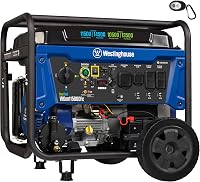
The Westinghouse 12500W Tri-Fuel, model WGen9500TFc, combines three fuel options with remote, electric and recoil starting. Its main appeal is flexibility during an outage, especially when you have both stored fuel and a suitable natural gas connection.
Westinghouse 12500W Tri-Fuel: Best for flexible outage planning

- 9,500 running watts on gasoline
- Gasoline, propane and natural gas
- CO shutdown
A home backup choice for households that want to use stored fuel or a suitable natural gas connection. Size your appliance plan around the fuel you'll actually use.
Pros
- Three fuel options
- Remote start key fob
- L14-30R and 14-50R outlets
- 3-year limited service, labor and parts coverage
Cons
- Lower output on propane and natural gas
- Weighs 215 lb
A 457cc four-stroke OHV engine with a cast iron sleeve powers the unit. Automatic low-oil shutdown helps protect the engine, while the digital hour meter helps you track service intervals.
It weighs 215 lb, so the included wheels and handle matter. Plan a ground-level route from storage to the operating spot; steps, gravel and soft ground can make moving a heavy generator difficult.
The box includes a battery charger, oil and funnel, tool kit and manual, with minimal assembly required. Westinghouse backs it with 3-year limited service, labor and parts coverage.
Who should buy the Westinghouse 12500 generator?
Buy it if you want to keep selected household essentials running and value more than one fuel source. It particularly suits a homeowner willing to plan circuits, arrange the right connection and maintain an engine between outages.
Skip it if you need something you can carry alone, mainly want campsite power or have nowhere to operate it safely. If your priority is a smaller generator for modest loads, compare the options in our inverter generator guide.
How much power does it provide on each fuel?
The generator's usable continuous output depends on fuel, and 12,500 watts is its gasoline peak figure. Use the running column below to plan equipment that stays on, then account for short motor startup demands.
| Fuel | Running watts | Peak watts |
|---|---|---|
| Gasoline | 9,500 | 12,500 |
| Propane | 8,500 | 11,200 |
| Natural gas | 7,500 | 9,500 |
Build your load plan around the fuel you expect to use most. A group of appliances that fits on gasoline may exceed capacity when you switch to natural gas.
Start with a list of essentials, including their running watts and startup requirements. For appliances labeled in amps, volts multiplied by amps gives a basic watt estimate, but motor startup needs require a separate check.
A useful plan has 2 groups: equipment that must stay available and equipment you can use briefly. Refrigeration and a sump pump may belong in the first group, while a microwave or other optional appliance can wait.
Avoid planning right up to the running limit. Leave room for changing demand, and remember that pumps or refrigerator compressors can start without warning.
The generator size guide explains how to total loads and allow for startup demand. For a smaller essentials-only plan, see what a 3000-watt generator can run.
What do the three fuel options change?
Three fuel choices let you prepare around local availability and storage space, but each requires a workable supply plan. Decide how you'll obtain fuel during a longer outage, rather than choosing solely by the number of fuels supported.
Gasoline gives this model its highest output. It also means handling fuel containers, rotating stored fuel and making time for safe refueling.
Westinghouse claims up to 12 hours from the 6.6-gallon gasoline tank. Your electrical load and operating conditions affect runtime, so use the fuel gauge and actual consumption to plan breaks.
Propane suits a plan built around stored cylinders, but cylinder capacity still limits your supply. Keep cylinders upright, use compatible equipment and follow the manual for connections and leak checks.
Natural gas avoids repeated tank refills while a suitable utility supply remains available. Have a qualified professional confirm that the line, pressure, connection and hose arrangement meet the generator's requirements.
A natural gas connection doesn't guarantee fuel during every emergency. Keeping another compatible fuel available can preserve your options if service is interrupted.
If gasoline and propane already cover your needs, compare our Westinghouse 14500 generator review. Read how dual-fuel generators work for more help deciding whether another fuel option is useful.
Does the CO shutdown make operation safe indoors?
No indoor or garage use is safe, even with automatic CO shutdown. Carbon monoxide is an odorless gas that can be deadly, and a shutdown sensor doesn't replace correct placement.
The CDC advises running generators outdoors, at least 20 feet from the home, with exhaust directed away from the building. Keep exhaust away from nearby buildings and openings, too.
Read the CDC's generator safety guidance and our guide to generator carbon monoxide risks. Keep working CO alarms inside the home.
Never run the generator in an attached garage with the door open. A shed, crawl space or enclosed porch is also unsuitable.
Remote starting is a convenience after you have checked placement, fuel connections and the area around the generator. Don't start it from inside simply because the key fob is within reach.
Can you connect it to home wiring?
Yes, compatible transfer equipment can connect it to selected home circuits, but an electrician needs to plan the installation. A transfer-switch-ready outlet doesn't mean the generator can be plugged directly into a household wall outlet.
The panel has an L14-30R outlet, a 120/240V 14-50R outlet and 2 GFCI household receptacles. Rubber outlet covers help protect unused connections, but they don't make operation in rain safe.
Have an electrician match the cord, inlet, transfer equipment and panel arrangement. Outlet and circuit limits still apply even when the generator has unused total capacity.
A properly installed transfer switch or interlock keeps generator power from feeding utility lines. Never use a cord with exposed male plugs at both ends or improvise a backfeed connection.
The generator transfer switch guide explains the choices to discuss before installation. Ask which circuits will be available and which appliances must stay off when larger loads start.
Remote start also isn't the same as automatic outage backup. Treat the WGen9500TFc as a manually managed backup plan unless a qualified professional confirms a compatible arrangement.
How does it compare with nearby Westinghouse options?
The 12500W model suits buyers whose loads already fit; the 2 larger models offer more gasoline capacity and larger tanks. Choose between those alternatives mainly by whether you need natural gas.
Westinghouse 13500W Tri-Fuel: Best for larger backup loads

- 10,500 running watts on gasoline
- Gasoline, propane and natural gas
- Up to 19 hours at 25% load on gasoline
Choose this tri-fuel model when your gasoline load plan needs more capacity than the 12500W model offers. Its larger tank also suits longer backup shifts.
Pros
- Three fuel options
- Remote key fob and electric start
- CO sensor shutdown
- 50A and 30A outlets
Cons
- Weighs 230 lb
- Automatic transfer switch sold separately
The Westinghouse 13500W Tri-Fuel supplies 10,500 running watts and 13,500 peak watts on gasoline. Choose it when your load calculations need that extra capacity and you still want all 3 fuel options.
Westinghouse claims up to 19 hours at 25% load from its 9.5-gallon tank. That load condition matters: don't read the figure as a promise for a house drawing heavy power throughout an outage.
Its 500cc engine uses pressure lubrication and a reusable oil screen. It also supports pairing with the separately sold Westinghouse WATS200 automatic transfer switch for a compatible automatic backup setup.
Skip this larger tri-fuel option if your loads fit the smaller unit and its added capacity won't change what you can use. At 230 lb, it also needs a realistic movement and storage plan.
Westinghouse 13500W Dual Fuel: Best for stored-fuel households

- 10,500 running watts on gasoline
- Gasoline and propane
- CO sensor shutdown
A higher-output alternative for households planning around gasoline and propane. Skip it if a natural gas connection is central to your backup plan.
Pros
- 10,500 running watts on gasoline
- Remote key fob and electric start
- CO sensor shutdown
- 50A and 30A outlets
Cons
- No natural gas option
- Weighs 230 lb
The Westinghouse 13500W Dual Fuel suits households relying on gasoline and propane. It has the same gasoline output, tank capacity and stated runtime as the larger tri-fuel model, plus WATS200 compatibility.
Choose it when natural gas has no role in your backup plan. Skip it if a utility gas connection is a key reason you're shopping, since this is the gasoline-and-propane choice.
Both larger models need the same careful load planning as the smaller generator. Don't apply their gasoline output figures to propane or natural gas; confirm the rating for the fuel you intend to use.
For more alternatives, see portable generators for home backup and best dual-fuel generators.
How should you prepare it before the first outage?
Complete assembly, placement and connection planning before you need power. Reading the starting procedure in daylight is easier than learning the controls during a storm.
Measure the storage space and the route outside, including gates and tight turns. The operating spot must remain safely separated from the home even after cords or fuel hoses are connected.
Follow the manual to fit the required parts, prepare the starting battery and check engine oil. Included oil doesn't mean the engine is already filled to the correct level.
Arrange suitable weather protection without enclosing the exhaust or blocking airflow. Our guide to running a generator in the rain explains why a dry operating setup needs advance planning.
For directly connected appliances, use outdoor-rated cords sized for the load and length. Route them away from standing water, sharp edges and places where people could trip.
Once setup is complete, follow the manual's startup procedure and connect loads in stages. Start essential motor loads before adding optional equipment, and check the generator's indicators as demand changes.
Keep the operating instructions, electrician's circuit plan and maintenance notes together. Another adult should be able to find the shutdown steps without guessing.
What care and operating mistakes should you plan around?
Track engine hours, check oil and follow the service schedule to keep the generator ready between outages. Low-oil shutdown is a backup protection feature, rather than a substitute for routine checks.
Use the manual's oil type, service intervals and storage procedure. The hour meter helps you keep a record instead of estimating service needs from the number of outages.
Check the air filter, fuel connections, cords and battery as directed. Before storage, follow the fuel-system instructions for your chosen fuel and expected storage time.
Avoid these common mistakes:
- Using peak watts as continuous capacity. Plan steady loads around running watts and allow separately for motor starts.
- Switching fuel without revising the load plan. Reduce demand to fit the selected fuel's output.
- Refueling a hot engine. Shut down and let it cool before adding gasoline.
- Ignoring an overload trip. Disconnect loads and identify the cause before following the reset procedure.
- Assuming electric start will always be ready. Maintain the battery with the included charger as directed.
- Running every appliance at once. Schedule optional loads around essentials instead of relying on repeated shutdowns.
Plan checks during a long outage, too. Fuel level, oil checks and service needs still matter while the generator is doing useful work.
Which Westinghouse generator should you choose?
Choose the Westinghouse 12500 generator when your essential loads fit its chosen-fuel output and you want several ways to obtain fuel. Its best buyer has already planned placement, connections and appliance priorities.
Choose the 13500W Tri-Fuel when extra gasoline capacity matters and natural gas remains part of the plan. Choose the 13500W Dual Fuel when you want that larger gasoline capacity but will rely on stored gasoline and propane.
If movement, safe placement or fuel storage is unresolved, settle that before ordering. A generator only helps when you can get it outside and operate it correctly.
Write down your essential circuits and planned fuel, then use the transfer switch guide to prepare the connection discussion with your electrician.
Frequently asked questions
How much power does the Westinghouse 12500 tri-fuel generator provide?
It provides 9,500 running watts and 12,500 peak watts on gasoline, 8,500 running watts and 11,200 peak watts on propane, and 7,500 running watts and 9,500 peak watts on natural gas. Use running watts for sustained loads, then allow for appliance startup demand.
Does the Westinghouse 12500 tri-fuel generator have CO protection?
Yes, it has automatic carbon monoxide shutdown, but that doesn't make enclosed use safe. Run it outdoors, at least 20 feet from the home, with exhaust directed away from doors, windows and vents; keep working CO alarms inside, and follow the manual's placement instructions.
How long can the Westinghouse 12500 run on a tank of gas?
Westinghouse claims up to 12 hours on its 6.6-gallon gasoline tank. Runtime changes with electrical load and operating conditions, so don't schedule refueling around that maximum alone; keep track of fuel use during operation, and shut down and let the engine cool before adding gasoline.
Can the Westinghouse 12500 power a home through a transfer switch?
Yes, its transfer-switch-ready L14-30R outlet can connect to compatible transfer equipment. Have a qualified electrician match the generator, cord, inlet and transfer switch or interlock to your panel; the connection must isolate utility power, and your selected circuits still need to stay within the generator's capacity.